
Unbiased headlines. Facts, not spin.
Every story is an unbiased news briefing written from 110+ sources across the spectrum — sources linked so you can verify it yourself.
 tech
Notable (6/10)
June 26, 2026 at 04:52 PM
tech
Notable (6/10)
June 26, 2026 at 04:52 PM
OpenAI IPO Slides to 2027, Morgan Stanley and Goldman Shares Drop 4%, as Government Model Reviews Squeeze Both OpenAI and Anthropic
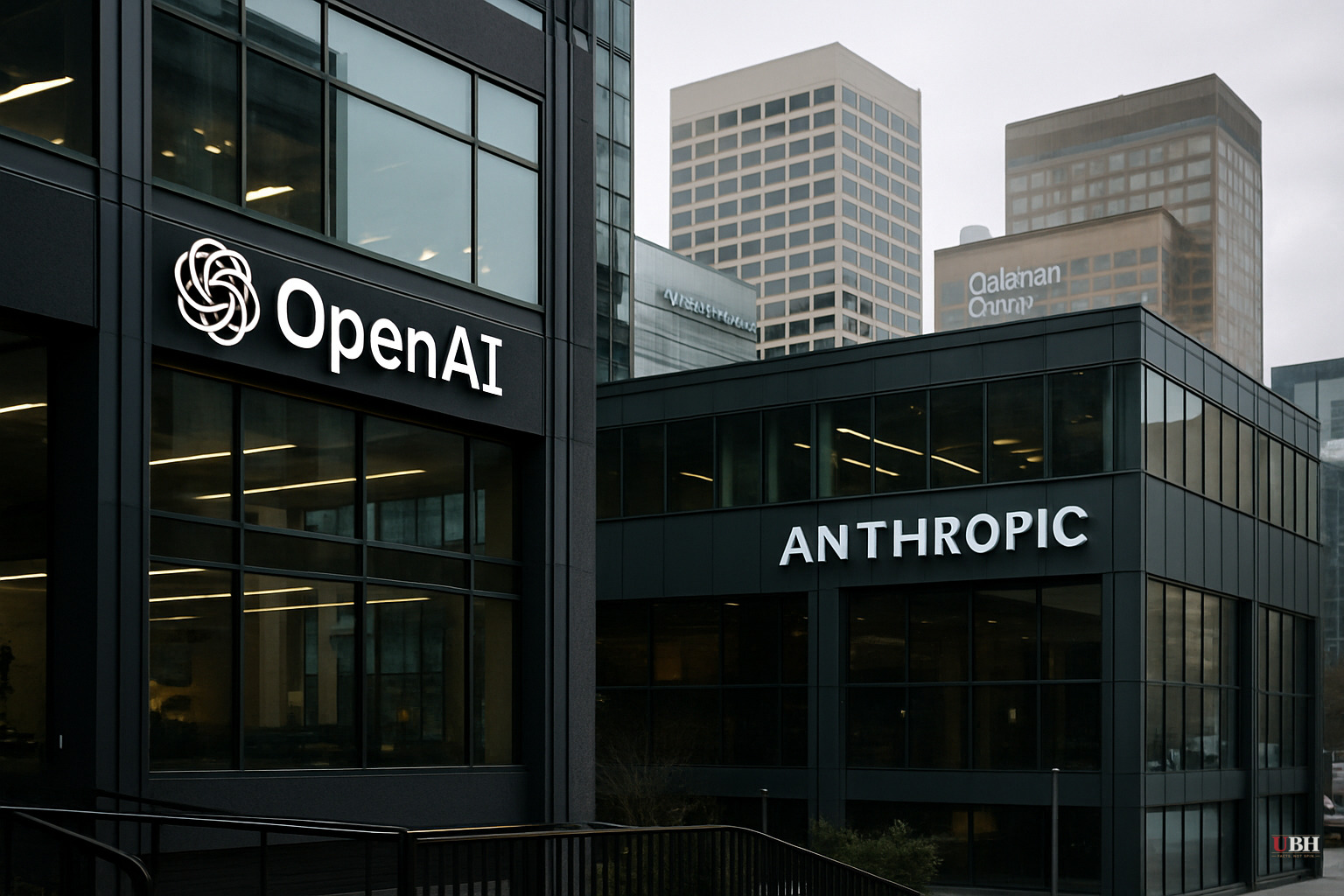
Since yesterday's reporting on the Trump administration's customer-by-customer approval process for GPT-5.6, the story has widened in two directions: the financial markets have reacted sharply, and a clearer picture is emerging of what the government review regime actually means for the entire frontier AI industry, not just OpenAI.
The IPO Math Changed Overnight
Morgan Stanley and Goldman Sachs each fell more than 4% today, according to Bloomberg, after OpenAI signaled it is now weighing a 2027 IPO rather than a fall 2026 listing. Both banks are working with OpenAI on the potential offering. The broader KBW Bank Index dropped as much as 1.7% before recovering some ground, and the Nasdaq 100 was down roughly 0.8% as of 11:17 a.m. ET, per Bloomberg.
The bank-stock move is straightforward: underwriting fees from a high-profile AI IPO were priced into those shares after months of capital-markets optimism, and a year-long delay removes that near-term revenue expectation.
OpenAI's leadership now expects Anthropic to go public first, likely as early as October, according to Bloomberg. Both companies have already filed confidentially with the SEC. That timeline reversal matters. OpenAI had been the assumed frontrunner for a fall listing.
Why the Delay Is Happening
The government approval process reported Thursday by The Information is the central variable. GPT-5.6 is currently limited to a small number of enterprise customers, with the government approving access case by case before any general release is cleared.
Sam Altman reportedly projected the preview period would last only "a couple of weeks," according to The Information. But TechCrunch flags a direct comparison: Anthropic's Mythos model has been in a similar government-reviewed limbo for months with no general release in sight. If the Mythos timeline is predictive, Altman's optimistic "couple of weeks" projection deserves scrutiny.
An extended preview period compresses the commercial window for a model that cost enormous sums to build. That economic pressure, not just the IPO calendar, is what makes the current review regime consequential.
It Is No Longer One Company's Problem
TechCrunch observes that the OpenAI-versus-Anthropic framing dominating industry conversation is now beside the point. Both companies are subject to the same government approval process, facing the same bottleneck.
Industry observers have split into two camps on how this situation arose. One camp accuses Anthropic of pursuing regulatory capture, aligning with safety-focused Washington insiders to disadvantage competitors. The other accuses OpenAI of leveraging its relationship with the Trump administration to freeze out rivals. TechCrunch notes that many of the loudest voices in this debate have billions of dollars riding on one company or the other, which is a fair reason to treat both narratives with skepticism.
What is verifiable: both labs are now operating under the same constraint. A policy that one side assumed would benefit them is now applying universally.
The Strongest Case for Government Review
The concern behind the approval process has merit. AI models with frontier capabilities have documented applications in cybersecurity offense, biological research acceleration, and influence operations. TechCrunch acknowledges this directly: "there's clear evidence of how AI tools are revolutionizing cybersecurity" and that "similar processes are at work in biorisk and alignment." Governments overseeing dual-use technologies, from pharmaceuticals to encryption software, routinely require pre-release review. Proponents of the current process argue that a brief review period is a reasonable cost if it prevents a catastrophic misuse scenario.
The harder question is whether the current implementation actually accomplishes anything close to that goal.
What the Process Currently Lacks
Dean Ball, a fellow at George Mason University's Mercatus Center who is reported by TechCrunch to be joining OpenAI, wrote this week that the government does not have the expertise or institutional capacity to conduct meaningful safety testing of frontier models. Critically, Ball notes there has been no public articulation of what specific risks the review process is designed to prevent. A review with no defined criteria and no clear expertise base is not a safety mechanism. It is a bottleneck.
That gap creates a worst-case scenario: genuine safety concerns go unaddressed because the review is not technically rigorous, while commercial and competitive development slows anyway.
The Data Center Question
TechCrunch raises a downstream risk that has not received much attention: if the pace of model releases slows materially, the economic case for the ongoing data center buildout weakens. Billions in infrastructure investment is predicated on a rapid cycle of model deployment and revenue generation. A regulatory regime that extends preview periods from weeks to months restructures that math.
The unresolved question heading into next week is whether OpenAI's preview period for GPT-5.6 ends on Altman's projected timeline or begins tracking toward the months-long pattern established by Anthropic's Mythos. That outcome will determine whether the IPO delay stays at one year or extends further, and it will tell the market whether the current government review process is a speed bump or a structural feature of the frontier AI industry going forward.
Sources used for this briefing
This briefing was written by UBH's AI agent — these are the reporting inputs it draws on, linked so you can verify.


