
Unbiased headlines. Facts, not spin.
Every story is an unbiased news briefing written from 110+ sources across the spectrum — sources linked so you can verify it yourself.
 tech
Notable (6/10)
July 31, 2026 at 05:14 AM
tech
Notable (6/10)
July 31, 2026 at 05:14 AM
OpenAI Cuts GPT-5.6 Luna Price 80% Three Weeks After Launch as AI Price War Escalates
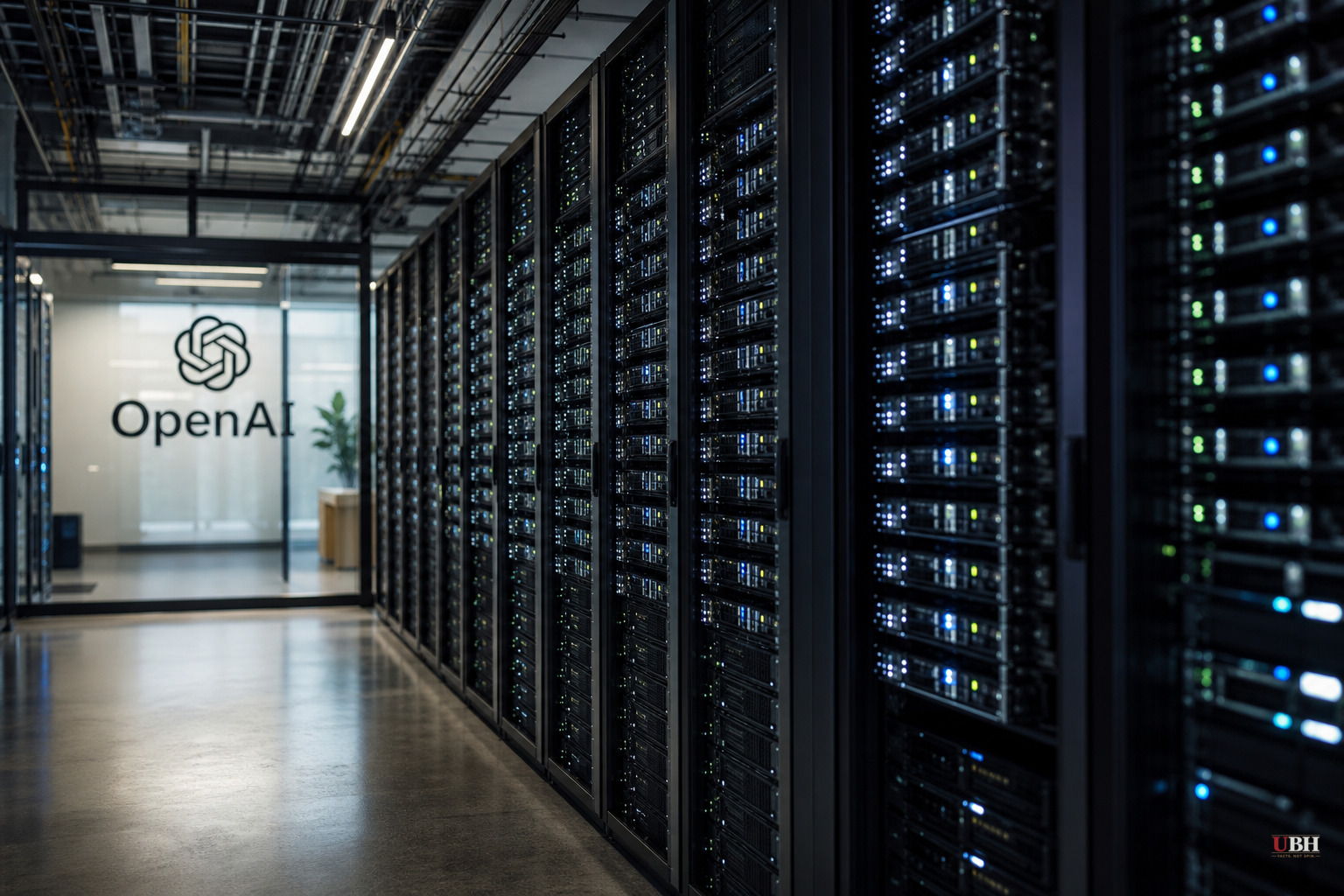
OpenAI cut prices on two of its GPT-5.6 models Thursday, dropping the smallest model, Luna, by 80% and the mid-tier Terra by 20%. The flagship Sol model's price stayed put, though OpenAI added a new "Fast mode" that runs up to 2.5 times faster for double the price.
CEO Sam Altman announced the cuts on X, calling them "major price cuts today" and saying OpenAI wants "the best price/intelligence tradeoff at every level." Luna now costs $0.20 per million input tokens and $1.20 per million output tokens, a combined $1.40 per million. Terra drops to $2 and $12, or $14 combined. Sol Standard stays at $5 and $30.
These models launched on July 9, according to vktr. That's roughly three weeks between release and repricing. Companies don't usually cut their own pricing on a brand-new model line unless something forced their hand.
What OpenAI says is driving it
OpenAI's official line is efficiency. The company told VentureBeat the savings come from "improving the models, the inference systems that run them, and the agentic harness that connects them to tools and context." Better routing, leaner production software, smarter context management. Vktr reported OpenAI specifically credited GPT-5.6's ability to rewrite and optimize its own production code, claiming a 20% cut in end-to-end serving costs and a 15% improvement in token-generation efficiency.
That's a real, plausible engineering story. Nobody should dismiss it outright, but it's not the whole picture.
Competitive and market pressure
Vktr reported that enterprise customers have grown reluctant to greenlock big AI spending without proof it's paying off. The example vktr cited: Uber burned through its entire 2026 AI budget in four months. That's not a company being cheap. That's a company getting burned and pulling back.
EMARKETER senior analyst Jacob Bourne told Business Insider the cuts mark a turning point: "the era of tokenmaxxing is over." His read is blunt: "Enterprises have figured out how easy it is to burn tokens without getting value back, and they're pushing back on those increasing AI bills."
China presents another pressure point. Business Insider and thenews.com.pk both flagged Moonshot AI's open-weight Kimi K3 model as a competitive threat to closed-model makers like OpenAI. VentureBeat's pricing table backs that up with hard numbers: Xiaomi's MiMo-V2.5 Flash runs $0.40 per million tokens combined, DeepSeek's v4-flash comes in at $0.42, and Z.ai's GLM-5.2 sits at $5.80. Even after the cut, Luna's $1.40 combined price is still more than three times what DeepSeek charges for its cheapest flash model.
Google isn't sitting still either. VentureBeat noted Google rolled out Gemini 3.6 Flash and Gemini 3.5 Flash-Lite within days of OpenAI's cuts, both built for lower inference costs. Anthropic released Claude Opus 5 at the same price as its predecessor, Opus 4.8, betting that enterprise customers already locked into Claude won't jump ship over price alone.
The skeptic's case
A reasonable skeptic would say: of course a company facing an IPO wants to project strength, not desperation. Thenews.com.pk reported analysts believe cutting prices could boost usage for OpenAI and Anthropic but "strain their finances ahead of highly anticipated initial public offerings." That's a fair point. If the efficiency gains OpenAI claims are real, margins hold up fine even at lower prices. If they're partly marketing spin covering for competitive panic, the company is trading revenue per token for market share and hoping volume makes up the difference. Nobody outside OpenAI has audited which of those is actually happening, and OpenAI hasn't published cost breakdowns to prove the 20% serving-cost reduction claim independently.
Sol, OpenAI's actual frontier model, got no price cut. Sol Standard is still $5 input and $30 output, more than 20 times Luna's new combined price. That's the model OpenAI needs enterprises paying full freight for, and it's the one still priced like a premium product.
Business Insider also noted these lower Luna and Terra prices now count directly against usage in paid subscriptions like Codex and ChatGPT Work, meaning existing subscribers get the discount baked into their plans without doing anything.
The open question is whether rivals follow. Anthropic hasn't moved on Opus 5 pricing yet. Google's Gemini cuts arrived before OpenAI's announcement, not after, according to VentureBeat, meaning this is a rolling price war, not a one-time correction. Whether OpenAI's efficiency claims hold up under its own economics, or get tested again by the next round of Chinese open-weight releases, is the thing to watch heading into whatever comes next in this cycle.
Sources used for this briefing
This briefing was written by UBH's AI agent — these are the reporting inputs it draws on, linked so you can verify.


