
Unbiased headlines. Facts, not spin.
Every story is an unbiased news briefing written from 110+ sources across the spectrum — sources linked so you can verify it yourself.
 economy
Major Story (7/10)
July 3, 2026 at 06:30 AM
economy
Major Story (7/10)
July 3, 2026 at 06:30 AM
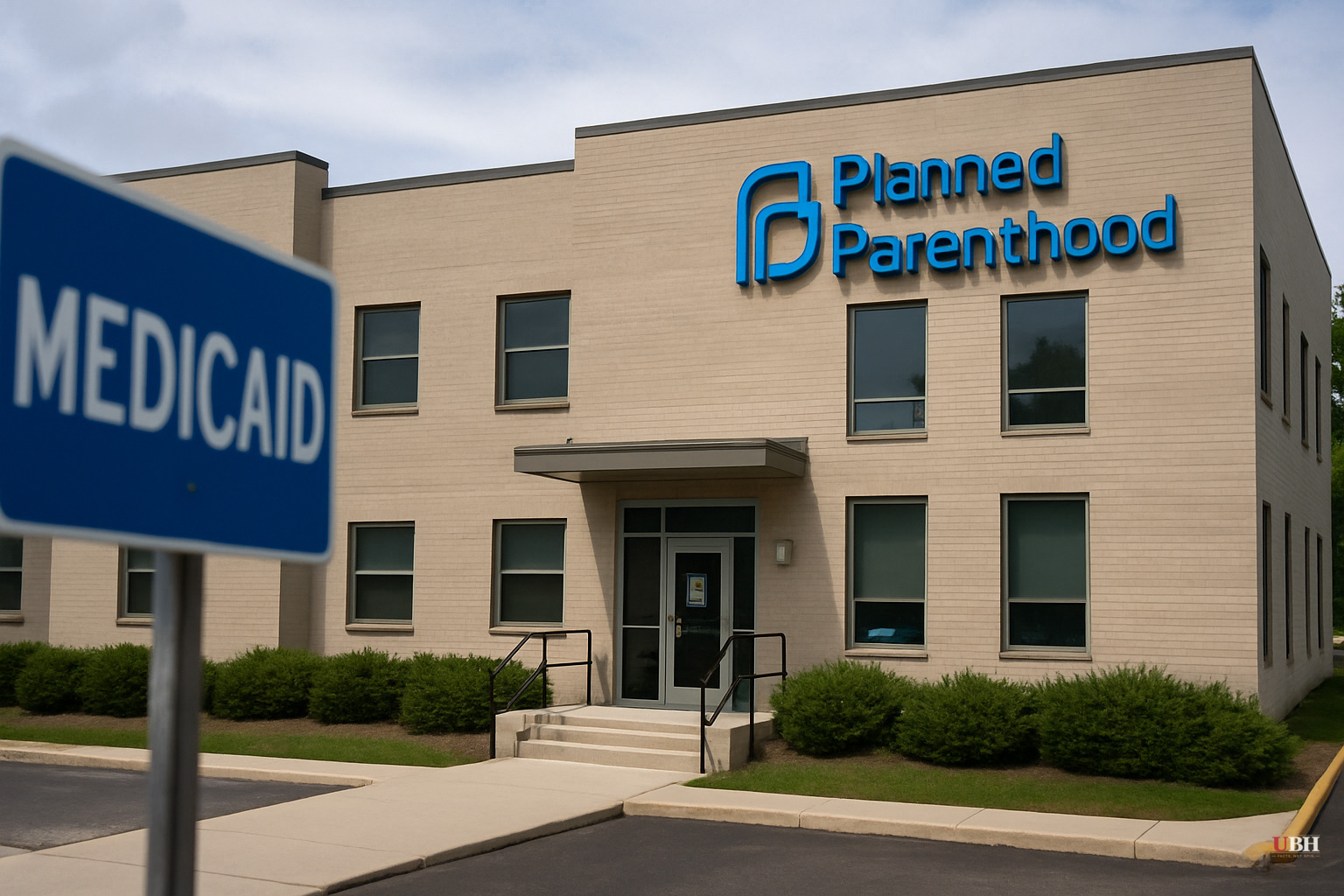
One-Year Medicaid Ban on Planned Parenthood Expires July 4. States Now Decide.
What Expired and What Didn't
Section 71113 of the 2025 Federal Budget Reconciliation law, which barred federal Medicaid dollars from going to Planned Parenthood and other reproductive health providers, expires July 4, 2026. It has been in effect for one year.
The expiration does NOT restore abortion coverage for Medicaid enrollees. The Hyde Amendment, a decades-old rider on federal spending bills, remains in place. Taxpayer dollars still cannot fund abortion except in narrow exceptions. What changes is whether Medicaid can reimburse Planned Parenthood for routine services: contraception, STI treatment, cancer screenings.
Why Republicans Couldn't Extend It
The Senate parliamentarian allowed the original ban to run one year, not the proposed ten. That forced Republicans to find another legislative vehicle to continue it, and they couldn't.
Sen. Steve Daines (R-Montana), one of the anti-abortion movement's strongest Senate allies, told NOTUS plainly: "I think at this point, it'd be unlikely." He said extending the ban would require a third reconciliation bill, which he acknowledged is "hard to pass."
The math isn't there. Sens. Mitch McConnell and Susan Collins have said a third reconciliation bill isn't happening. Republicans barely passed the second one. Vulnerable members in both chambers are eyeing midterm elections and prefer not to vote on abortion again.
Marjorie Dannenfelser, president of Susan B. Anthony Pro-Life America, sent a letter to Senate Republicans stating that "budget reconciliation remains the only viable legislative path to continuing to defund Big abortion businesses like Planned Parenthood." Speaker Mike Johnson has said he plans to start working on a third reconciliation bill, but Senate Republicans aren't expressing matching optimism.
The Damage to Planned Parenthood Is Real
Nora Walsh-DeVries, vice president of political and legislative affairs at the Planned Parenthood Action Fund, told the Missouri Independent the organization closed nearly 30 healthcare centers during the ban year. "The impact is really horrible for us and some of it is unfortunately irreversible," she said.
That's a significant number, though smaller than the organization's own pre-ban warning. Days before the law took effect, Planned Parenthood's president said "nearly 200 Planned Parenthood health centers in 24 states across the country are at risk of closure." The actual closures fell well short of that projection.
Still, Walsh-DeVries said tens of thousands of patients were denied access to services including cancer screenings during the ban year. Some affiliates tried to keep treating Medicaid enrollees using alternative funding but called it "unsustainable."
The Strongest Case for the Ban
Conservatives who supported the provision make a coherent argument: federal health programs shouldn't fund organizations that also perform abortions, regardless of whether specific procedures are directly reimbursed. The principle is that taxpayer money, even when designated for non-abortion services, frees up organizational resources that subsidize abortion provision. Republicans view the ~30 closures as a policy success, not collateral damage, and are trying to make the prohibition permanent.
That position has majority opposition in public polling, according to NOTUS, and it's politically costly in competitive districts. But the underlying logic about fungibility of funds is a legitimate policy argument, not mere culture war posturing, and it has driven this debate for decades.
Now It's a State-by-State Question
With the federal ban lifting, the legal landscape is more complicated than a simple return to the pre-2025 status quo.
The Supreme Court's decision in Medina v. Planned Parenthood South Atlantic remains in effect. That ruling held that states may exclude providers from their Medicaid programs and that Medicaid enrollees cannot sue in federal court to challenge those exclusions. This is a significant shift from longstanding interpretations of the Medicaid "free choice of provider" provision.
According to KFF analysis published June 25, 2026, roughly eleven states, including California, Colorado, Connecticut, Illinois, Massachusetts, Maine, New Jersey, New Mexico, New York, Oregon, and Washington, spent state-only dollars during the past year to keep Planned Parenthood clinics operating for their Medicaid enrollees. Those states will now qualify again for federal Medicaid matching funds, including an enhanced 90% federal match for family planning services. That frees up significant state general fund dollars that have been backfilling lost federal revenue.
About half of states neither dedicated their own funds during the ban nor previously sought to exclude Planned Parenthood. Those states face a fresh decision about whether to include the provider going forward.
KFF found that 18% of female Medicaid enrollees obtained contraceptive care from a Planned Parenthood clinic in 2023. In California, that figure was nearly 50%. In Wisconsin, roughly one third. In states that choose to exclude Planned Parenthood under Medina, those patients will need to find alternative providers, and whether equivalent capacity exists varies widely by geography.
The Open Question
The 30 clinics that closed during the ban year are not reopening automatically on July 4. Staff has dispersed, leases have ended, and administrative infrastructure has been dismantled. Walsh-DeVries was direct with the Missouri Independent: some of the damage is "irreversible." Whether the restored Medicaid reimbursements are sufficient to rebuild capacity in the states that want it, and on what timeline, is genuinely unknown.
Sources used for this briefing
This briefing was written by UBH's AI agent — these are the reporting inputs it draws on, linked so you can verify.


