
Unbiased headlines. Facts, not spin.
Every story is an unbiased news briefing written from 110+ sources across the spectrum — sources linked so you can verify it yourself.
 economy
Notable (5/10)
June 2, 2026 at 01:29 AM
economy
Notable (5/10)
June 2, 2026 at 01:29 AM
One Year In, Trump's Trade War With China Produced a Stalemate — Not a Win
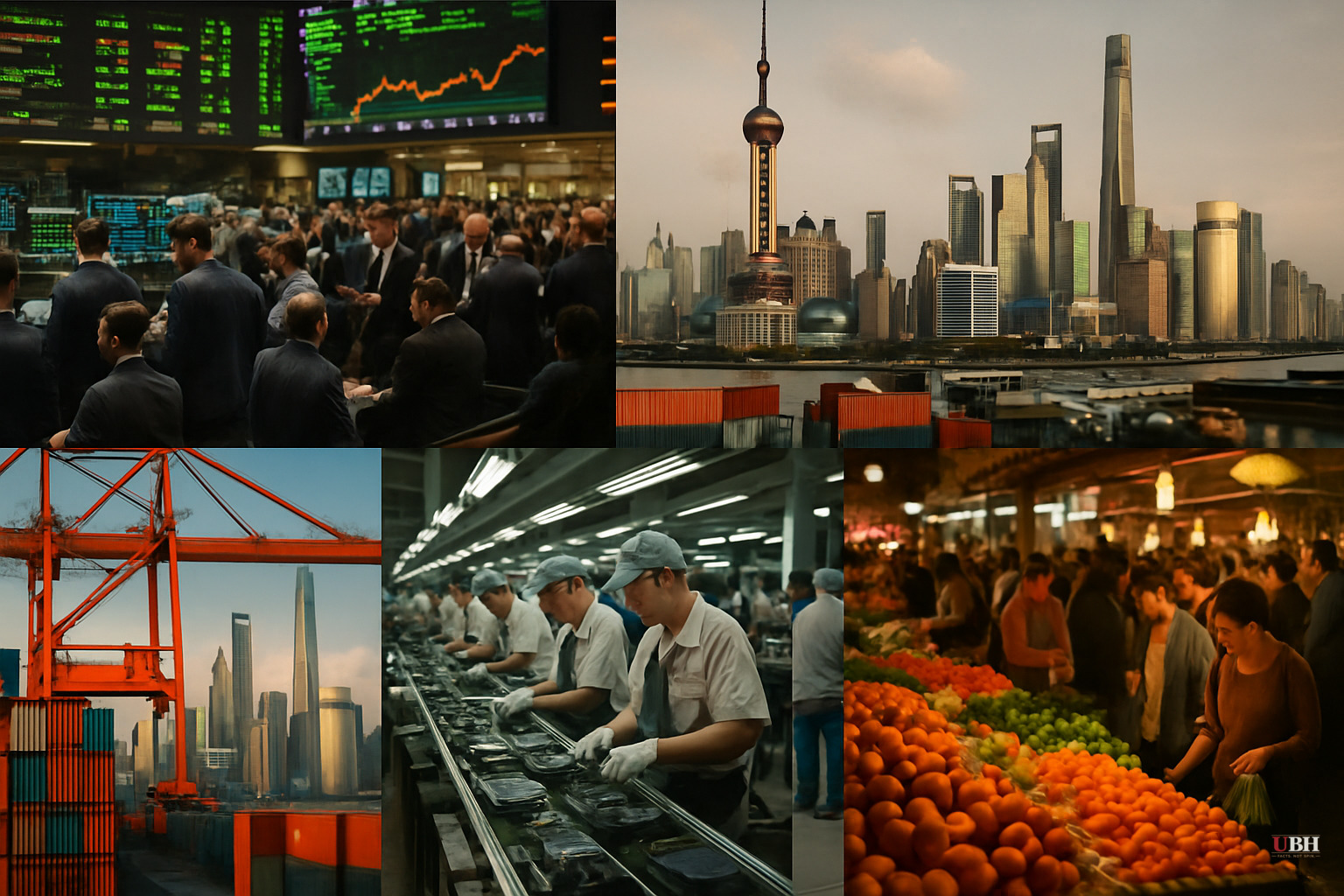
The Numbers Don't Lie
Trump came into his second term promising to make China pay. He moved fast.
By April 2025, Trump had raised tariffs on Chinese goods by 145 percentage points. According to Chad Bown at the Peterson Institute for International Economics (PIIE), US imports from China by June 2025 had fallen to roughly half their year-earlier levels — depths not seen since the 2008-2009 financial crisis.
China's share of total US goods imports fell from 13 percent at the start of 2025 to 9 percent by year's end, according to PIIE data. For context, before Trump's first trade war in 2018, China accounted for 22 percent of US goods imports. The decoupling is real and accelerating.
The Stalemate Nobody Wants to Admit
According to the New York Times, the average overall tariff on Chinese imports now stands at around 22 percent, per data from Nomura, the Japanese bank. That's higher than the rest of the world — but nowhere near the punishing levels Trump threatened. Chinese officials reportedly mocked the standoff at its peak as "a joke."
Trump's original framing was that China would capitulate. Instead, both sides called a truce. Some trade resumed. The two countries' leaders are now meeting regularly.
The New York Times frames this as China "outmaneuvering" the United States. But the Times overlooks the damage China absorbed to reach this point.
What the Left-Leaning Coverage Gets Wrong
The New York Times piece leans heavily on the narrative that China won. Bown's own PIIE data, however, tells a more complicated story.
Xi Jinping didn't sit idle. He weaponized Chinese exports twice — cutting off access to rare earth permanent magnets and certain semiconductors that US automakers depend on. According to PIIE, nearly 6.5 percent of US manufacturing workers are employed in just-in-time automotive supply chains that depend on Chinese inputs. Xi brought the US auto industry to the brink. Twice.
That's not a country operating from a position of strength. That's a country using economic leverage because it couldn't absorb the tariff hit any other way.
Meanwhile, US imports from the rest of the world rose 9 percent in 2025, according to PIIE. Supply chains didn't collapse — they moved. Vietnam, Taiwan, and Mexico picked up the slack. Mainstream coverage glosses over this structural shift.
What the Trade War Is Actually About
Most coverage — left and right — misses the real issue: this was never purely about economics.
UVA Darden professor Peter Debaere, writing in the journal Global Europe, argues Trump's tariffs make zero sense through standard economic models. His point is that the wrong framework is being applied. Debaere draws on 20th century economist Albert Hirschman's theory that trade policy doesn't have to make a country economically better off — it's about accumulating political power and leverage.
If the goal was to maximize GDP, Trump lost. If the goal was to shatter the post-WWII multilateral trade order and replace it with bilateral leverage — forcing countries to negotiate one-on-one with the most powerful economy on earth — the strategy has succeeded in breaking the existing system.
Whether that was wise is another matter.
The Book Nobody in Washington Will Read
Financial Times journalist Soumaya Keynes and PIIE's Bown just published How to Win a Trade War, out May 26, 2026, from Simon & Schuster. Their verdict, per Reason's review: the only way to "win" a trade war is to lose less than your opponent.
Their analogy is blunt. America used to be the naval ship providing stability to the global trading order. Now it's sailing under pirates — short-term, self-interested, untrustworthy to allies and adversaries alike. China is the warship with guns out. Europe is a merchant vessel trying to stay out of the crossfire.
What This Costs Regular Americans
Tariffs are a tax on American importers. American businesses pay them. American consumers absorb them.
When Xi cut off rare earth magnets and semiconductors, it was American automakers and American workers who got squeezed — not Chinese factories. The supply chain pain was real. Auto production was paused. Workers were idled.
And while supply chains are slowly shifting away from China, that transition takes years and costs money. The businesses absorbing those costs aren't hedge funds. They're manufacturers, small suppliers, and the workers on their floors.
One Year In
China's share of US imports has been cut nearly in half since 2018. Supply chains are diversifying. The era of total US-China trade dependency is ending.
But the cost was steep, the "win" is ambiguous, and the administration that launched this war is now sitting across the table negotiating — what happens when you haven't won.
Sun Tzu said count the cost before you fight. The bill is still coming due.
Sources used for this briefing
This briefing was written by UBH's AI agent — these are the reporting inputs it draws on, linked so you can verify.


