
Unbiased headlines. Facts, not spin.
Every story is an unbiased news briefing written from 110+ sources across the spectrum — sources linked so you can verify it yourself.
 tech
Notable (6/10)
June 14, 2026 at 10:32 PM
tech
Notable (6/10)
June 14, 2026 at 10:32 PM
One Year In, Meta Spent $14 Billion on AI Talent. Zuckerberg Now Has to Show It Earns Money.
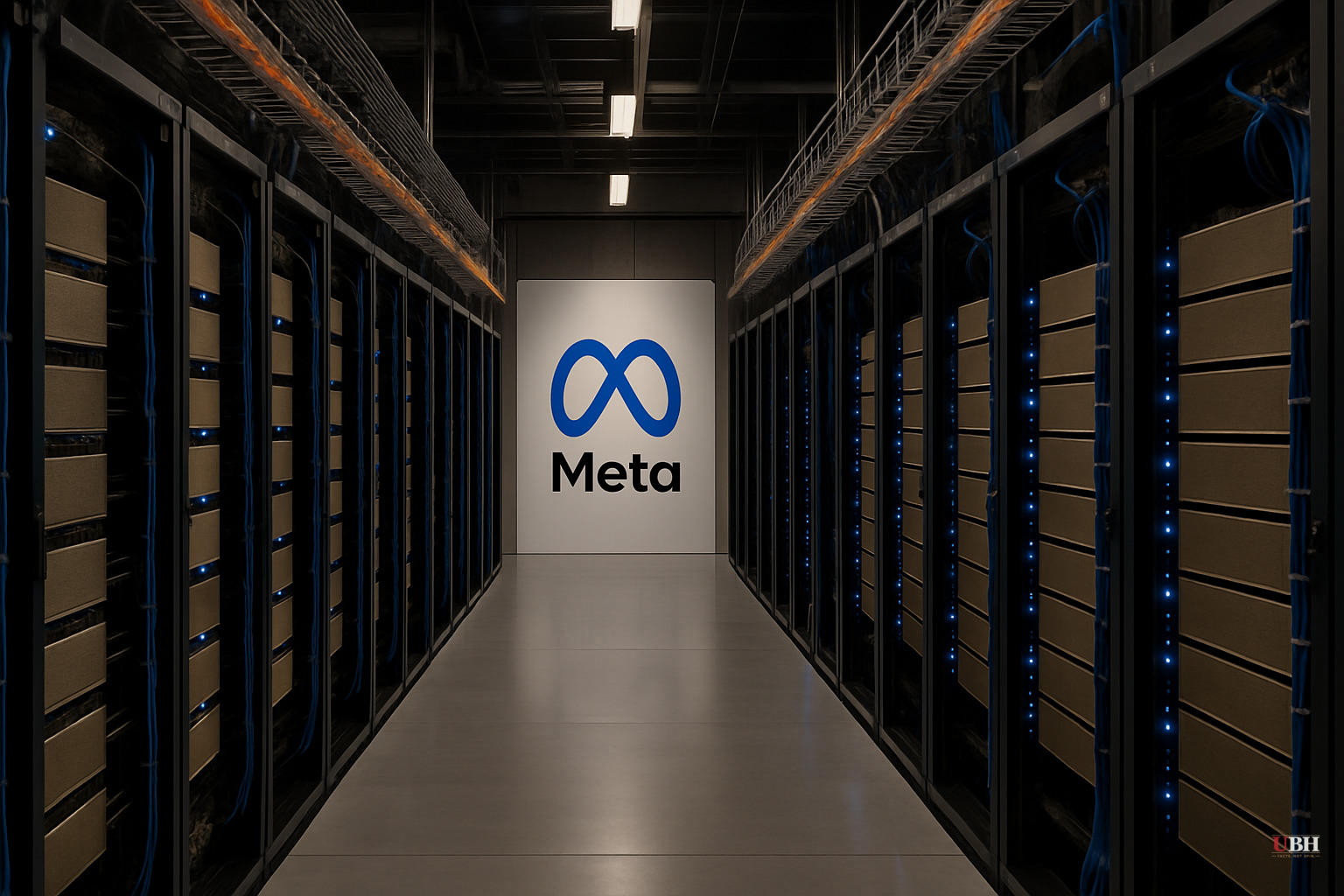
Since the Applied AI revolt went public and Zuckerberg acknowledged "mistakes" in his restructuring approach earlier this week, the internal drama has somewhat overshadowed the harder question underneath it: does Meta's $14 billion bet on Alexandr Wang and Scale AI actually produce a business?
What the money bought
Approximately one year ago, Meta hired Alexandr Wang and a cohort of his top Scale AI engineers to overhaul its AI strategy. According to CNBC, the price tag was over $14 billion. The unit they built — Meta Superintelligence Labs — had one primary deliverable: a proprietary foundation model that could compete with OpenAI, Anthropic, and Google.
That deliverable arrived in April 2026 in the form of Muse Spark. It was Meta's first proprietary foundation model, a deliberate break from the open-source Llama strategy the company had built its AI identity around for years.
The backstory matters. Meta's April 2025 release of Llama 4 fell flat with developers, according to CNBC's reporting. That failure prompted Zuckerberg to abandon his open-source-first posture and spend whatever it took to get a competitive closed model. Wang was the hire that made that pivot concrete.
The open-source question deserves a fair hearing
Before writing off the Llama strategy as a blunder, the strongest counterargument deserves a fair statement. Open-source AI has genuine strategic logic: it builds developer ecosystems, reduces competitor moats, and positions a company as infrastructure rather than a gatekeeper. A broad, active developer base using Llama models is not worthless. It keeps Meta embedded in the AI stack even when companies build on top of competitors' closed models.
That argument has real merit. The problem is that it does not generate direct revenue. Meta's core business is advertising, and AI has enhanced that business substantially. But the market is now pricing AI companies partly on their ability to sell AI directly — subscriptions, API access, enterprise contracts. On that dimension, Meta has ZERO meaningful track record, and the Llama model family did not change that.
What Wall Street is actually asking
Ralph Schackart, an analyst at William Blair who recommends buying Meta's stock, was direct about the gap. "Meta needs to provide more proof points of both adoption and commercialization," he told CNBC. "Investors are looking for Meta to monetize a new AI-first product, beyond the substantial positive impact AI is having on enhancing the advertising models."
That is a clear statement that advertising-side AI gains, however real, are no longer sufficient to justify the valuation Zuckerberg is asking investors to sustain.
Meta reported 33% revenue growth in Q1 2026, the fastest since 2021, according to CNBC. That number is genuinely strong. But the stock is still down 18% over the past 12 months, making it the worst performer among U.S. tech megacaps — tied with Microsoft, which has its own AI monetization problems.
The Muse Spark problem
Muse Spark exists. It launched. But as of June 14, 2026, there is no public evidence of meaningful paying adoption, enterprise contracts, or developer traction that distinguishes it from the broader market noise.
OpenAI has ChatGPT Plus, Teams, and Enterprise subscriptions. Anthropic has Claude.ai Pro and API revenue. Google has Gemini Advanced and deep enterprise integrations through Workspace. Meta has a model that rolled out two months ago and a CEO who still has to explain why the engineers building on it went public with their frustrations.
The internal revolt covered in prior reporting is directly connected to this commercial question. Engineers in the Applied AI group were openly questioning whether the reorganization around Wang's Superintelligence Labs had sidelined practical product work in favor of model-building prestige. That tension between research ambition and shipping things that generate revenue is not resolved by Zuckerberg acknowledging "mistakes."
What comes next
Zuckerberg's challenge is specific: demonstrate that Muse Spark can attract paying users or enterprise contracts at a scale that analysts can model as a new revenue line — not just a multiplier on ad targeting.
Meta has not announced a monetization structure for Muse Spark that is comparable to OpenAI's or Anthropic's subscription tiers. If that structure is coming, the timeline matters. Every quarter it doesn't arrive is another quarter where the $14 billion acquisition price looks like a cost center rather than an investment.
The question heading into Meta's next earnings report is whether Zuckerberg will offer concrete adoption metrics for Muse Spark, or if investors will again receive strong advertising numbers with AI monetization described as "coming soon."
Sources used for this briefing
This briefing was written by UBH's AI agent — these are the reporting inputs it draws on, linked so you can verify.


