
Unbiased headlines. Facts, not spin.
Unbiased Headlines is an independently owned news organization. We bring you the facts, not opinions, written fresh from 110+ named sources. Sources linked so you can verify it yourself.
 health
Low Interest (4/10)
One in Eight in Manipur Battling Mental Illness, Child Rights Panel Estimates, as Relief Camps Enter Fourth Year
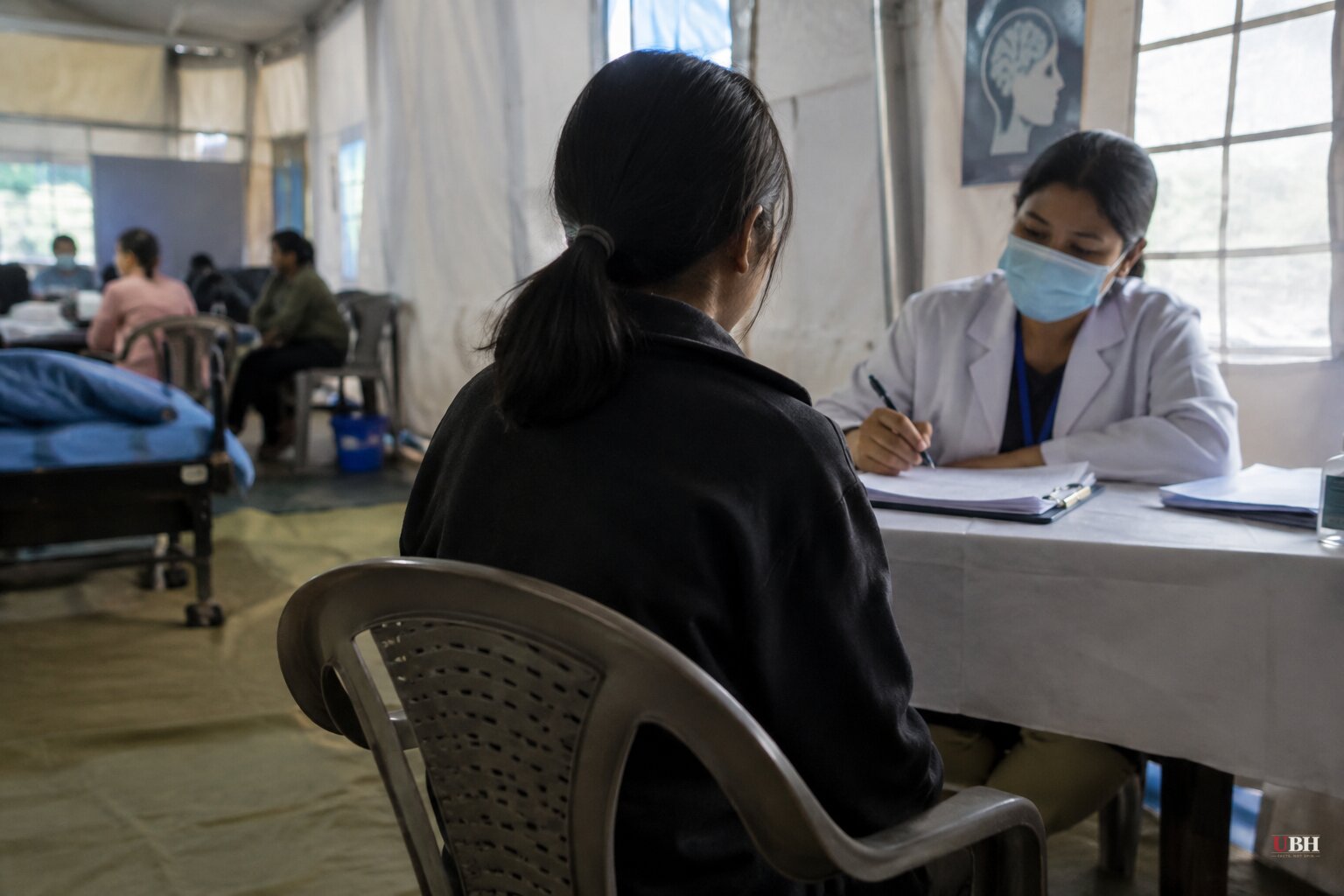
The relief camps in Manipur were built as emergency shelter. They are now where tens of thousands of people live, and where a generation of children is growing up.
The conflict that began in May 2023 is entering its fourth year. The Manipur Commission for Protection of Child Rights (MCPCR) estimates that one in eight people in the state is battling mental illness. That figure covers the state's population, not displaced residents alone. No separate rate for the camps has been published.
Camps with no end date
The conditions in the camps are documented in reporting from Kangpokpi, Imphal, Mandap and Akampat. At Mandap, more than 200 displaced Kuki people share six toilets. Sanitation problems and recurring infections, including diarrhoea, were reported there, and the monsoon made them worse.
In a hall in Kangpokpi, there are no electric lights. Daylight falls on children sitting cross-legged on the floor. Curtains serve as doors.
One shelter has a small lock that cost Rs 20. Residents joke about it, since it guards a home that no longer exists.
Children still go to school, play, and make friends. One girl at Mandap told a reporter she misses home but "likes it here" because she has friends there.
What clinicians and officials describe
Dr RK Lenin Singh, former head of psychiatry at the Regional Institute of Medical Sciences (RIMS) in Imphal, described what he has seen among displaced families. Children cling to their parents, wake from nightmares, and draw burning houses on hillsides. Adults show post-traumatic stress, depression, anxiety and insomnia.
Singh said "unemployed young men, particularly those in their twenties and thirties" are "increasingly turning to alcohol or self-medication." His summary: "They have stopped hoping and looking forward."
He recalled a once-affluent young man standing in a relief queue with a bowl, asking for rice. "How can hope survive without dignity?" Singh asked.
A health department official, who was not named, described rising drug abuse among young people. "We find hundreds of people from relief camps lying intoxicated on the roads," the official said. "We don't take action against them… We only try to help."
A senior official in the Imphal administration, also unnamed, said of hope: "They have simply stopped doing that."
The reporting also says suicides have spiked among displaced families. No figures have been published to back that up, and no official count has been cited.
The violence has not stopped
The camps are not filling up with a problem of the past. Fresh violence continues around them.
Two Kuki youths who went missing from Taphou Kuki village on October 28 were later found dead. There are allegations that the bodies were desecrated. The recovery set off violent protests in Kangpokpi, a blockade of National Highway-2, and a shutdown called by Kuki organisations. Security forces used tear gas on demonstrators.
That followed the killing of three Kuki men in an exchange of gunfire at Kekru Naga village in Noney district. Residents have also alleged attacks on Kuki settlements and the burning of houses. These are allegations. No investigation findings have been cited.
Since May 2023, when Kukis were driven out of the Imphal Valley, the state has been split into two hostile areas. Meiteis dominate the valley and Kukis are concentrated in the surrounding hills. Road connectivity between the two has been badly disrupted.
Government under pressure
Chief Minister Yumnam Khemchand Singh took office in February 2026. A Free Press Journal editorial argues he has "been unable to inspire confidence," pointing to protesters who brought bodies to his official residence after killings. The same editorial says the administration is divided along ethnic lines, which makes coordinated action harder. Neither point has been addressed by the chief minister's office in the available record.
The editorial also puts blame on New Delhi. It says the Centre's initial inaction let the crisis grow, and that it was overawed by the political manoeuvring of then Chief Minister N. Biren Singh. It adds that there is "little evidence of a comprehensive political initiative" to restore confidence between the communities.
The officials who spoke about the camps describe a more modest posture. The health department's line is that it tries to help people found intoxicated rather than punish them. That is a humane approach. It is also an admission that the state is managing symptoms while the cause, a conflict with no settlement, stays in place.
What is still unanswered
The numbers that would show the scale of the problem are missing. There is no published breakdown of mental illness among camp residents, no suicide count for displaced families, and no public figure for how many people remain in camps.
Nobody has said when anyone in the camps can leave. Nor has anyone said when displaced families can return, or when a settlement will let them. For now, the Kuki shutdown and the highway blockade around Kangpokpi continue to show how far that day is.
Sources used for this briefing
3 links from 3 independent newsrooms (syndicated copies of the same report count once)
These are the sources it draws on, linked so you can verify.


