
Unbiased headlines. Facts, not spin.
Unbiased Headlines is an independently owned news organization. We bring you the facts, not opinions, written fresh from 110+ named sources. Sources linked so you can verify it yourself.
 health
Notable (6/10)
Lilly's Foundayo Pill Cut Sleep Apnea Events by 44% in Phase 3 Trial, FDA Filing Planned by Year-End
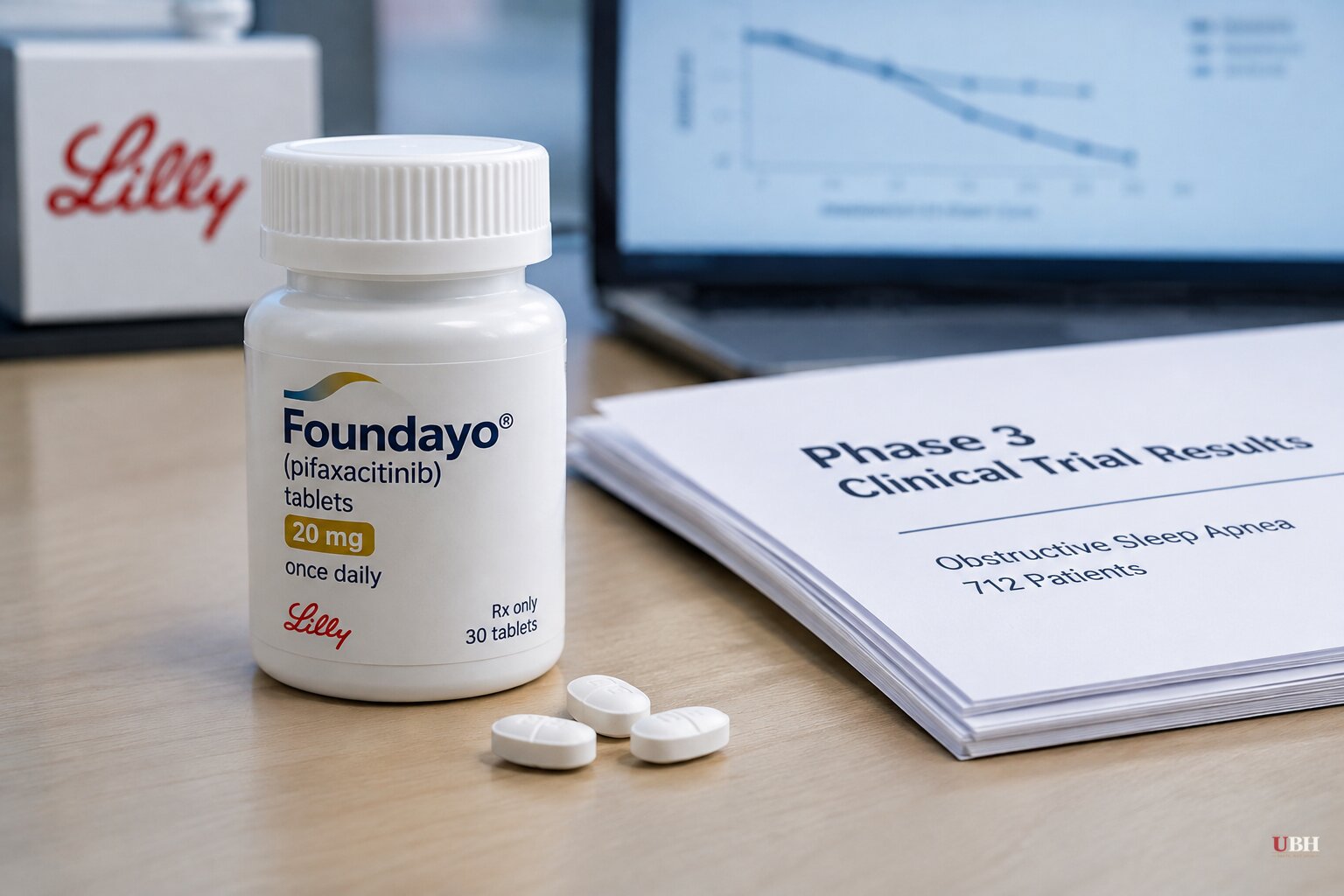
Eli Lilly announced today, Nov. 9, that its oral obesity drug Foundayo (orforglipron) met its main goal in a Phase 3 trial in adults with obstructive sleep apnea and obesity or overweight. The company plans to submit the results to the FDA by the end of 2026.
The data were presented at the American Heart Association Scientific Sessions 2026 and published in JAMA the same day.
What the trial showed
The ATTAIN-OSA program ran two studies and enrolled 712 patients in total. One study had 363 people who could not or would not use positive airway pressure (PAP) therapy. The other had 349 who were already on PAP for at least three months and kept using it.
Patients started on a low dose and moved up at four-week intervals to different maximum doses. The yardstick was the apnea-hypopnea index (AHI), which counts breathing interruptions per hour of sleep.
In the group not using PAP, the average baseline was 50.7 events per hour. At 52 weeks, Foundayo cut that by 21.1 events per hour, or 43.8%. The placebo group improved by much less.
In that group, 47.2% of participants had their AHI fall by half or more. Lilly said 31.5% reached remission or mild disease.
Among patients also on PAP, Foundayo reduced events by 18.3 per hour, or 27.5%. Lilly also reported that the drug cut sleep apnea-specific hypoxic burden by up to 55.9%, meaning oxygen levels during sleep improved.
"Foundayo is already making a difference for people living with obesity, and with plans to submit these results to the FDA by the end of the year, we could have the opportunity to help people living with OSA," said Dr. Thomas Seck, senior vice president of product development at Lilly Cardiometabolic Health.
Dr. Vaishnavi Kundel, an associate professor at the Icahn School of Medicine at Mount Sinai, said the trial showed fewer breathing interruptions and oxygen drops, along with better blood pressure and inflammation. "In addition to improving their sleep, what I care about for my patients is improving the cardiovascular risk factors that have the potential to impact long-term health," she said.
Why the condition matters
Obstructive sleep apnea occurs when the airway repeatedly collapses during sleep. That causes oxygen drops and blood pressure spikes linked to hypertension, heart failure, atrial fibrillation, coronary artery disease and stroke.
Lilly estimates 936 million adults worldwide have it, and most have never been diagnosed. The National Council on Aging puts the U.S. figure at about 80 million people ages 20 and over.
PAP machines remain the standard treatment. They also require a bedside device and a mask, and many patients find that hard to sustain.
Where Foundayo stands with regulators
Foundayo launched in the U.S. in April for obesity. In September, Lilly filed for U.S. review of the pill in Type 2 diabetes. An OSA filing would be the second label expansion in quick succession.
Lilly's injectable Zepbound (tirzepatide) became the first drug approved in the U.S. for OSA in December 2024. A pill would give patients a non-injectable option, though only if the FDA signs off.
The competitive field is also filling in. On Oct. 28, Mayo Clinic cardiologist Dr. Virend Somers discussed how another weight-loss drug, retatrutide, significantly reduced OSA severity and improved cardiovascular risk factors in patients with and without Type 2 diabetes.
What is still open
The results so far come from Lilly's announcement, with the full paper now in JAMA. No FDA application for the OSA indication has been filed yet, and the agency has made no decision. Lilly has not announced a price or a timeline for review.
The next concrete step is the submission Lilly says it will make before Dec. 31. The FDA's response to that filing, and to the Type 2 diabetes application pending since September, will determine how soon the pill can be marketed for either condition.
Sources used for this briefing
6 links from 6 independent newsrooms (syndicated copies of the same report count once)
These are the sources it draws on, linked so you can verify.


