
Unbiased headlines. Facts, not spin.
Unbiased Headlines is an independently owned news organization. We bring you the facts, not opinions, written fresh from 110+ named sources. Sources linked so you can verify it yourself.
 health
Major Story (8/10)
FDA Orders Eye-Risk Warning on All GLP-1 Drugs After Trial Data Shows 6.4 vs 3.8 Cases per 100,000 Person-Years
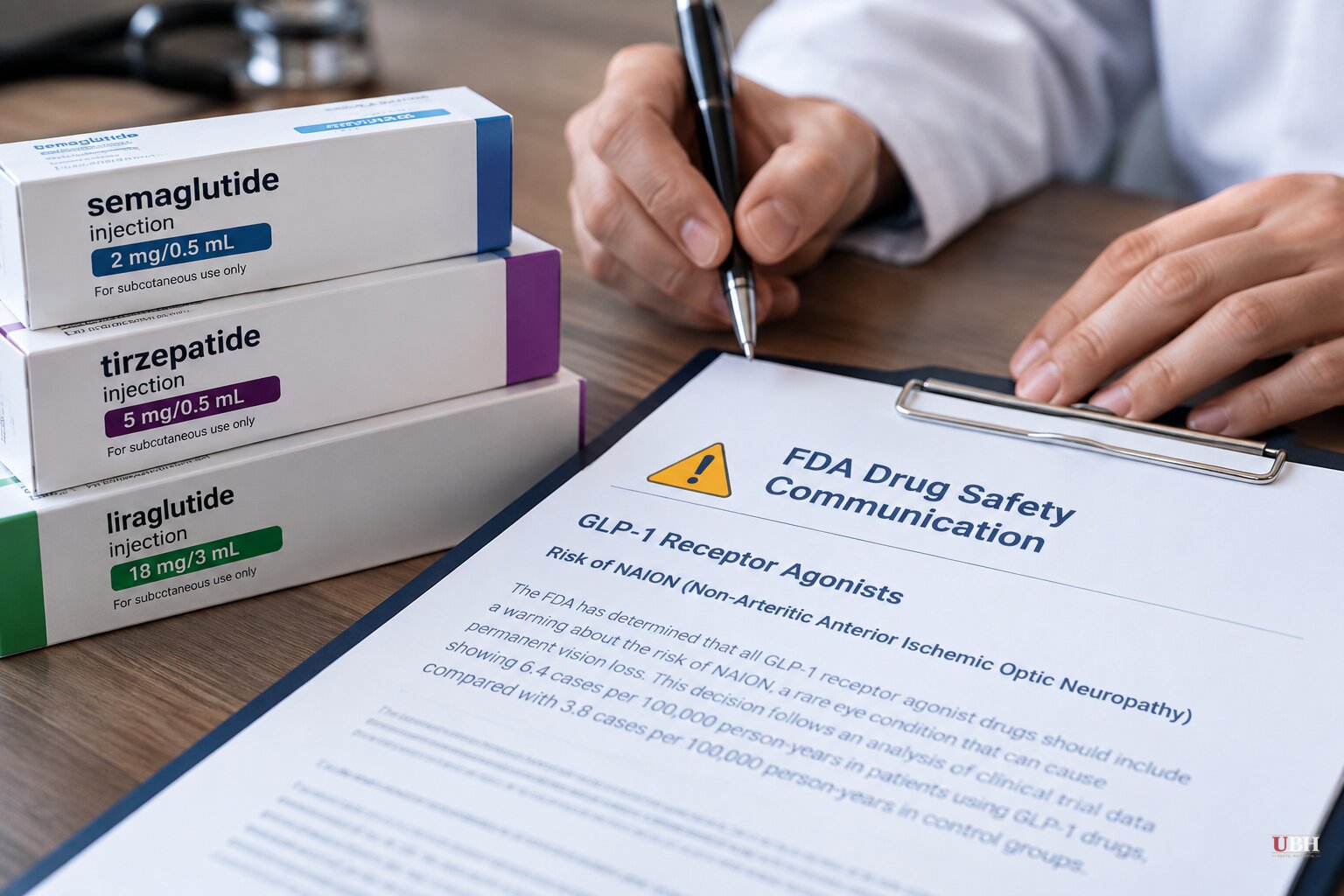
The U.S. Food and Drug Administration said today, Monday, Nov. 9, that it is requiring makers of all GLP-1 receptor agonist drugs to add a warning about non-arteritic anterior ischemic optic neuropathy, or NAION, to the Warnings and Precautions section of their labels.
The order covers the whole class: Novo Nordisk's Ozempic and Wegovy, Eli Lilly's Mounjaro and Zepbound, and the rest. Tirzepatide, which also hits the GIP receptor, is included.
What the FDA found
NAION is caused by reduced blood flow to the front of the optic nerve. It produces sudden, painless vision loss in one eye, sometimes noticed on waking, and the loss can be permanent. The FDA says the underlying cause is not completely understood.
The agency analyzed 126 randomized controlled trials covering more than 134,000 patients. It found 6.4 NAION cases per 100,000 person-years among patients on GLP-1 drugs. Patients on placebo or a different glucose-lowering drug had 3.8 cases per 100,000 person-years. The condition remains rare.
NAION cases were reported for every currently marketed GLP-1 product. The FDA also reviewed animal data, case reports, observational studies and its own retrospective work. The agency acknowledged limitations in the evidence but concluded that a "potential increased risk" justified a class-wide warning.
What patients are told to watch for
The FDA lists these symptoms: sudden vision loss in one eye, blurred or missing portions of vision such as blind spots or tunnel vision, distorted colors, and reduced central sharpness. Patients with any of them should contact a health care professional right away.
Patients who have already had a NAION event should talk with their doctor about whether to continue or stop the drug. The FDA also notes that NAION in one eye raises the odds of it occurring in the other.
The agency lists smoking, diabetes, high blood pressure, sleep apnea, anemia and kidney disease as possible risk factors. Several of those overlap with conditions common in patients who get these drugs.
Europe moved first
The European Medicines Agency's safety committee said last year that NAION may affect up to 1 in 10,000 people taking semaglutide for at least a year. It was the first time a regulator had confirmed the side effect.
The Danish Patient Compensation also granted compensation to four patients who lost vision after using Novo's GLP-1 drugs.
A large study published in 2025 tracked nearly 175,000 diabetic patients on semaglutide and an equal number on non-GLP-1 medicines. It found NAION risk more than doubled after two years on a GLP-1 drug.
The evidence is still argued over
Not everyone has agreed a warning was warranted. The American Academy of Ophthalmology said earlier this year that available evidence was insufficient to support a broad warning and that a direct cause-and-effect relationship had not been established. Studies have produced conflicting results, with some finding an association and others finding none.
Lilly has said patient safety is its highest priority. It says it monitors and reports safety information to the FDA and continues to review data on eye-related conditions. Novo Nordisk has described the personal injury claims as without merit and says it intends to defend them. Neither company had immediately responded to requests for comment on today's order.
Citi analyst Geoff Meacham said the FDA action "may temporarily increase patient and investor concern," but argued the rarity of NAION and the drugs' weight, glycemic, cardiovascular, renal and sleep apnea benefits "should preserve a favorable benefit-risk profile and limit changes to prescribing."
The legal backdrop
A growing number of patients diagnosed with NAION are suing the drug makers. They allege the companies failed to adequately warn about permanent vision damage. A central complaint is that NAION did not appear on U.S. labels even though Novo had updated European labeling to include a possible connection between semaglutide and NAION, with a stated frequency of up to 1 in 10,000 patients.
That gap is now being closed by regulatory order. The lawsuits are allegations, and the claims themselves do not establish that the drugs caused any plaintiff's vision loss.
Sources used for this briefing
8 links from 8 independent newsrooms (syndicated copies of the same report count once)
These are the sources it draws on, linked so you can verify.


