
Unbiased headlines. Facts, not spin.
Unbiased Headlines is an independently owned news organization. We bring you the facts, not opinions, written fresh from 110+ named sources. Sources linked so you can verify it yourself.
 health
Major Story (7/10)
Event date: October 21, 2026 ·
Cychlorphine, an Opioid About 10 Times Stronger Than Fentanyl in Lab Tests, Linked to Deaths in Multiple States
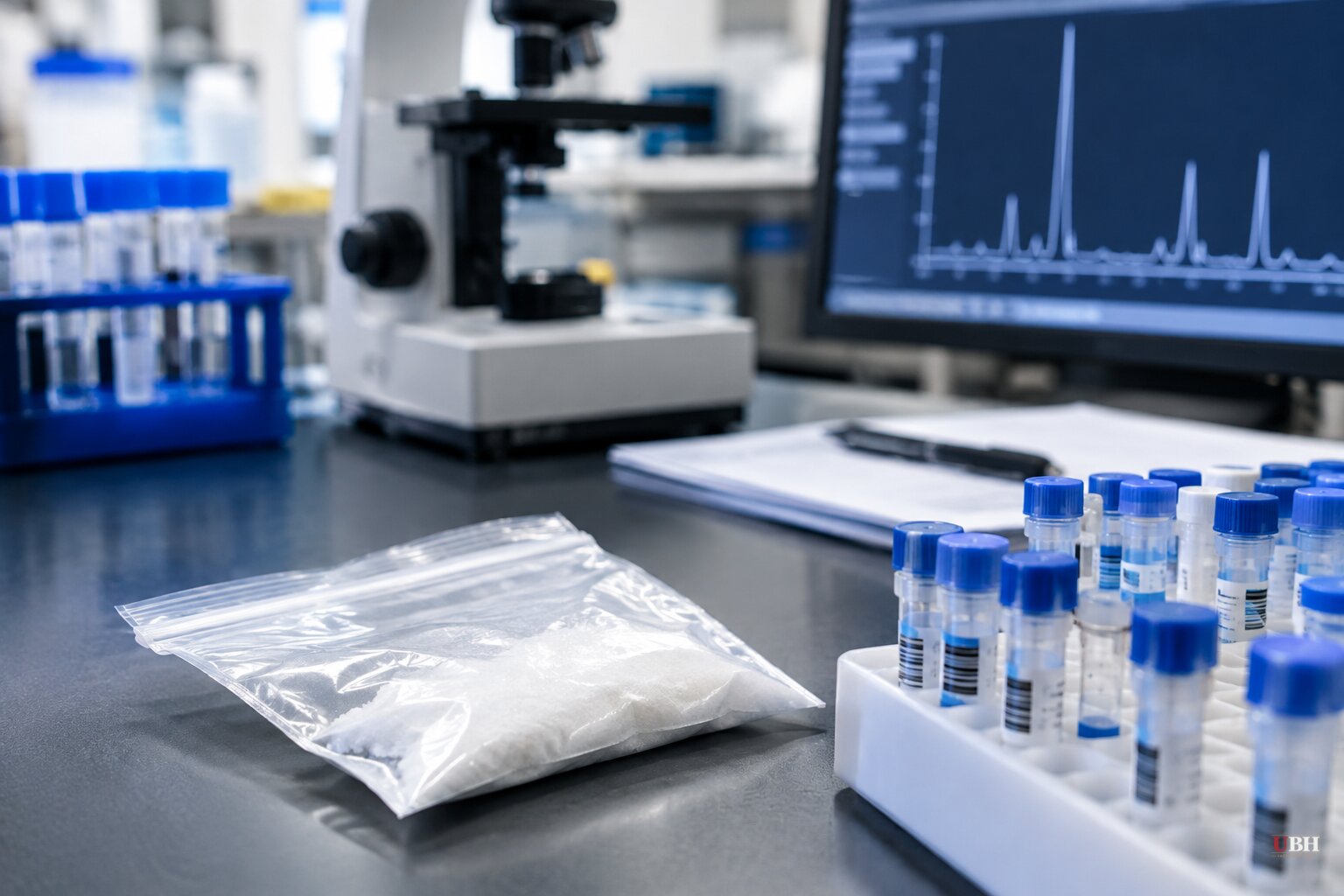
A synthetic opioid that most Americans have never heard of is turning up in overdose deaths across the country.
It is called cychlorphine (sy-KLOR-feen). Lab tests show it is about 10 times more potent than fentanyl, according to Alex Krotulski, director of toxicology and chemistry at the Center for Forensic Science Research and Education.
What the death counts show
Tennessee has taken the worst of it so far. The state health department announced in March that more than 30 fatal overdoses had been associated with cychlorphine since October 2025.
An April 2026 notice from the White House Office of National Drug Control Policy cited at least 41 Tennessee deaths between July 2025 and February 2026, and at least 55 deaths nationally.
The number keeps climbing. Officials in Knoxville said cychlorphine was detected in about 50 suspected overdose deaths from July 2025 to early June.
Krotulski said his center's lab started to detect cychlorphine in late 2025, with prevalence increasing in 2026. In about seven months, the lab linked more than 140 deaths to cychlorphine in the United States and Canada, he said.
Fatal overdoses have also been reported in Illinois, California and Oklahoma, according to public health and law enforcement records. A 16-year-old died in San Francisco in April after a cychlorphine-linked overdose.
The drug office says it is currently most prevalent in Ohio, Texas and Tennessee. Officials in Louisiana and Los Angeles County have issued public alerts.
How fast it spread
The drug office counted one report of cychlorphine in the U.S. drug supply in 2024. In 2025 there were 16 reports across 10 states.
People who track illicit drugs first identified it in the U.S. supply in 2024. Reddit users were discussing it online that same year.
The compound is not new chemistry. Researchers developing painkillers in the 1960s created the "orphine" class of opioids, then shelved them as too strong and too dangerous. The FDA never approved cychlorphine for medical use.
Its reappearance has followed China's ban on another class of synthetic opioids, the nitazenes. Cychlorphine has been increasingly linked to overdoses since that ban.
What users are taking
The Los Angeles County Department of Public Health said cychlorphine is being mixed into the illicit supply without buyers knowing. It has turned up in powders, rocks or crystals, liquids, and counterfeit pills made to look like prescription medications.
"Cychlorphine is particularly dangerous due to its strength, where a very small amount can cause someone to stop breathing," the county health department said in its advisory.
The Drug Enforcement Administration says the drug activates the same receptors as fentanyl. It can cause profound sedation, slowed or stopped breathing, or death.
Nicholas Kardaras, CEO and chief clinical officer of the New York Center for Living and a clinical professor at Stony Brook Medicine's School of Social Welfare, called it "the new fentanyl on steroids." He told Fox News Digital that the problem is compounded by its presence in other designer drugs and counterfeit pills.
"It's a constant battle of keeping up with the latest iterations of new drugs," Kardaras said.
The limits of what is known
The potency figure comes with a major caveat. Krotulski said the 10-times number is "the only data that we have right now." Fentanyl has been studied in humans. Cychlorphine has not been studied in humans or animals.
"So we're really finding out in real time what its effects on humans are," Krotulski said in July.
Potency also does not settle how deadly a given pill or powder is. A person's response depends on the dose, not just the strength of the compound.
Kardaras's math runs higher than the lab data alone. He described fentanyl as about 50 times more potent than morphine or heroin and said cychlorphine is therefore "theoretically" about 500 times more potent. The DEA describes fentanyl as about 100 times more potent than morphine, so ratios depend on which baseline is used. Either way, they are estimates stacked on a single lab comparison.
There is also a disagreement over scale. Kardaras says the drug is among the most potent synthetic opioids now appearing in the illicit supply. Jason R. Williams, a research scientist at the University of Washington's Addictions, Drug & Alcohol Institute, says that nationally, orphines do not currently appear to be widespread. He added that "prevalence and trends are hard to discern."
His reason is practical. Hospitals, medical examiners' toxicology screens and even crime labs sometimes miss a given drug until officials decide to track it. A death can be counted as a generic opioid overdose while cychlorphine goes unnoticed. Most samples that test positive for orphines in the U.S. also test positive for other drugs, Williams said, which further complicates determining what caused a death.
Standard fentanyl test strips and routine hospital opioid urine screens do not detect cychlorphine, so it can easily be missed.
That cuts both ways. The reported deaths could understate the problem, or they could reflect a handful of concentrated local clusters. "It's really unknown truly how many deaths there have been," Krotulski said, though he called the number reported in such a short period significant for a newly emerging drug.
What remains open
The drug office has reported 55 deaths linked to cychlorphine in 2025 and through April 2026, and 16 reports of the drug in 2025. The Knoxville figure of about 50 suspected deaths runs through early June. Not all labs test for the compound, which makes it hard to detect trends, and whether testing becomes routine will determine how many deaths can be attributed to it.
Sources used for this briefing
2 links from 2 independent newsrooms (syndicated copies of the same report count once)
These are the sources it draws on, linked so you can verify.


