
Unbiased headlines. Facts, not spin.
Unbiased Headlines is an independently owned news organization. We bring you the facts, not opinions, written fresh from 110+ named sources. Sources linked so you can verify it yourself.
 health
Major Story (7/10)
Event date: November 4, 2026 ·
ACA Benchmark Premiums Rise 13% on Average for 2027 as 11 States Add Their Own Subsidies
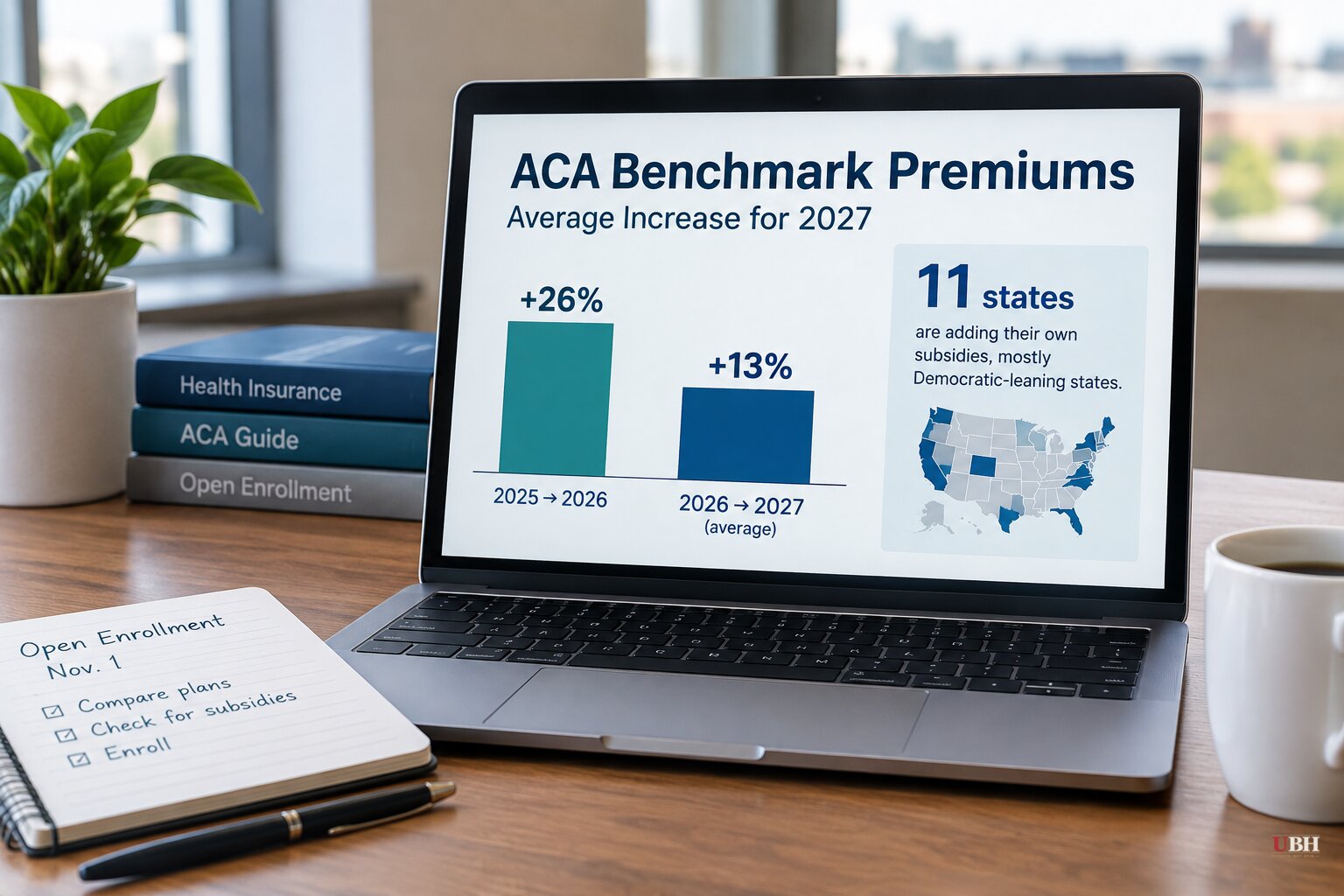
Since the enhanced federal premium tax credits expired at the end of 2025, the Affordable Care Act marketplace has become a patchwork. Open enrollment for 2027 started Nov. 1 in most states, and the prices are going up again.
Premiums climb for a second straight year
KFF's analysis puts the average increase in finalized benchmark silver premiums for 2027 at 13%. Insurers had proposed a median increase of 15%. Those premiums rose 26% from 2025 to 2026, making this the second consecutive year of double-digit increases.
The split by platform is large. In states that use the HealthCare.gov platform, benchmark silver premiums are increasing 11% for 2027. In states that run their own enrollment platforms, the increase is 16%. For 2026, the pattern ran the other way: HealthCare.gov states saw a 30% increase, while state-based marketplaces saw a roughly 17% increase in benchmark premiums.
Some states are far above average. Healthinsurance.org's rate tracker, as summarized by Quartz, shows full-price increases of 21.7% to 27.9% in ten states, with Arizona highest at 27.9% and Alabama second at 25%. Vermont's finalized increase is 3%, Iowa's 5.7%, New York's 6% and Utah's 6.7%. Kansas, Alaska and Mississippi figures had not been marked finalized as of Oct. 19 and remained insurer proposals.
Insurers point to a higher-than-usual increase in the underlying cost of care. KFF's analysis of insurer filings found that risk pool changes added about four percentage points on average to premiums in 2026, and insurers expect a similar, additional effect in 2027.
Who gets hit hardest
Most enrollees still get a subsidy that cushions the increase, KFF says. People with incomes above 400% of the federal poverty level no longer qualify for premium tax credits and must pay the full cost of coverage.
KFF also warns that higher costs may lead additional healthier enrollees to drop coverage, further worsening the risk pool and putting additional upward pressure on premiums.
The 2026 numbers show the stakes. According to KFF, average ACA premiums paid by enrollees rose 58% last year, to $178 per month from $113. ACA enrollment fell to 19.2 million as of February 2026, down from 22.1 million in February 2025, according to figures published by the U.S. Department of Health and Human Services.
Eleven states add their own money
At least 11 states are funding extra premium help for 2027: California, Colorado, Connecticut, Maryland, Massachusetts, New Mexico, New Jersey, Rhode Island, Vermont, Virginia and Washington. The state money comes on top of the federal premium tax credits that remain in place.
Most are continuing policies from 2026. Rhode Island and Virginia are debuting their programs for 2027, and California has expanded eligibility. All of them operate state-based marketplaces rather than HealthCare.gov, and health policy experts describe them as largely Democratic-leaning.
"It can certainly be significant if you qualify for the help your state provides," said Louise Norris, a health policy analyst at healthinsurance.org.
New Mexico went furthest. It is the only state fully replacing the enhanced federal premium subsidies in 2027, extending a 2026 policy. Its Healthcare Affordability Fund, financed by an assessment on health insurance carriers, covers all enrollees, including those above 400% of the poverty level. BeWellNM chief executive Bruce Gilbert said New Mexico is the only state where ACA enrollment increased in 2026. Live Insurance News puts the gain at 15.4%, while CNBC, citing KFF, reports about 14%. The average net monthly premium there is $141, and the fund is authorized and funded through 2030.
California raised its state subsidy funding to $300 million in 2027 from $190 million in 2026 and extended eligibility to incomes up to 200% of the federal poverty level, up from 165%. Covered California says that makes an additional 200,000 people eligible. Massachusetts says its financial assistance rose to $620 million in 2027 from $600 million in 2026, the largest state investment in the country, according to state officials.
Connecticut fully offset lost federal subsidies for enrollees between 100% and 200% of the poverty level and half of the loss for those between 400% and 500%. Maryland covers lost subsidies in full below 200% and phases the help down to half for incomes up to 400%.
The hardest-hit states in 2026 had no meaningful replacement programs. Ohio, Oklahoma, South Carolina, Indiana, Michigan, Minnesota, Mississippi and Louisiana all lost between 25% and 32% of enrollment, per Live Insurance News.
Michigan shows the rate review process
Michigan's Department of Insurance and Financial Services, under Democratic Gov. Gretchen Whitmer, approved a statewide average increase of 14.2% for individual plans and 9.6% for small-business plans in 2027. UnitedHealthcare Community Plan received 25.2%, Meridian Health Plan of Michigan 24% and Molina Healthcare 22.4%.
Bill Tuthill of Blue Cross said an anticipated 10% rise in the cost of medical care and prescription drugs drove the request. UnitedHealthcare cited higher hospital prices, increased utilization and rising specialty drug costs.
The fight over restoring the subsidies
The Paragon Health Institute argues the expanded credits were the problem. Its new paper says more than 6 million people were improperly enrolled after both the 2025 and 2026 open enrollment periods. It says the share of individual-market enrollees with no medical claims rose from 19% in 2021 to 35% in 2024. It also says federal subsidies accounted for 86% of premium revenue in HealthCare.gov states in 2025.
Paragon president Brian Blase said the rise in health insurer and hospital stocks the day after the election was "a signal that the market expects more corporate welfare from Washington."
The other side has voter sentiment to point to. KFF polling found 59% of voters concerned about healthcare affordability, up from 2024, including two in five Republican voters. House Democrats drafted an 84-page healthcare policy agenda that includes restoring Obamacare premium subsidies and reversing Medicaid cuts.
The politics are not simple. KFF's Larry Levitt said at a Nov. 5 panel that he expects Democrats to move quickly to restore the enhanced subsidies, but that President Trump is likely to veto any bill Democrats pass to do this. Levitt said a deal might take the form of a delay rather than a reversal, or restoration paired with Trump priorities such as health savings accounts.
The 2025 government shutdown, which lasted more than a month, centered on this very fight, and the Republican-led Congress opted not to extend the subsidies.
For now, enrollees are shopping under the rules as they stand. Where they live determines whether a state program softens the 2027 increase.
Sources used for this briefing
7 links from 7 independent newsrooms (syndicated copies of the same report count once)
These are the sources it draws on, linked so you can verify.


