
Unbiased headlines. Facts, not spin.
Unbiased Headlines is an independently owned news organization. We bring you the facts, not opinions, written fresh from 110+ named sources. Sources linked so you can verify it yourself.
 finance
Notable (5/10)
finance
Notable (5/10)
On-Chain Sleuth Ties $8.8M Trump Prediction-Market Bets to Farage Ally George Cottrell
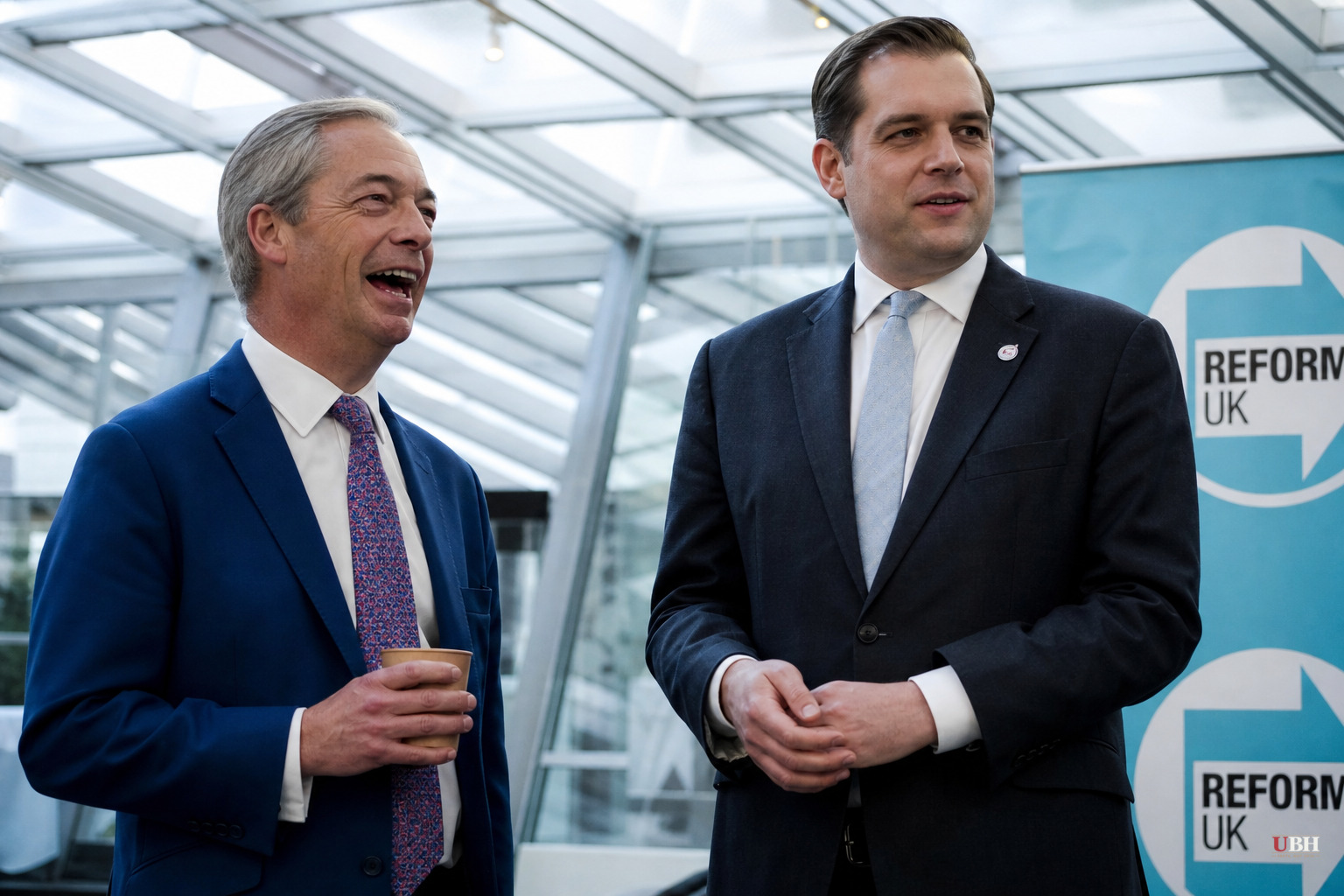
An on-chain investigator says he's identified the man behind one of the biggest winning bets on Donald Trump's 2024 election victory, and it's not some random crypto whale. It's George Cottrell, a longtime aide and major donor to Reform UK leader Nigel Farage.
The investigator, known online as ZachXBT, says he traced a Polymarket account operating under the username GCottrell93 back to Cottrell with what he described as high confidence, according to Crypto Briefing. The account poured roughly $8.8 million into bets on Trump winning the presidency and walked away with about $4.4 million in profit.
How the money moved
ZachXBT's findings, as reported by Crypto Briefing, show the account received its deposits in late October 2024, just days before the election, from two wallets whose owners have not been identified. The money moved through exchanges including OKX and ChangeNOW, a swap service that doesn't require identity verification for most transactions.
That routing matters. Polymarket runs on the Polygon blockchain and settles trades using pUSD, a USDC-backed token. Every deposit and withdrawal is permanently recorded on-chain, which is the only reason ZachXBT was able to reconstruct the account's activity in the first place. But the wallets that fed the account before it reached Polymarket remain anonymous. Nobody outside those two unidentified addresses knows where the original $8.8 million actually came from.
The bet wasn't a one-off lucky punt either. The same account reportedly lost around $655,000 on Iran-related prediction market positions, with a single bet accounting for roughly $550,000 of that loss. Even with those losses factored in, the Trump position left the account comfortably in the black.
Who is George Cottrell
Cottrell, 32, is known in British political circles as "Posh George." He's been one of Farage's closest confidants for years and a significant financial backer of Reform UK, the party Farage leads. Cottrell also has a prior US conviction for wire fraud, a fact that adds weight to questions about where his money comes from, even though it has no established connection to this specific bet.
Having a felony conviction from years past does not mean this transaction was illegal or improperly sourced. No regulator in the US or the UK has opened an investigation into the Polymarket account, and no charges have been filed related to these bets. ZachXBT's identification, however credible his track record as an on-chain investigator, is an attribution, not a legal finding. The two wallets that funded the account remain anonymous, and it's entirely possible the money was Cottrell's own legitimately earned funds, moved through a no-KYC exchange simply because that's how a lot of crypto users who value privacy prefer to operate.
Why this matters
Cottrell isn't a random retail trader. He's inside Farage's political operation, and Reform UK has been gaining ground in British politics. A close aide to a sitting party leader turning millions in profit on a US election bet, funded by anonymous wallets, is the kind of thing that invites scrutiny regardless of whether any law was broken.
Polymarket itself is technically off-limits to US users following a 2022 settlement with the Commodity Futures Trading Commission. But the platform operates freely for people outside the US, and there's nothing in the reporting suggesting Cottrell, a British national, violated that restriction.
The mechanics here are exactly what critics of prediction markets have been warning about. An $8.8 million position funded by anonymous wallets, routed through an exchange that skips identity checks, on a platform built for exactly this kind of pseudonymous betting. Supporters of these markets will say the blockchain's permanent, public ledger is itself a form of transparency, better than the black box of traditional political donations or dark-money PACs. Critics will say that pseudonymity plus no-KYC off-ramps make it trivial to disguise who's really behind the money, and that a permanent ledger tied to an anonymous wallet tells you nothing if you can't identify the wallet owner.
Both points are true at once, and that tension is the actual story. Regulators in the US and UK have not weighed in on this specific case. Whether they should, and whether prediction markets need mandatory identity verification before large political bets clear, remains an open question nobody in either government has yet answered on the record.
Sources used for this briefing
1 link from 1 independent newsroom (syndicated copies of the same report count once)
These are the sources it draws on, linked so you can verify.


