
Unbiased headlines. Facts, not spin.
Unbiased Headlines is an independently owned news organization. We bring you the facts, not opinions, written fresh from 110+ named sources. Sources linked so you can verify it yourself.
 tech
Low Interest (4/10)
Oklo's AI Fuel Research With Nvidia and Los Alamos Is Still Research-Stage as Shares Sit Down Over 70% in 2026
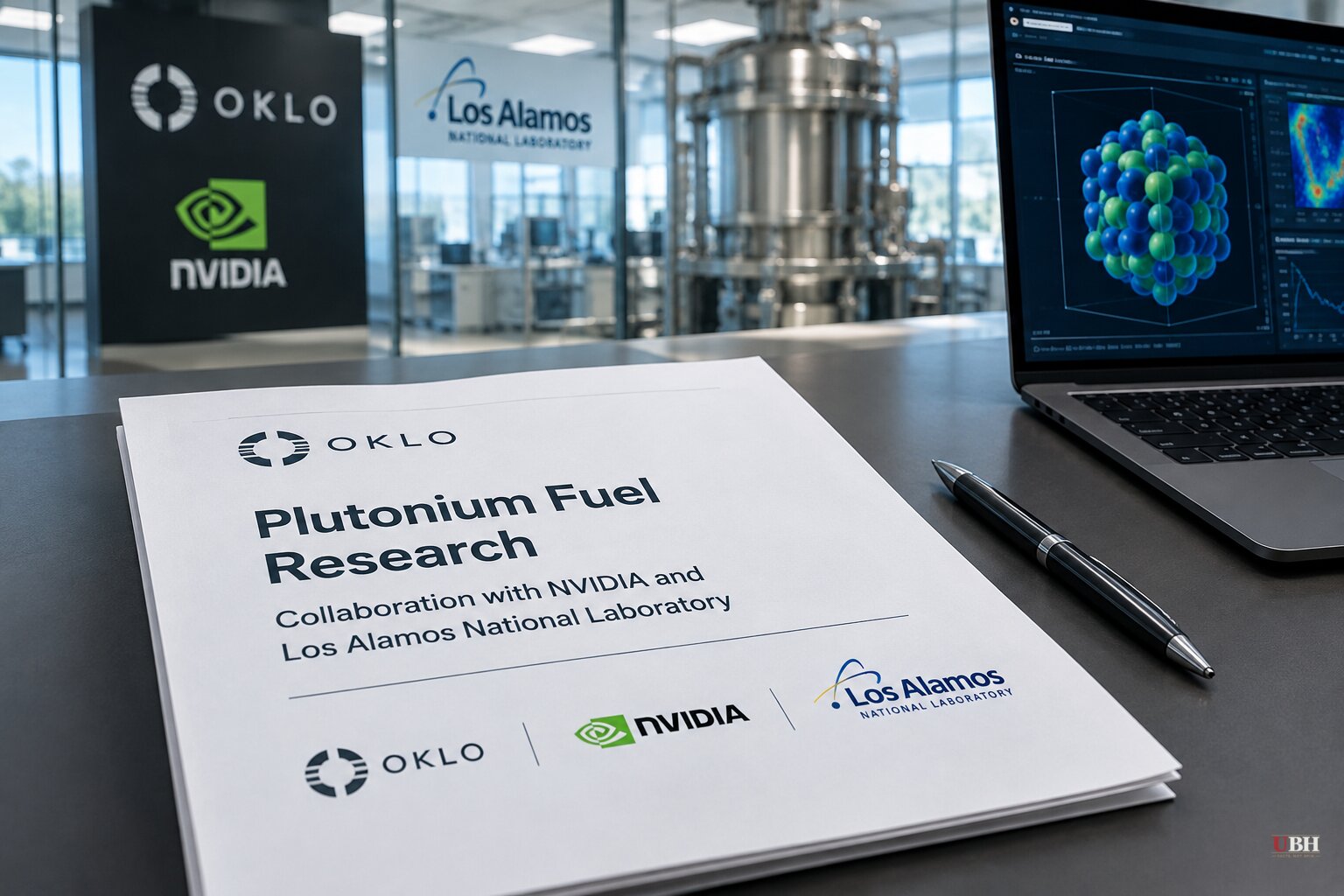
Oklo's collaboration with Nvidia and Los Alamos National Laboratory is not new. The partners announced it on April 23, 2026. Seven months on, it is still a research effort, and the stock attached to it is deep in the red.
The goal is to use artificial intelligence and high-performance computing to validate plutonium-bearing nuclear fuel for Oklo's Pluto reactor project. Pluto is a sodium-cooled fast reactor selected under the U.S. Department of Energy's Reactor Pilot Program.
Who does what
The division of labor is simple. Nvidia supplies computing power and AI models. Los Alamos, a Department of Energy lab in New Mexico, supplies the nuclear science. Oklo supplies the reactor that needs the fuel.
The work covers materials science and digital twins, which are computer models of physical systems. The idea is to validate fuel virtually before it is tested in hardware.
The partners also say they want to support nuclear-powered AI infrastructure at Los Alamos and help pave the way for nuclear-powered AI data centers.
Oklo and Los Alamos have worked together before. In December 2025, they carried out criticality experiments using fast-spectrum plutonium.
Why fuel is the choke point
Nuclear fuel qualification is notoriously slow. The partners say the AI and digital-twin approach is meant to compress that timeline and narrow the gap between a reactor design and a working plant.
Oklo's Aurora powerhouse is designed to run on HALEU, high-assay low-enriched uranium. HALEU is in short supply in the United States. Oklo has secured some for its first reactors, but The Motley Fool's Steven Porrello notes that finding enough for dozens or hundreds of reactors is a different problem.
A workable plutonium-based fuel for Pluto could ease that dependence if the effort succeeds. That is a big if. The partners have not published validation metrics, and no validated fuel or operating plant has come out of the work.
Oklo is also pursuing the conventional route. In November 2026, it signed a HALEU supply agreement with Centrus Energy covering up to five Aurora powerhouses. The fuel supports a planned 1.2-gigawatt Ohio campus that has been linked to Meta, with deliveries scheduled to begin in 2029.
The stock
Oklo shares climbed more than 200% in 2025 on bets that AI would drive enormous demand for electricity. This year, they have fallen more than 70%, erasing nearly all of those gains.
On Friday, Nov. 27, the stock traded between $19.53 and $20.91, according to market data as of 1 p.m. ET. Market capitalization stood at about $4.07 billion. The 52-week range runs from $17.28 to $115.72.
U.S. markets are closed for the weekend, so the Friday figures are the latest available.
Porrello argues that Nvidia's research help is a bright spot for investors. He also points to the return of Jensen Huang as Nvidia's CEO on Nov. 23 following a brief resignation. Porrello says that could reinforce Nvidia's commitments to research projects, Oklo's among them. Oklo shares rose about 4.6% that day, which he says barely dented the year's losses.
The same analysis carries a caution. Porrello says developing an alternative nuclear fuel is a complex process that will take years, even with Nvidia's help. The collaboration is mainly about compressing timelines. It has little bearing on near-term revenue.
What the public money is doing
Two federal pieces sit under this project: Los Alamos, a national lab, and the Reactor Pilot Program, which selected Pluto. Taxpayers have a stake in whether the program delivers hardware or just press releases. Oklo's ability to scale beyond its first reactors depends on fuel it does not yet have in the quantities it would need.
The next measurable test is whether Oklo, Los Alamos and Nvidia publish validation results for plutonium-bearing fuel, and whether the Centrus HALEU deliveries arrive on schedule in 2029. Neither milestone has a published date for the AI fuel work.
Sources used for this briefing
7 links from 7 independent newsrooms (syndicated copies of the same report count once)
These are the sources it draws on, linked so you can verify.


