
Unbiased headlines. Facts, not spin.
Unbiased Headlines is an independently owned news organization. We bring you the facts, not opinions, written fresh from 110+ named sources. Sources linked so you can verify it yourself.
 tech
Notable (6/10)
European ministers to vote Dec. 15 on €10bn crewed spaceflight programme
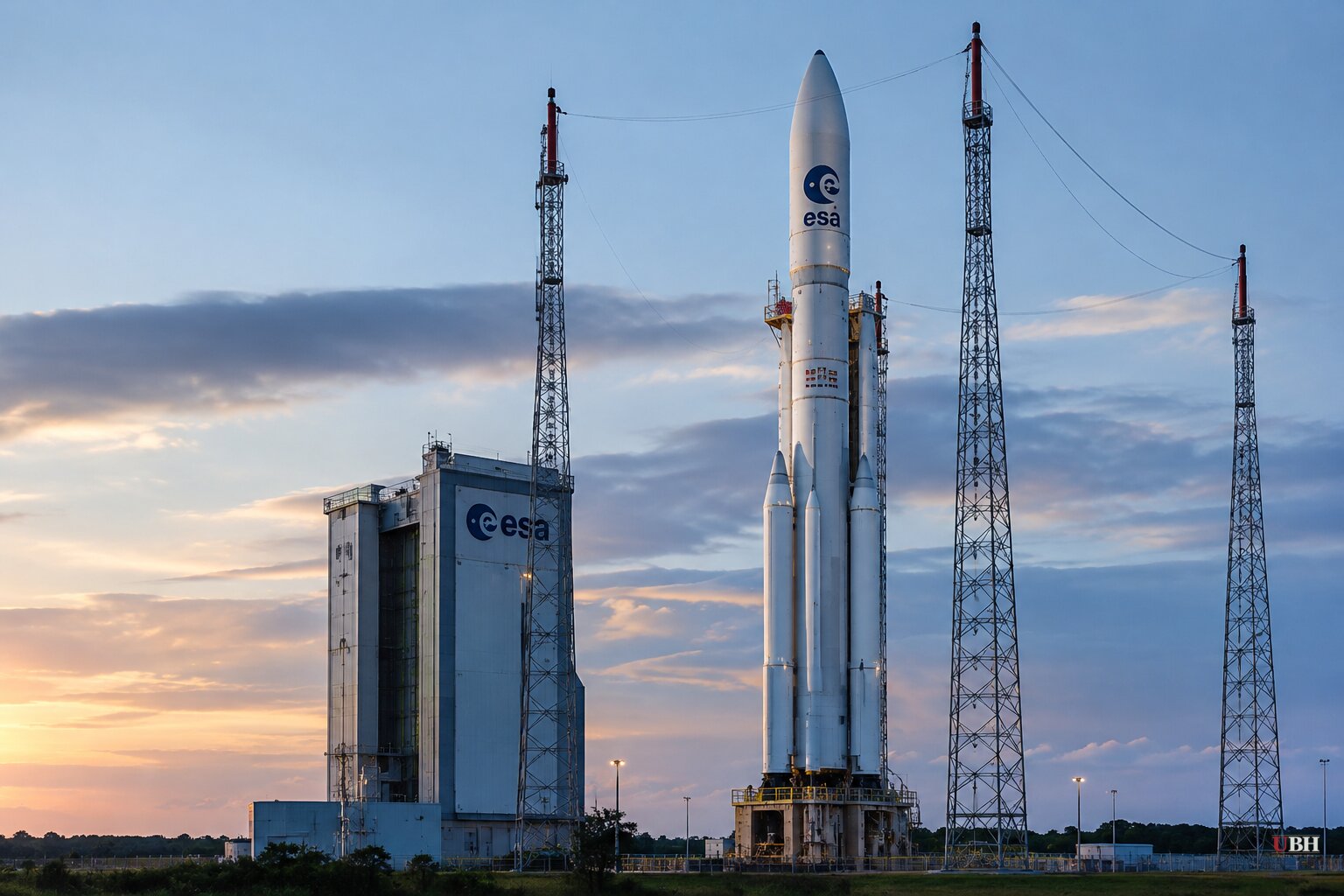
European ministers will meet in Rome on 15 December to decide whether to fund the continent's first human spaceflight programme. The vote is just over two weeks away. Nothing has been approved.
The programme would ultimately cost €10bn (£8.4bn). It would require a European space shuttle plus launch and landing pads, likely in French Guiana, where Arianespace has been launching satellites for Europe for around 45 years.
What ESA wants
Josef Aschbacher, director general of the European Space Agency, put it plainly: "If the decision is positive, that would be quite a historic moment for Europe."
His stated reason is autonomy. Until 2022, ESA relied on NASA and Russian launch systems to get European astronauts to the International Space Station. Four more European astronauts are scheduled to fly to the ISS next year through NASA.
Aschbacher says relations with NASA are "good and strong." He also says things "could change" in Washington. In his words, "There are uncertainties right now [over] how human spaceflight will continue in the United States."
Depending on who is in the White House, he said, the US government could downgrade NASA or even ban foreign access to private and public US spaceflights.
The plan, he said, is not to drop NASA but to supplement it. The aim is to make Europe a "space power" alongside Russia, China and the US.
The money argument
ESA's pitch is partly a taxpayer pitch. The agency argues that continued reliance on NASA could send large chunks of European money to US companies. "It funds companies in the US instead of our own companies," Aschbacher said.
He also cited the commercialisation of space by figures such as Elon Musk and concern over Russia's military space plans, including a potential nuclear weapon. Both, he said, exposed vulnerabilities in Europe's position.
The Guardian, which interviewed Aschbacher, reported that recent restrictions on Ukraine's use of Musk's Starlink network and SpaceX's regulatory approval to launch 1m data-processing satellites will add urgency to the Rome talks. Aschbacher has also held talks with Japan and the United Arab Emirates.
The industry's case, and its warnings
At the Space Tech Expo Europe conference, ESA astronaut Samantha Cristoforetti and representatives of Airbus Defence and Space, ArianeGroup and The Exploration Company argued for investing in a sovereign crewed capability. The conference account describes the plan as a 10-year, €10bn effort. It would cover certifying heavy launch vehicles for human flight, building crew capsules, emergency rescue systems and ground training infrastructure.
Panelists proposed a public-private model patterned on NASA's commercial programmes. Governments would act as anchor customers. Private developers would raise venture capital and chase the commercial orbital station market.
The Exploration Company's reusable Nyx capsule is the example they pointed to. ESA awarded the company a contract worth up to €760m in September 2026 for a cargo version to serve the ISS from 2028. The company is working toward a crewed Nyx for 4-5 astronauts in the mid-2030s. It completed a system review of the capsule's emergency rescue concept in November and has begun prototyping life support systems.
Industry experts at the event also flagged two risks that ministers will have to weigh. One is the budget itself. They called €10bn thin for certifying a launch vehicle and a crewed spacecraft at the same time. The other is ESA's traditional "geographic return" principle, which spreads contracts across member states roughly in proportion to what each pays in. They said reviewing it could slow the project and raise its cost.
The Hermes precedent
Europe has not attempted this since the Hermes space plane. That project was meant to rival NASA's shuttle. It was abandoned during development in 1992 amid rising costs after the Challenger disaster.
The sums are different now, but the issue is familiar. Programmes that need new rockets, new capsules and new ground systems at once have a long record of costing more than their first estimates. The sources give no cost-overrun guarantee, no schedule for the shuttle, and no breakdown of how the €10bn would be split among member states.
The €10bn is also described as an ultimate cost, not a first-year bill. What ministers commit to on 15 December, and what they leave open for later budgets, will matter as much as the headline number.
What happens next
Ministers vote in Rome on 15 December. A yes would start a decade-long build that has to clear certification and the geographic return question. A no would leave Europe dependent on NASA, and whatever Washington decides about foreign access, for its astronauts' rides to orbit. Which way the vote goes has not been announced.
Sources used for this briefing
6 links from 6 independent newsrooms (syndicated copies of the same report count once)
These are the sources it draws on, linked so you can verify.


