
Original briefings. Zero spin.
Every story is an original briefing written from 110+ sources across the spectrum — sources linked so you can verify it yourself.
 finance
Breaking / Critical (9/10)
Event date: September 10, 2026
finance
Breaking / Critical (9/10)
Event date: September 10, 2026
Oil Tops $107 as Iran War Escalates, Sending Global Bond Yields to Decades-Long Highs Ahead of Fed Decision
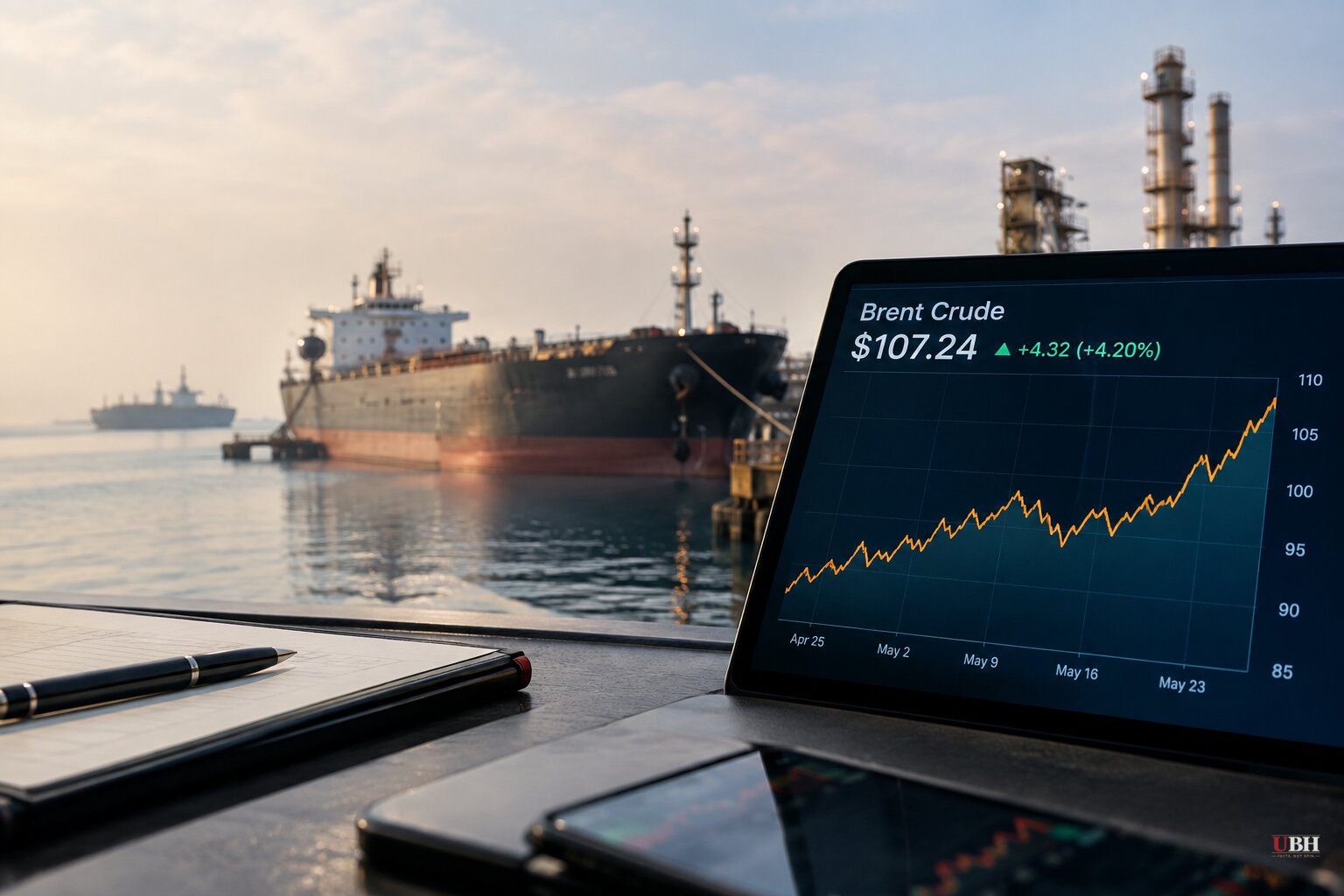
Oil has gone from a Middle East flashpoint to a full-blown global bond problem in about two weeks.
Brent crude was trading above $92 a barrel on Tuesday, September 1, according to the Epoch Times. By the following week it had punched through $100 for the first time since July, settling at $101.21 as fighting between the U.S. and Iran escalated, according to the Washington Post. U.S. benchmark crude finished at $96.05 the same day. By Thursday, September 10, Brent had jumped another 6% to above $107, according to the Guardian, as Houthi rebel advances along Yemen's Red Sea coast raised fears that Saudi crude exports could be choked off.
Brent rose roughly 15% to 16% in under two weeks, rattling bond markets on three continents.
Yields Climbing Almost Everywhere
The 10-year U.S. Treasury yield hit 4.79% during the week of September 1, its highest since January 2025, according to the Epoch Times. Japan's 10-year yield touched 3% for the first time in three decades that same week. By Thursday, September 10, the U.S. 10-year had climbed to 4.92%, and the 30-year hit its highest level since 2007, according to the Guardian. By September 11, per BigGo Finance, the 10-year stood at 4.96% and the 30-year at 5.35%, with the 2-year at 4.63% and the 5-year at 4.78%.
BigGo Finance notes the short end of the curve is now moving faster than the long end, a sign markets aren't just pricing one rate hike anymore. They're pricing the possibility of consecutive Federal Reserve hikes over the next six to nine months.
In Britain, 10-year gilt yields surged above 5.37% Thursday, the highest borrowing cost since 2007, according to the Guardian. That lands less than seven weeks before Chancellor Rachel Reeves's first budget on October 28. Reeves has promised to give households "breathing space" while also "controlling borrowing to bear down on inflation." Unleaded petrol prices in the UK have risen 6 pence a litre since the start of September, according to the motoring group RAC.
The European Central Bank raised its main rate to 2.5% on Thursday. ECB President Christine Lagarde said, "The conflict in the Middle East continues to generate inflation pressures, and inflation is set to remain well above target for an extended period."
A Fed Meeting Next Week, and a Split Inside It
The Federal Reserve's rate decision is scheduled for next week. Markets got a jolt Friday, September 11, when a hotter-than-expected inflation print strengthened the case for a hike, according to Bloomberg.
That comes after a visible split at the top of the Fed. Governor Christopher Waller signaled support for holding rates steady in comments Wednesday, September 3, pointing to progress on inflation, according to the Epoch Times. That caught markets off guard because it came a week after Fed Chair Kevin Warsh struck a more hawkish tone at the Jackson Hole symposium. Waller's comments briefly pulled yields lower and lifted stocks that week, with Dell Technologies and Snowflake surging on strong earnings.
Michael Landsberg, chief investment officer at Landsberg Bennett Private Wealth Management, told the Epoch Times that the pattern is a warning sign. "The rise in bond yields is a reminder that stocks and bond prices can go down together during environments where rates are rising at a fast pace," he said, adding that bonds are supposed to act as "a diversifier for stock volatility, but it doesn't always work." He argued portfolios may need exposure to commodities as a hedge if rates keep climbing.
For the week ending September 4, the Dow Jones Industrial Average slipped 0.27% to 53,414, the S&P 500 edged up 0.09% to 7,718, and the Nasdaq Composite gained 0.4%. The CBOE Volatility Index rose to 14.53, still a relatively low level historically despite the headlines.
The Political Fight Over Who's to Blame
President Trump said Wednesday, September 9, that the conflict with Iran could continue "immediately after" November's midterm elections, at which point he claimed oil prices would be "tumbling downward," according to the Guardian. That's Trump's own prediction, not an independently verified forecast, and no source here confirms an end date to the conflict. Vice President JD Vance has said "everything" is on the table to pressure Iran, according to Epoch Times reporting.
Trump has also promised to send a $5,000 check to every American adult if Republicans win the midterms, per the Guardian. That pledge lands at the exact moment investors are demanding higher yields partly because, as the Guardian frames it, they're worried about "out-of-control government borrowing." A new unfunded spending promise in the middle of a global bond sell-off tied to deficit fears deserves scrutiny regardless of which party is making it. Neither the Guardian nor any other source here quantifies the plan's cost or funding mechanism, and Trump has not detailed one.
The Case That This Isn't 2008 Redux
Bloomberg reports that emerging markets have shrugged off the war, $100-plus oil, and rising Treasury yields all year, and money managers see reasons the rally can continue. Their case rests on improved policy credibility in emerging economies, strong corporate earnings, and, critically, little sign of the kind of dollar rebound that has historically hurt emerging markets during Fed tightening cycles.
That's a real tension in the data. BigGo Finance and the Guardian frame the bond move as a structural deficit and inflation problem spreading to Europe and South Korea, while Bloomberg's sourcing suggests the emerging-market damage many feared simply hasn't shown up yet. Both readings are supported by what's actually happened so far. Which one wins likely depends on what the Fed does next week and whether Brent keeps climbing past $107.
The open question heading into the Fed's meeting: does a hotter August inflation print outweigh Waller's dovish signal, and does Chair Warsh side with the hawks or the doves when the committee votes.
Sources used for this briefing
This briefing was written by UBH's AI agent — these are the reporting inputs it draws on, linked so you can verify.


