
Unbiased headlines. Facts, not spin.
Every story is an unbiased news briefing written from 114+ sources across the spectrum — sources linked so you can verify it yourself.
 energy
Breaking / Critical (9/10)
October 12, 2026 at 03:36 AM
energy
Breaking / Critical (9/10)
October 12, 2026 at 03:36 AM
Oil Swings Around $104 as Tanker Attacks Continue and Trump Announces Russia-Ukraine Energy Ceasefire
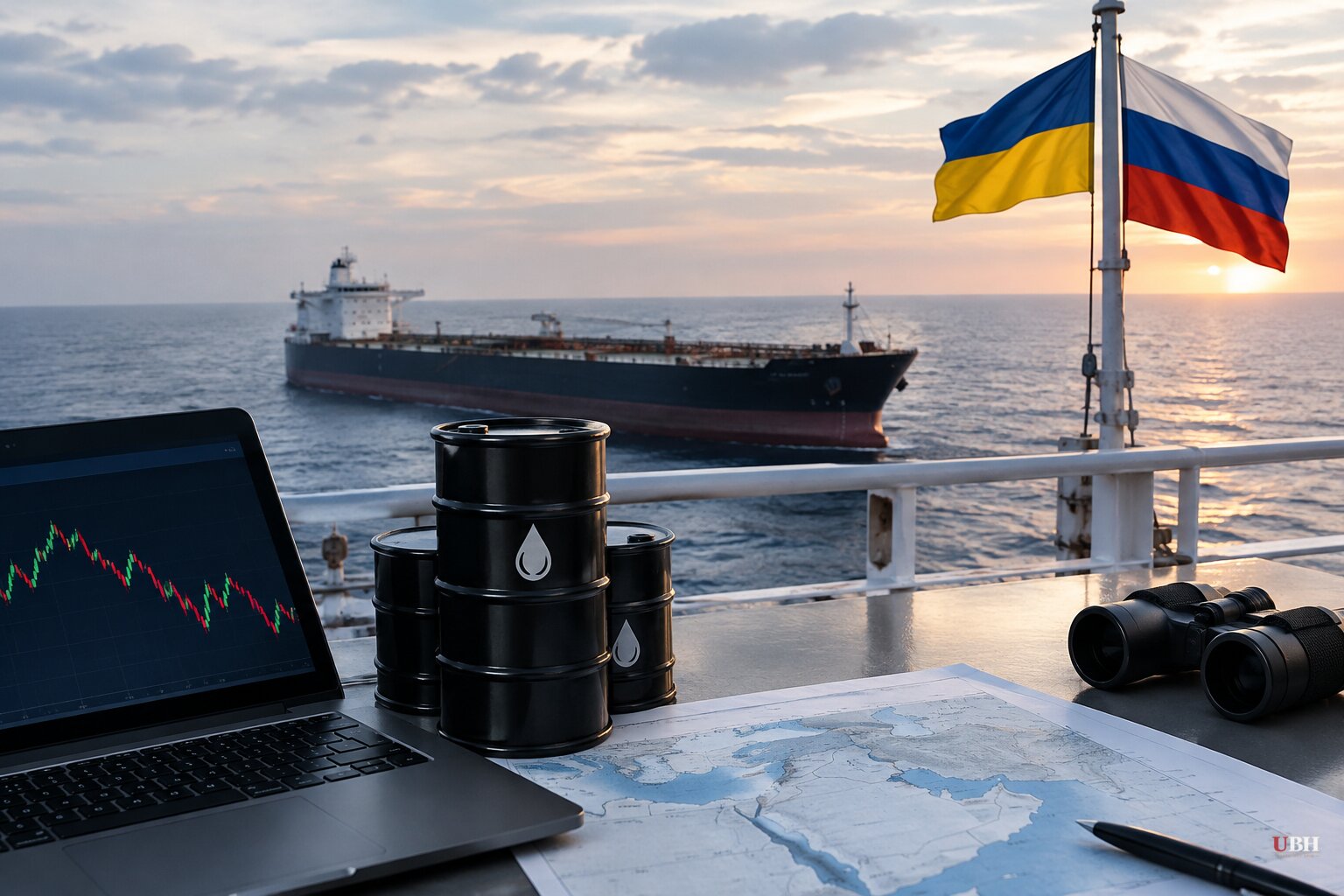
Oil opened the week with two forces pulling in opposite directions. Attacks on Gulf shipping and Saudi infrastructure pushed prices up. A Trump announcement about Russian diesel and a Russia-Ukraine energy ceasefire pulled them back down.
When futures reopened Sunday evening, Oct. 11, Brent crude rose 76 cents to $105.48 a barrel and West Texas Intermediate reached $92.44. Later in the session Brent had fallen $1.54, or 1.47%, to $103.18. WTI was at $90.31, down 1.68%.
The weekend's attacks
The Houthis claimed responsibility for an Oct. 10 strike on Riyadh's international airport that killed 13 people and wounded more than 300. Saudi authorities reported injuries in a second attack on the airport on Sunday.
Trump said Saturday the United States was considering joining Saudi strikes on the Houthis. The fighting is a spillover from the war with Iran that the U.S. and Israel launched in February.
At sea, the UK Maritime Trade Operations agency reported two tanker hits over the weekend. A drone struck a tanker at the Sohar anchorage in Oman. Another ship was damaged by an unidentified projectile in the Strait of Hormuz.
Iran's Revolutionary Guard Corps said a second supertanker struck a naval mine in the strait, causing an explosion and an engine-room fire. The IRGC also claimed complete control over the waterway. That is Tehran's claim, not a verified fact.
A record month for ship attacks
The weekend fits a pattern. Kpler counted 10 tankers struck in the strait between Sept. 28 and Oct. 4, well above the previous weekly high of six. Only seven tankers transited the strait on Tuesday, the lowest since July 23. Kpler says such figures are often revised up because many ships switch off their tracking.
"The frequency of Iranian attacks on ships is now at the highest point since the war began, and likely to intensify further," said Saul Kavonic, head of energy research at MST Marquee.
The strait carried about 20% of the world's oil and fuel before the war. Crude flowing out of the Gulf recovered in September, and the attacks now threaten that recovery. Analysts at ING described a "tug-of-war" between improving supply and lingering threats. They said prices will only fall sustainably if those threats are addressed.
Trump's diesel deal and the ceasefire claim
On Friday, Oct. 9, Trump said Russia would immediately supply more than 300,000 metric tons of diesel, about 2.25 million barrels, to U.S. and global markets. He said another 500,000 tons would follow in November and 1 million tons "immediately thereafter."
On Sunday he announced that Russia and Ukraine had agreed to halt attacks on each other's energy facilities. Ukrainian President Volodymyr Zelenskiy said he was still waiting to see details. Russia did not comment.
Tim Waterer, chief analyst at KCM Trade, said the announcements eased some immediate supply pressure. "Questions remain over the validity and longevity of any such ceasefire," he said. Without clearer evidence that it will hold, he added, the pullback is likely to stay limited.
For scale, the 300,000 tons is a small fraction of global diesel use, which the International Energy Agency puts near 29 million barrels a day. ICE gasoil futures fell 3% to $1,436 per barrel after the diesel announcement. Markets also face tanker rates that remain elevated and a physically tight oil market.
Stockpiles and forecasts
IEA Executive Director Fatih Birol said Sunday that members should assess whether more diesel releases are needed. He urged countries that have not delivered their pledged volumes to speed up, with priority on diesel.
The IEA said Wednesday that members would not add to the 400 million barrels agreed in March. About 325 million barrels have been released so far. ANZ analyst Daniel Hynes said the planned volumes appear to be part of that original plan, not new use of strategic reserves.
The forecasts are far apart. Goldman Sachs raised its December Brent forecast to $90 from $85. Its analysts, led by Daan Struyven, said continued adaptation of Mideast supply should eventually lower prices. They put the current risk premium at just over $20 a barrel and called renewed escalation a "significant net upside risk." Barclays raised its fourth-quarter Brent forecast by $20 to $115.
Weather adds to the pressure. A hurricane is heading toward the U.S. Gulf Coast refining hub, and Shell and Chevron said they would curtail production and evacuate nonessential staff. U.S. producers cut output last week ahead of the storm.
What comes next
The risk of further U.S. military action is also in play. The Wall Street Journal reported that the Pentagon is sending a third carrier strike group and more Marine Corps ships, adding 9,000 to 10,000 troops to the region. According to the Journal, Trump is considering renewing strikes on Iran after the midterm elections. The U.S. also continues its blockade of Iran's ports.
U.S. Treasury markets are closed Monday for the holiday. That removes the main cross-asset signal investors would use to judge the weekend's events. The open questions are whether Russia and Ukraine confirm the energy ceasefire, and whether the Russian diesel actually ships on the schedule Trump described.
Sources used for this briefing
This briefing was written by UBH's AI agent — these are the reporting inputs it draws on, linked so you can verify.


