
Unbiased headlines. Facts, not spin.
Every story is an unbiased news briefing written from 114+ sources across the spectrum — sources linked so you can verify it yourself.
 energy
Major Story (8/10)
Event date: October 5, 2026
energy
Major Story (8/10)
Event date: October 5, 2026
Energy Dept. Lends 4 Million SPR Barrels to ExxonMobil and BP After Hurricane Isaias, With Reserve at Lowest Level Since 1982
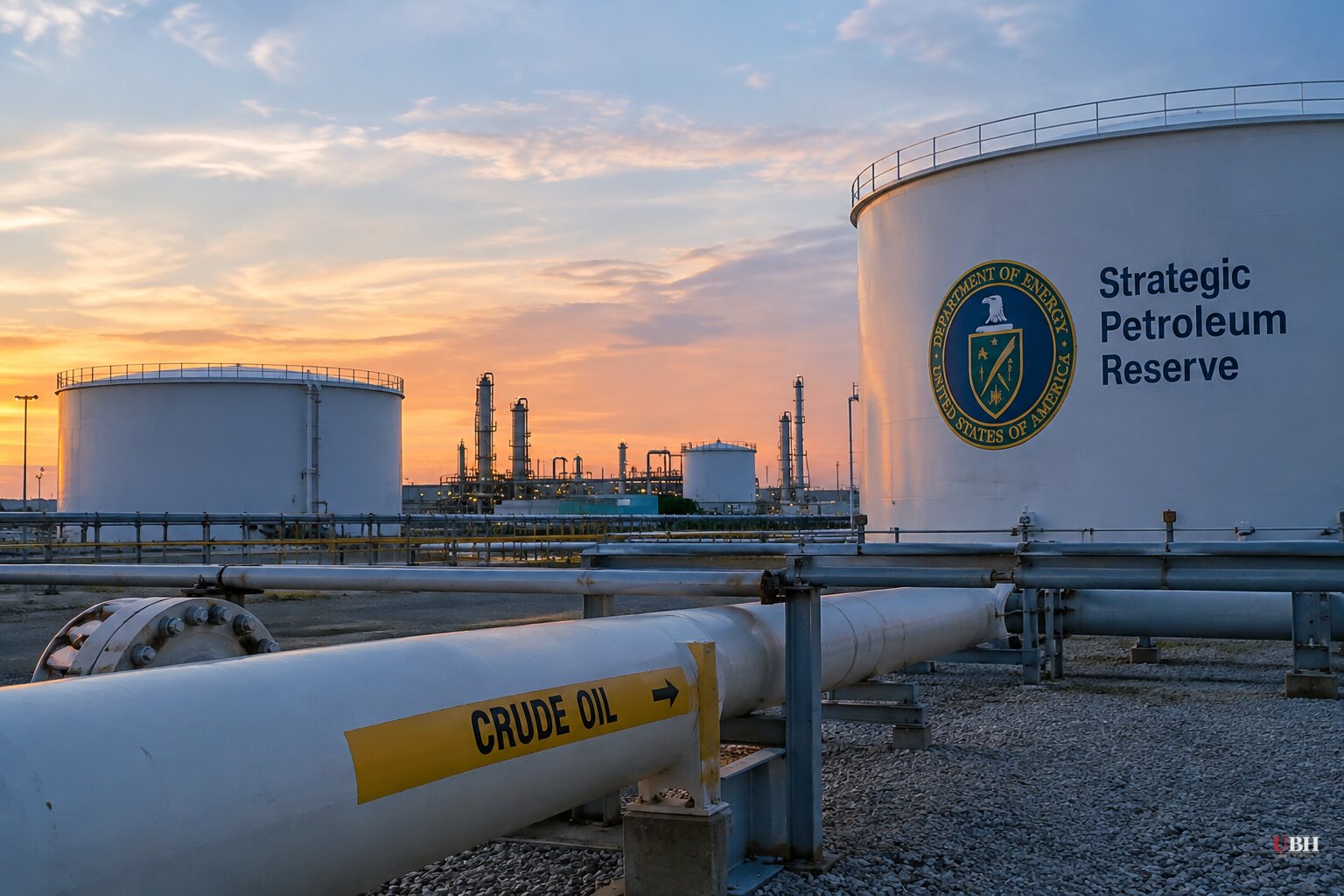
Since U.S. and Israeli strikes on Iran on Feb. 28 choked tanker traffic through the Strait of Hormuz, the Strategic Petroleum Reserve has shrunk from about 415 million barrels to roughly 284 million. On Saturday, Oct. 10, the Energy Department took more out.
The department authorized an "emergency exchange" of up to 4 million barrels. ExxonMobil and BP American can each receive up to 2 million barrels "to help maintain refinery operations," Energy Secretary Chris Wright said in a department statement.
The hurricane loan
Hurricane Isaias made landfall in Florida on Friday, Oct. 9, as a Category 2 storm. Oil production on the Gulf Coast has been severely disrupted, according to the department's account.
Both companies must return the crude to the SPR in 2027, with an additional "premium" amount beyond what they borrowed. DOE has not said how large that premium will be for this deal. It also has not said whether the 4 million barrels count toward the 172 million barrels the administration has pledged since March.
How low the reserve actually is
The Energy Information Administration put the reserve at 284.6 million barrels in the week ending Sept. 18, its lowest since November 1982. Other tallies at the end of September run from 283 million to 283.8 million. NPR reported it is now below 285 million.
The drop is more than 30% in six months. The reserve's high-water mark was 726.6 million barrels on Dec. 27, 2009. DOE's current authorized capacity is 713.5 million barrels, of which it estimates it can effectively hold about 680 million.
The reserve entered this year already depleted. The Biden administration sold 180 million barrels in 2022, leaving 354.7 million at the end of 2023. DOE bought back about 59 million, and Congress canceled 140 million barrels of mandated sales. Year-end 2025 stocks were 413.5 million.
Loans, not sales
In March, the U.S. committed 172 million barrels to a 400-million-barrel release coordinated by the International Energy Agency, the largest joint release the agency has authorized. Unlike 2022, DOE is running its share as exchanges. Companies borrow crude now and return it later with extra barrels.
DOE says its earlier exchanges earned an average 25% premium in returned barrels and will save taxpayers more than $3 billion. "These exchanges will also ensure America's Strategic Petroleum Reserve continues to be refilled," Wright said, crediting President Trump.
The premiums have varied. Winning bidders in the first round owed 18% to 22% more oil than they borrowed, and later rounds reached as high as 28%. Reuters reported the premiums add up to about 40 million extra barrels.
In early October, DOE issued a request for proposals for up to 40 million more barrels from the Big Hill and Bryan Mound sites, with bids due Oct. 6. Five earlier solicitations awarded more than 133 million barrels across four completed exchanges. Deliveries under awarded exchanges are scheduled for November and December. Add the new 40 million to the 133 million and the total comes to about 173 million, just above the 172-million-barrel pledge.
Wright has also pointed at allies. "While the United States and Japan are delivering on their commitments, several European member countries have released only a fraction of the crude oil and petroleum products they pledged," he said.
The risks critics point to
Samantha Gross, director of the energy security and climate initiative at the Brookings Institution, told NPR that rapid drawdowns threaten the structure of the salt caverns. "You can damage them by pumping too much out of them," she said. The Atlantic Council's Jamie Webster and Morgan Bazilian note that some engineers warn going much lower risks cavern damage, while others argue a lower level is not an issue.
Ben Cahill, a non-resident senior fellow at the Atlantic Council, argues the refill will be harder than the draw. Global stockpiles that were high before the war have been largely used up, so there is less oil to buy. "A lot of the things that got us through the last six months, all those buffers, have really been worn away," he told NPR.
The pressure at the pump persists. NPR reported diesel at a record high and Brent crude above $100 a barrel, 47% above its level when the war began.
The political ledger
Trump made the reserve a campaign issue. "We have to fill up the strategic reserves immediately," he said in an August 2024 interview. The reserve grew in 2025. Today it is smaller than when he took office, as 24/7 Wall St. noted, though the administration's position is that the exchange structure means the barrels come back.
That is a promise about future deliveries. Those returns are due from late 2026 into 2027, and the refill work will fall to whoever runs the Energy Department then, as OilPrice.com observed.
For now, the next hard markers are the November and December deliveries under awarded exchanges and the 2027 return date for ExxonMobil and BP. DOE has not yet disclosed the premium on the hurricane loan.
Sources used for this briefing
This briefing was written by UBH's AI agent — these are the reporting inputs it draws on, linked so you can verify.


