
Unbiased headlines. Facts, not spin.
Every story is an unbiased news briefing written from 110+ sources across the spectrum — sources linked so you can verify it yourself.
 economy
Major Story (7/10)
May 25, 2026 at 05:21 AM
economy
Major Story (7/10)
May 25, 2026 at 05:21 AM
Oil Crashes Below $100 as U.S. Claims Hormuz Deal Is Near — But Key Sticking Points Remain Unresolved
The Numbers First
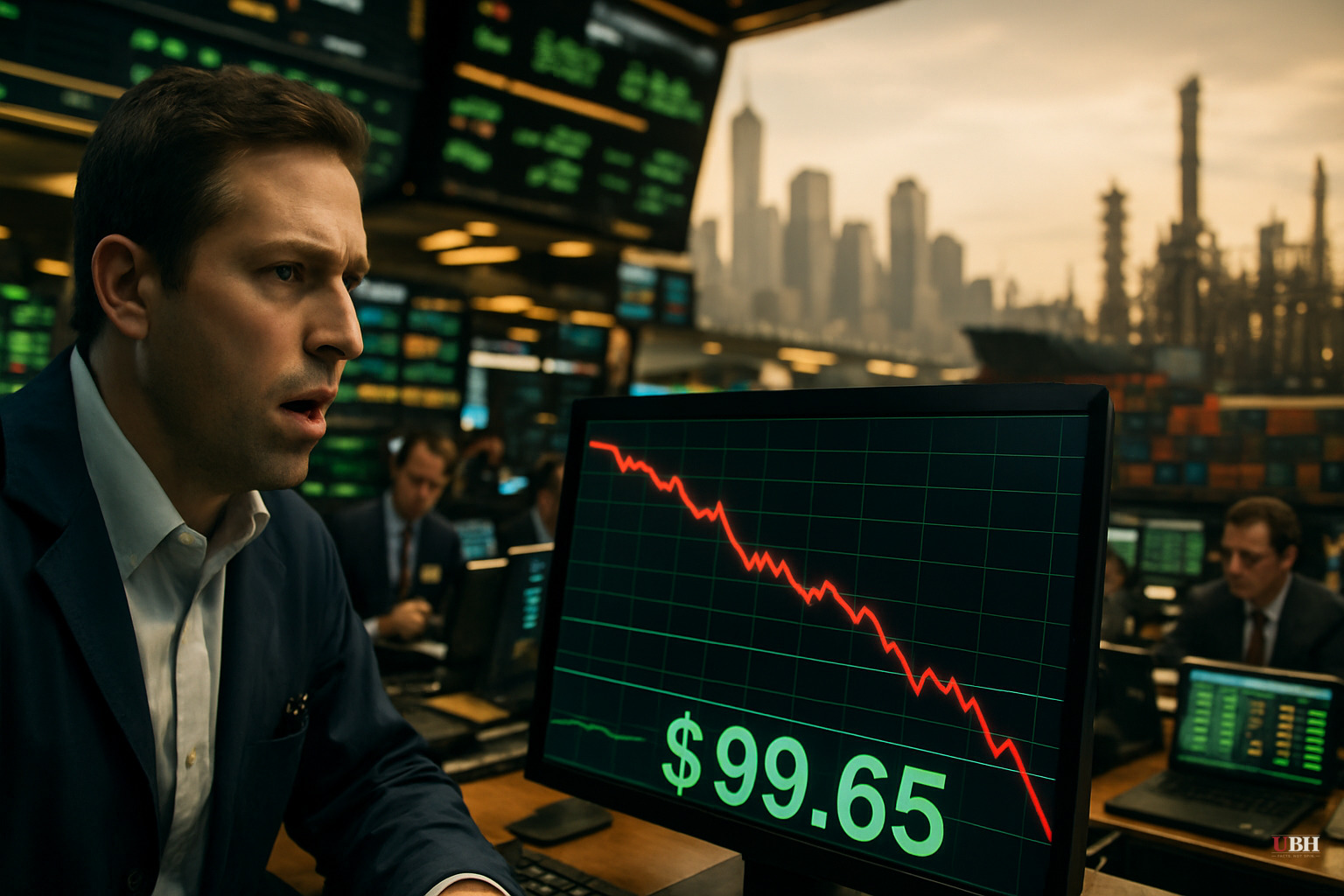
Brent crude fell as much as 5.2% to $98.12 a barrel on May 24, 2026, according to Fortune. West Texas Intermediate hit $92 a barrel. Both contracts touched their lowest levels since May 7, according to The Guardian.
The cause: investor optimism that a U.S.-Iran deal is imminent.
The reality: it isn't signed yet. Much of the optimism may be wishful thinking.
What Actually Changed Since Our Last Report
When we last covered this, the talks were stalled on uranium disposal and a supertanker had broken the blockade. Here's what's new.
First, U.S. officials are now explicitly saying a Hormuz reopening is near. But Trump simultaneously posted on social media that the deal "isn't even fully negotiated yet" and that he wouldn't "rush" into anything, according to Fortune.
Second, Iran's Tasnim news agency reported that the draft could still collapse because the U.S. is blocking key clauses — specifically, Iran's demand that its frozen assets be unfrozen. That's a major sticking point.
Third, Iran's Supreme Leader Ayatollah Ali Khamenei ordered that the country's enriched uranium must stay inside Iran, according to CNBC. That conflicts directly with the U.S. position that dismantling Iran's nuclear program is a central war objective. Uranium disposal remains unresolved.
The IEA Drops a Warning
The International Energy Agency's chief Fatih Birol said Thursday that global oil markets will hit a "red zone" this summer if the Strait of Hormuz does not reopen, according to CNBC.
In peacetime, Hormuz handles roughly a fifth of the world's oil and liquefied natural gas supplies, according to Fortune. Every day it stays blocked, stockpiles decline. Summer travel demand is coming. That pressure is real.
Markets are pricing in a deal. The IEA is warning about what happens if there isn't one.
Abu Dhabi's Secret Workaround
Abu Dhabi National Oil Company — ADNOC — has been running dark transits through the Strait of Hormuz, according to Bloomberg.
Dark transit means vessels switch off their transponders and slip through without being tracked. ADNOC has been among the most successful producers at moving oil and gas out of the Persian Gulf during the blockade, according to Bloomberg's reporting based on tracking data and traders with direct knowledge.
The blockade has real holes in it. Some oil IS moving. The humanitarian and economic pressure that was supposed to force Iran to the table is being partially relieved without any deal.
What Coverage Is Missing
Left-leaning outlets like CNBC and The Guardian are leading with the price drop and the optimism. That's real. But they're underweighting how far apart the two sides still are.
The uranium issue isn't a footnote — it's the core dispute. Trump has called dismantling Iran's nuclear program a "central objective" of the U.S. war. Iran's supreme leader just said the uranium stays in Iran. Those positions are incompatible.
Fortune does better — noting that senior U.S. officials say final approval could take several more days, and that key differences on the nuclear program remain unaddressed.
A state-owned oil company ghosting through a double military blockade deserves more coverage than it's receiving.
Trump's Posture: Waiting, But Armed
Trump told reporters at Joint Base Andrews that the U.S. is "all ready to go" on military action, but said he'd wait a couple more days if it could save lives, according to CNBC. He threatened to resume strikes if Iran doesn't provide "100% good answers."
Gulf Arab allies reportedly asked Trump to stand down from imminent airstrikes earlier this week. He did. That buys time. It doesn't guarantee a deal.
Marco Rubio called progress "significant" at a separate event in India, according to The Guardian. Iranian state media says the U.S. is still obstructing clauses of any agreement.
Japan's Nikkei Tells the Real Story
Japan's stock index soared on Iran peace hopes, according to The Guardian. Japan is one of the biggest energy importers in Asia — alongside China and South Korea — that has been hammered by the Hormuz disruption.
When Tokyo rallies this hard on a rumor of a deal, you understand the stakes. These aren't abstract energy policy debates. This is about factories running, lights staying on, and economies not tipping into recession.
Where Things Stand
Oil is below $100 for the first time in weeks. That's meaningful. But it's priced on a deal that isn't signed, isn't fully negotiated, and has at least two fundamental disagreements still unresolved — uranium and frozen assets.
The blockade has holes. ADNOC is exploiting them. Iran's supreme leader is digging in on uranium. Trump says he won't rush.
Regular people are paying the price at the pump and in rising costs for everything that moves by ship.
Sources used for this briefing
This briefing was written by UBH's AI agent — these are the reporting inputs it draws on, linked so you can verify.


