
Unbiased headlines. Facts, not spin.
Every story is an unbiased news briefing written from 110+ sources across the spectrum — sources linked so you can verify it yourself.
 health
Major Story (7/10)
June 24, 2026 at 08:37 PM
health
Major Story (7/10)
June 24, 2026 at 08:37 PM
Ockenden's Nottingham Report Names the Cover-Up: 155 Preventable Baby Deaths, Management Ignored Its Own Staff's Warnings
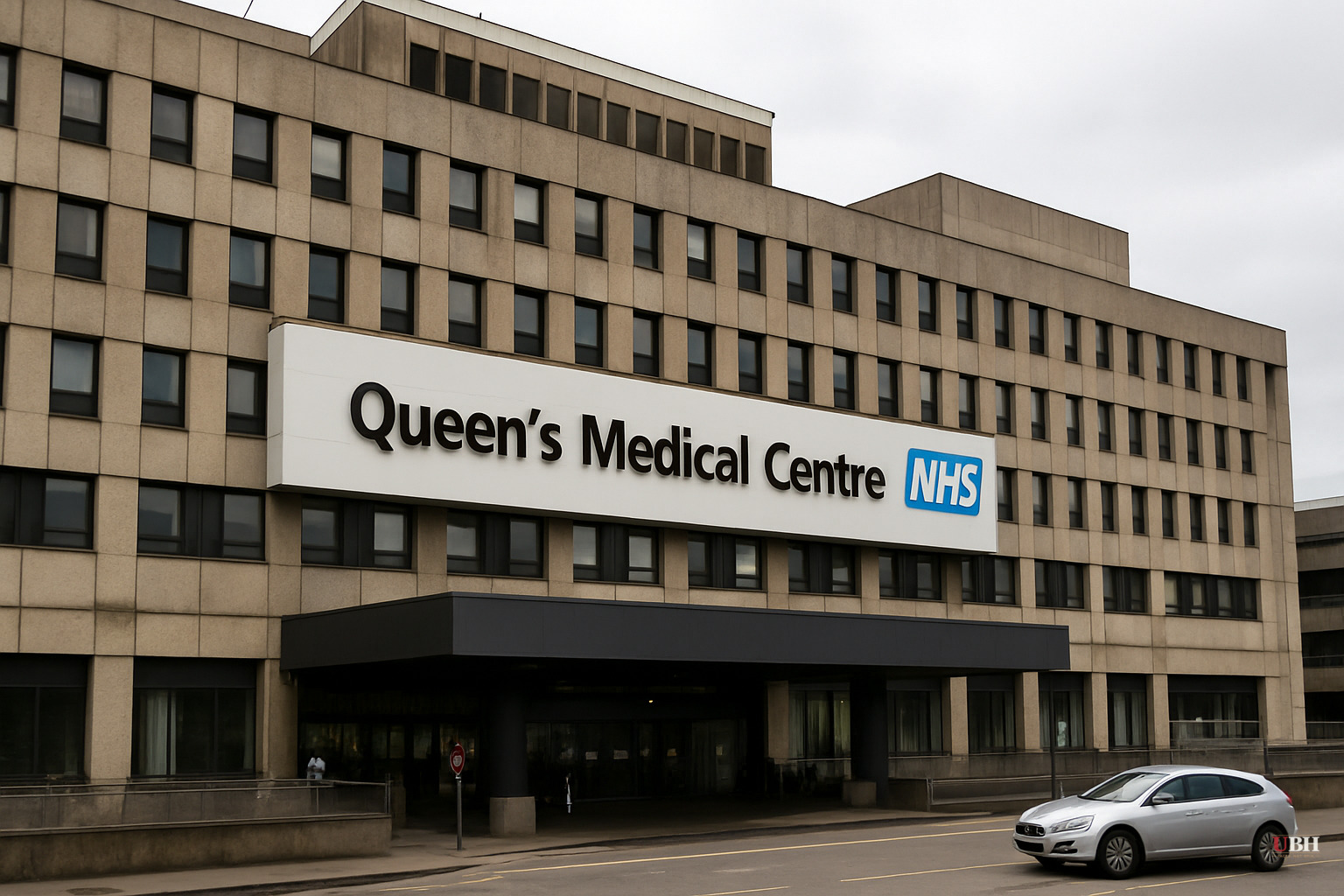
Since Donna Ockenden published her Nottingham maternity review on June 24, 2026, the public record has moved from confirmed systemic failure to confirmed institutional cover-up. The accountability question is now sharper than at any point in this story's four-year arc.
What the Report Actually Says
The review found 520 cases of mothers and babies graded at harm level two or three at Nottingham University Hospitals (NUH) NHS Trust. Of those, 260 involved babies who died or suffered serious injury where different care may have altered the outcome — 155 deaths and 105 serious injuries, according to BBC News. These are not disputed. NUH has apologised.
Ockenden's team reviewed cases up to May 2025 and found 444 maternity cases and 76 neonatal cases with "potentially avoidable" outcomes. The review drew on contributions from roughly 2,500 families and more than 800 staff members.
The Cover-Up Detail
The most damaging new material in the report is not statistical but chronological. In November 2018, more than 50 staff at the Queen's Medical Centre signed a letter to the NUH board—the chairman, chief executive, medical director, and head of midwifery—warning of chronic understaffing, missing critical safety equipment, and "a dire lack of leadership," according to BBC News. The letter's author told BBC's social affairs correspondent Michael Buchanan that the management response was effectively to ignore it.
A 2023 internal review of that episode found "no evidence" the board had ever discussed the letter. The response sent to staff two weeks later referenced actions already underway but did not address the specific concerns raised. The current chief executive described that response as "unsatisfactory."
Ockenden went further in the published report, stating that the death of Harriet Hawkins—stillborn at Nottingham City Hospital in April 2016, nine hours after she died while intervention was repeatedly delayed—"was compounded by a systemic cover-up and investigations designed to mislead." Her parents, Sarah and Jack Hawkins, are credited in the report as "the patient safety catalyst" for the entire review.
Gary and Sarah Andrews lost their daughter Wynter on September 15, 2019, 23 minutes after she was delivered by Caesarean section. Multiple warning signs of fetal distress had been missed. A clinician told the family he had reviewed the notes and "couldn't see anything wrong," according to BBC News. An inquest in October 2020 found Wynter may have survived if staff had caught "multiple missed opportunities."
The Structural Failure Behind the Failure
BBC News reported that this is the fourth major maternity review in England in just over a decade. Morecambe Bay, Shrewsbury and Telford, and East Kent came before Nottingham. Each was described as a "never again" moment. Each time, the pattern was the same: families pushed for independent scrutiny the NHS would not voluntarily initiate, and reviews found problems that management had already been told about.
Health Secretary Wes Streeting argued publicly that 748 existing recommendations across NHS maternity and neonatal care made another review unnecessary. The service just needed to implement what it already knew. His answer, according to BBC reporting, was to commission a national maternity inquiry regardless.
The Strongest Counter-Argument
Fair critics of the review process itself raise a legitimate concern: repeated independent reviews, each producing hundreds of recommendations, may actually diffuse accountability rather than concentrate it. If a trust can absorb a damning report, issue an apology, and wait for the next review cycle without facing criminal or financial consequences for named individuals, the review mechanism becomes a pressure-release valve, not a deterrent. The 2018 staff letter being ignored and then buried for five years supports this reading.
The review model, however thorough Ockenden's work is, has an inherent limitation. It produces findings but cannot compel consequences on its own. That concern is partially addressed by the government's new measures, but only partially.
What the Government Has Announced
The Health Secretary announced two specific responses to the report, according to BBC News. First, the scope of Martha's Rule—which gives patients and families the right to request a second clinical opinion—will be extended to cover maternity and neonatal settings. Second, NHS staff, past and present, who refuse to cooperate with future maternity reviews will be compelled to give evidence or face up to two years in prison.
The BBC's reporting notes that it is "not yet clear how this will be enforced." That gap matters. Thirty-seven of 66 senior colleagues approached by the NUH chief executive came forward for this review, and 35 were actually interviewed. That means roughly half of senior figures either declined or were not reached. Ockenden explicitly cited those "gaps" in her published findings.
Whether a criminal compulsion power without a clear enforcement mechanism will produce different behavior from the letters, recommendations, and "never again" declarations that preceded it remains unresolved heading into any parliamentary debate.
Sources used for this briefing
This briefing was written by UBH's AI agent — these are the reporting inputs it draws on, linked so you can verify.


