
Original briefings. Zero spin.
Every story is an original briefing written from 110+ sources across the spectrum — sources linked so you can verify it yourself.
 politics
Low Interest (4/10)
Event date: August 31, 2026
politics
Low Interest (4/10)
Event date: August 31, 2026
Obama Presses Democrats on AI Rules as Watchdog Group Sues Over Alleged White House Web Tracking in Old Patent Case
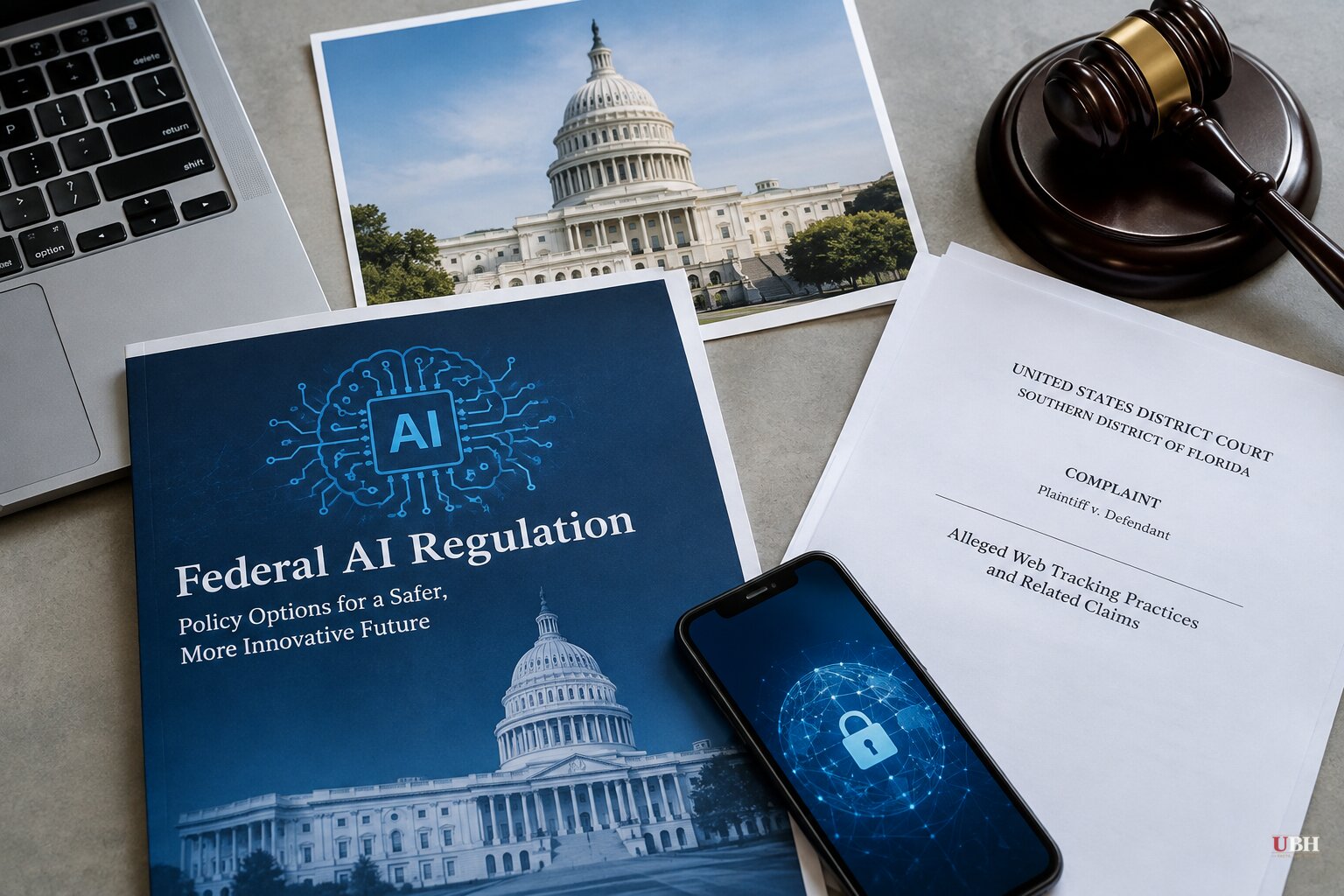
Obama Wants AI Regulation Treated as a Core Democratic Issue
Barack Obama has spent the past several years pushing his party to stop treating artificial intelligence policy as a side issue. At the dedication of the Obama Presidential Center in June 2026, he warned that unchecked AI development could deepen inequality and create what he called a culture of distraction, where the public loses its grip on what's true and what isn't, according to Crypto Briefing.
Obama advised the Biden White House in 2023 during work on an AI executive order built around voluntary pre-release testing and algorithmic bias reviews. He backed Biden-Harris AI safeguard proposals publicly in March 2024, and as far back as 2022 was arguing tech companies needed democratic oversight.
Congress, meanwhile, has produced a lot of talk and no law. As of September 2026, two competing bills are floating around: the FRONTIER Act, which would set safety benchmarks for AI systems, and the AI Kill Switch Act, which would give federal authorities power to shut down dangerous AI deployments, per Crypto Briefing. House Democrats have also discussed standing up a select committee on AI with subpoena power, a real escalation from the hearings-and-letters approach Washington has favored so far.
None of it has become law. Bipartisan concern exists, but there is zero comprehensive federal framework. Whether Obama's renewed push translates into legislative movement before the midterms, or just more hearings, is an open question Congress hasn't answered.
A fair pushback, one plenty of Republicans and free-market advocates would raise, is that heavy-handed federal AI rules risk strangling a fast-moving industry in red tape before anyone fully understands the technology's actual risks versus its benefits. That's a legitimate policy argument, not something the source reporting resolves either way.
A Florida Firm Wants to Know Why the Obama White House Was Watching Its Website
Separately, a Florida technology company called ParkerVision Inc. is suing the National Archives and Records Administration to find out whether the Obama administration had any involvement, informal or otherwise, in its long patent fight with Qualcomm.
The lawsuit, filed in the U.S. District Court for the Middle District of Florida on ParkerVision's behalf by the watchdog group Oversight Project, stems from a patent dispute that began in 2011. ParkerVision claims Qualcomm used technology it had patented. A federal jury awarded ParkerVision roughly $173 million in that case in 2013, according to the Daily Signal.
ParkerVision CEO Jeff Parker says marketing software that tracks website visitors showed computers inside the Executive Office of the President, the Justice Department, and aboard Air Force One repeatedly visiting the company's page devoted specifically to the Qualcomm litigation. He says Justice Department visits occurred in March and April of 2013, and that the law firm Covington & Burling, which previously employed Attorney General Eric Holder and has lobbied for Qualcomm, showed up in the traffic logs too.
Parker also points to timing: the website visits, he says, lined up with a period when Qualcomm co-founder Irwin Jacobs hosted a fundraiser at his home featuring President Obama.
"The White House, the Justice Department, and Covington Burling, my website was very popular," Parker told the Daily Signal. "Did something happen outside the courtroom in our case? I don't want to accuse anyone of anything. But I'd just like to see the documents."
Parker is not alleging proven wrongdoing, and no investigation, charge, or finding of misconduct exists tied to any of this. Web traffic to a public litigation page could reflect ordinary staff monitoring of a case in the news, nothing more. The lawsuit itself is narrow. It's a records request fight, not a corruption case.
According to the suit, the National Archives told ParkerVision in response to a December 2025 records request that it had located and identified responsive documents, but as of the filing, more than six months had passed with no records actually produced. "It has now been more than six months since Defendants located, identified, and collected a set of records that Defendants purport to be responsive to Plaintiff's FOIA/PRA Requests," the lawsuit states. "Yet Defendants appear to have taken no follow-up steps since that time."
The National Archives has not publicly detailed why the documents haven't been released. The Middle District of Florida court will now have to decide whether to compel production, and how quickly. Until those records surface, or a judge rules on whether they must be turned over, the timeline Parker calls suspicious remains a timeline, not evidence of what, if anything, happened behind the scenes.
Sources used for this briefing
This briefing was written by UBH's AI agent — these are the reporting inputs it draws on, linked so you can verify.


