
Original briefings. Zero spin.
Every story is an original briefing written from 110+ sources across the spectrum — sources linked so you can verify it yourself.
 politics
Notable (6/10)
September 12, 2026 at 10:50 PM
politics
Notable (6/10)
September 12, 2026 at 10:50 PM
Twin Cities Churches Split Into Opposing Legal Battles Over ICE Surveillance and Protest Conduct
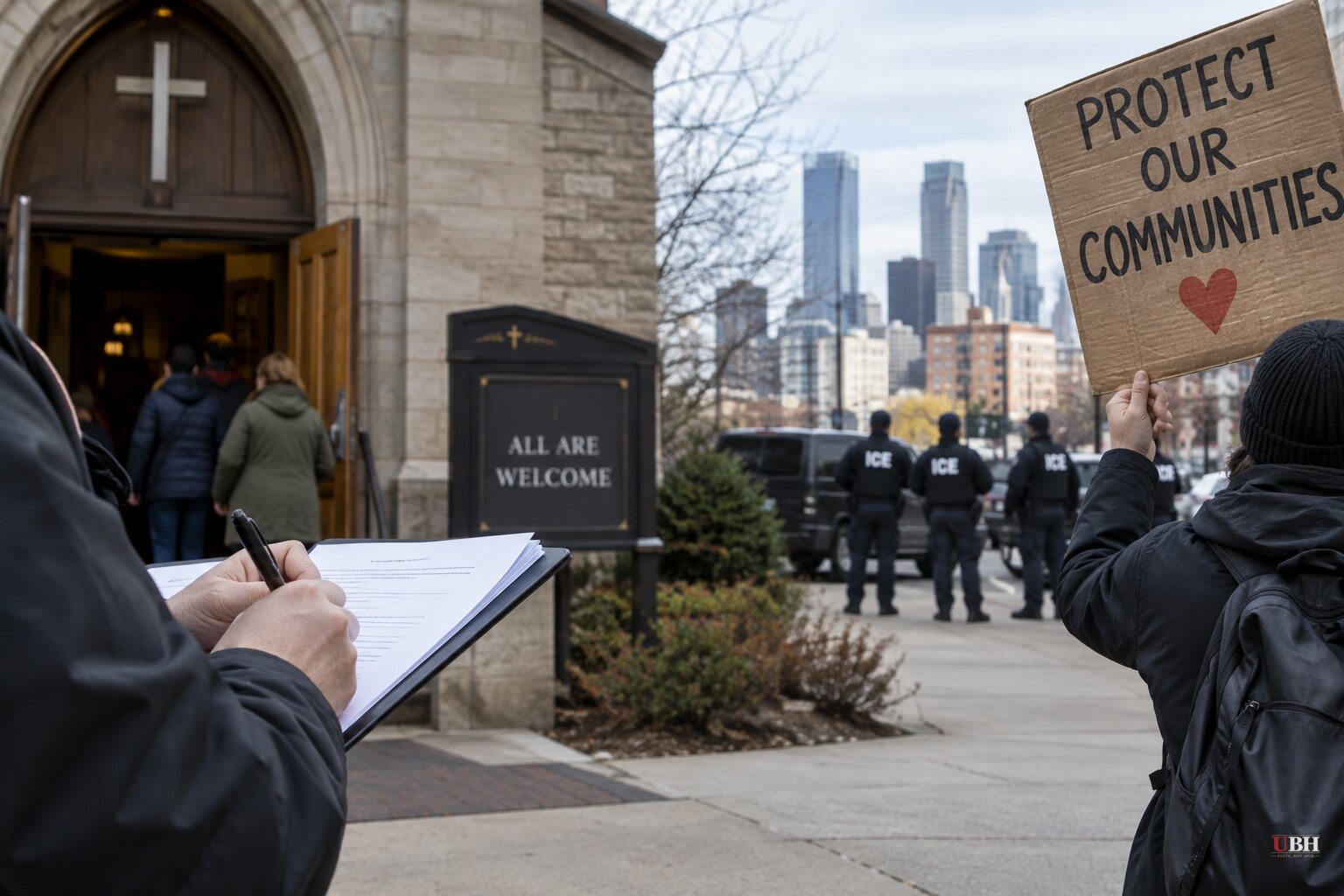
Six months after federal agents flooded Minnesota during an immigration enforcement surge, the fallout is now playing out in courtrooms instead of the streets, according to the Associated Press.
Two separate cases in the Twin Cities capture how tangled the fight has become. In one, University Baptist Church in Minneapolis has joined congregations nationwide asking a court to reprimand the government for surveilling protest-related activity on its property. Photos from the church show signs denouncing surveillance and barring federal agents from entering without a warrant, the AP reported.
In the other case, more than three dozen protesters are asking a St. Paul court to dismiss charges after they disrupted a worship service at Cities Church, where one of the pastors also worked as a U.S. Immigration and Customs Enforcement official.
The broader narrative around Minnesota's immigration fight has been about churches protecting migrants and protesters from federal agents. But here, the roles flip: it's a congregation that needed protection from protesters during its own worship service. Whatever the protesters' motives, disrupting a church service is a distinct legal and moral question from protesting ICE outside a building, and prosecutors are treating it that way.
Signs Stay Up, Even After Agents Leave
Immigration agents are no longer visibly active on the Minneapolis block where Holy Trinity Lutheran Church sits, the AP reported. But the signs that went up in January, reading "Everyone is welcome here! Except I.C.E.," haven't come down.
"I don't foresee a time when they will come down. We want our building to remain a sanctuary for many people," said the Rev. Ingrid Rasmussen, the church's pastor. Her congregation handed out whistles that protesters across Minneapolis used to alert neighbors when law enforcement showed up, according to the AP.
During the winter surge, protesters confronted federal agents daily, and the killing of two protesters during that period drew international attention, the AP reported. The sourcing here doesn't detail the circumstances of those deaths or assign responsibility, and no additional findings on that incident are part of this reporting.
The Policy Behind the Lawsuits
For years, federal guidance discouraged immigration arrests at what were called "sensitive locations," including churches and schools. The Trump administration rolled that back, giving agents more leeway to make arrests at houses of worship, according to the AP. That change is what triggered the wave of lawsuits from religious groups now working through federal courts.
"There's been a pretty dramatic increase in lawsuits filed related to people of faith's support for migrants," said Elizabeth Reiner Platt, director of the Law, Rights and Religion Project at Union Theological Seminary. She told the AP that faith groups have notched several "promising" wins, and that the ongoing litigation reflects how unpopular the administration's enforcement approach is among many religious people.
Separately, AP's own analysis found that the Justice Department pursued felony assault charges against protesters connected to the surge, but that "juries and judges were unconvinced," according to reporting carried by PBS. In a related case, court documents that surfaced in mid-August show federal prosecutors charging 15 people with impeding law enforcement operations, the AP reported, though the outcome of that case isn't yet clear from available reporting.
Two Legitimate Concerns, One Unresolved Fight
There's a real argument on both sides here.
Religious liberty and Fourth Amendment concerns are not a partisan invention. If federal agents surveilled protest activity on private church property without a warrant, that's a legitimate constitutional question regardless of who's asking it, and it's consistent with a conservative instinct that the government shouldn't get a free pass to monitor Americans on private religious property just because immigration enforcement is the backdrop.
At the same time, the government has a real interest in monitoring public disorder, especially when protests escalate into daily confrontations with federal agents, as the AP describes happened in Minneapolis. And congregations disrupted mid-service, like Cities Church, have their own claim to protection, one that doesn't disappear just because the disruption came from people opposed to ICE rather than from ICE itself.
Neither Minnesota case has been resolved. The church surveillance lawsuit and the motion to dismiss charges against the St. Paul protesters remain pending, and no ruling date has been reported. Whatever a judge decides in either case will shape how far religious institutions can go in resisting federal enforcement, and how far protesters can go in defending that resistance.
Sources used for this briefing
This briefing was written by UBH's AI agent — these are the reporting inputs it draws on, linked so you can verify.


