
Original briefings. Zero spin.
Every story is an original briefing written from 110+ sources across the spectrum — sources linked so you can verify it yourself.
 politics
Major Story (7/10)
Event date: September 10, 2026
politics
Major Story (7/10)
Event date: September 10, 2026
DHS Proposes Ending 60-Day Grace Period for H-1B and Other Work Visa Holders After Layoffs
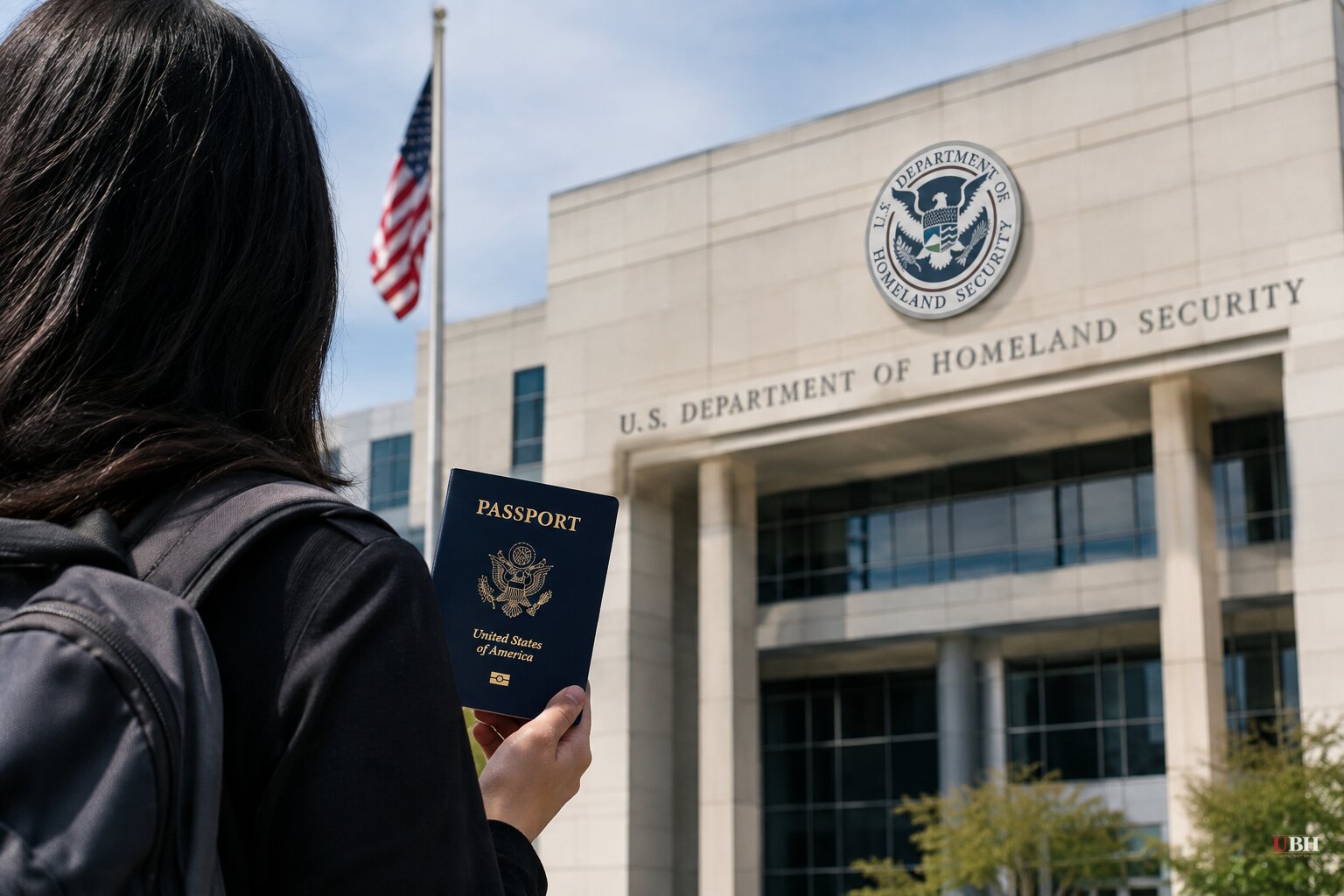
The Department of Homeland Security wants to end the 60-day cushion that lets certain foreign workers stay in the U.S. after they lose their job. DHS filed the proposed rule on September 10, 2026, and it published in the Federal Register on September 11, 2026, according to the Epoch Times and confirmed by TIME and the Times of India.
Homeland Security Secretary Kristi Noem laid out the reasoning in the filing. "DHS now believes that once the alien is no longer fulfilling the very specific conditions under which he or she was admitted or otherwise provided status, such status, as well as the authorization to remain in the United States, should definitively cease and the impacted alien should immediately depart the United States," Noem wrote, according to the Epoch Times.
What the grace period does today
The 60-day window was created under an Obama-era rule that took effect in early 2017, according to TIME. It covers H-1B specialty-occupation workers along with H-1B1 visas for Chilean and Singaporean nationals, E-1 treaty trader and E-2 treaty investor visas, L-1 intracompany transfer visas, O-1 extraordinary-ability visas, TN visas for Canadian and Mexican professionals, and E-3 visas for Australians.
Under current regulation, cited by Campos Law Firm at 8 CFR 214.1(l)(2), workers get up to 60 days after their job ends, or until their authorized stay expires, whichever comes first, before they're considered out of status. DHS already has discretion to shorten or eliminate that window case by case. The new rule would erase it entirely and strike a related cross-reference at 8 CFR 204.5(p)(1)(i), per Campos Law Firm's review of the docket, filed as USCIS-2026-0364.
The numbers DHS is using
DHS estimates roughly 4,000 workers a year use the grace period to file a new employer petition after a layoff or resignation, and more than 99% of them are H-1B holders, according to TIME. Separately, DHS says it processed about 1.9 million related petitions and applications between October 1, 2017 and May 20, 2026.
DHS argues the grace period created extra paperwork for immigration officers without a matching benefit for the country. Its own filing states the department expects most employers left short-staffed to "offer the same jobs to equally qualified U.S. workers," reassign the work internally, or go through the standard I-129 petition process to sponsor a replacement worker, as reported by the Epoch Times and NTD.
Part of a bigger squeeze on H-1B
This isn't happening in isolation. The Washington Post reported that the administration has also proposed a $103,265 fee on employers seeking H-1B workers, with the revenue earmarked for immigration courts and Immigration and Customs Enforcement. Combined with ending the grace period, the two proposals mark the most aggressive tightening of the H-1B program since it was created, and both moves point the same direction: raise the cost and risk of using the visa category at all.
The case against it
Immigration attorneys and advocates for visa holders have a straightforward objection. A worker laid off through no fault of their own, sometimes in a mass tech layoff, would have to leave the country almost overnight instead of getting even a short window to find a new sponsor or wind down affairs. Campos Law Firm, which represents visa holders, notes that TN visas are the standard route for Mexican professionals and E-2 visas are widely used by investors, meaning the rule reaches well beyond Silicon Valley tech workers into cross-border business and trade relationships. The firm's read is blunt: "a layoff becomes, far more quickly, a maintenance-of-status problem."
Losing a job is often not a worker's choice, and 60 days isn't a long runway to begin with for someone who has to find a new employer willing to sponsor a visa, pack up a household, or arrange school transfers for kids. DHS's own filing doesn't dispute that some legitimate job seekers will be caught by the change; it argues the administrative cost isn't worth the benefit.
What happens next
Nothing changes yet. The rule is open for public comment for 60 days, running to roughly November 10, 2026, according to Campos Law Firm's tracking of the docket. DHS must review those comments before it can finalize anything, and legal challenges are a near-certainty if it does. Until a final rule is published, the current 60-day grace period stays in effect for anyone laid off from an H-1B, L-1, O-1, TN or other covered visa today.
Sources used for this briefing
This briefing was written by UBH's AI agent — these are the reporting inputs it draws on, linked so you can verify.


