
Original briefings. Zero spin.
Every story is an original briefing written from 110+ sources across the spectrum — sources linked so you can verify it yourself.
 politics
Notable (6/10)
Event date: September 11, 2026
politics
Notable (6/10)
Event date: September 11, 2026
FBI Tip on Teen's ChatGPT Chats Leads Argentine Police to Raid Home Over Alleged School Attack Plot
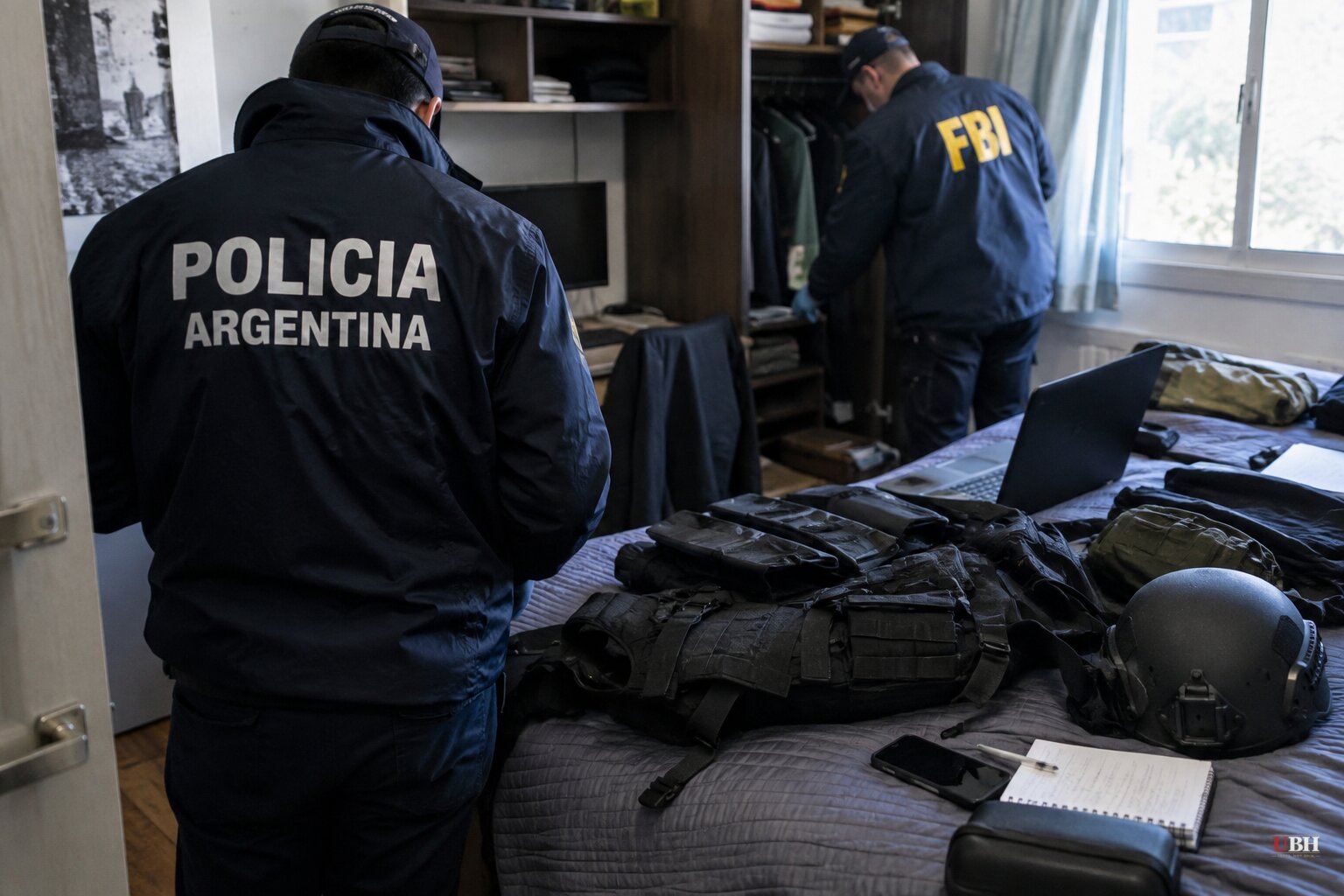
Argentine Federal Police raided a home in Quilmes, Buenos Aires Province, after the FBI warned local authorities that a 15-year-old boy had been using ChatGPT to plan an attack on his own classmates.
Alejandro de Mena, a legal assistant at the Quilmes Juvenile Criminal Prosecution Office No. 1, told Radio Mitre and Infobae that the investigation opened after the FBI's Legal Attaché at the U.S. Embassy in Buenos Aires flagged the case. The New York Post reported the FBI reached out on August 15. The Buenos Aires Herald and Breitbart both put the start of the local investigation at August 19, following the FBI alert. Either way, the timeline is the same: a tip from Washington in mid-August triggered an Argentine criminal probe within days.
De Mena said the alert was generated after the teen used certain monitored words while asking the chatbot what he would need to carry out an attack on his schoolmates. According to de Mena, the boy initially discussed carrying out the attack in 2027 but later returned to the chatbot to ask about moving the timeline up, potentially into this month.
How police found him
Investigators did not have a name to start with. According to Breitbart, Argentina's anti-terrorist unit used open-source intelligence techniques to trace the user's social media presence and address. The Herald reported the teen was ultimately identified through his IP address, the numerical identifier tied to his device's internet connection.
Officers searched the home and seized two cell phones, one of which had reportedly been repurposed to function as a computer, along with two pairs of tactical gloves, a camouflage military-style hat, a skull-print balaclava, a second camouflage balaclava, and black tactical goggles. Investigators also recovered a mask the teen had used to disguise himself in photos, according to the New York Post.
No firearms or ammunition turned up in the search, a detail every outlet covering the case, from the Post to the Herald, confirmed. De Mena told Todo Noticias that investigators have found no evidence so far linking the teen to plans against any other school, and prosecutors are still reviewing the seized phones to determine whether anyone else was involved.
Arrest, or just charges?
Breitbart described the operation as a detention and said the teenager was "arrested" at his residence. The Buenos Aires Herald, reporting from inside Argentina's legal system, described the same event as a raid that led to the teen being charged with public intimidation and summoned to the prosecutor's office, adding that neither he nor his parents had yet given testimony. That represents a meaningfully different legal posture than an arrest, and the Herald's account, grounded in the specific charge filed, is the more precise read on where the case actually stands.
De Mena told Todo Noticias that the boy's parents were "shocked" when police showed up. "Parents are always surprised at that moment, and often fail to grasp the seriousness of what this could lead to," he said.
The Herald reported the case falls under a protocol the Quilmes prosecutor's office set up after a wave of public intimidation cases tied to viral internet challenges in March and April of this year. That protocol has already produced multiple raids and prosecutions, according to de Mena.
This isn't Argentina's first brush with an AI-linked school threat, either. Breitbart noted that in February, FBI tips also led Argentine police to detain two teenagers, ages 15 and 16, over a separate planned school shooting. That case was triggered by antisemitic and racially charged messages the pair posted on social media rather than AI chat logs.
De Mena, for his part, framed the Quilmes case as a rare win. "Often, we are playing catch-up with crime and never manage to get ahead of it before it is committed," he told Infobae. "In this instance, I believe we managed to get ahead of it before it could actually be carried out."
What none of the available reporting explains is exactly how the FBI came to know the contents of a private ChatGPT conversation in the first place, whether through an automated flag from OpenAI's own safety systems, a tip pipeline, or another monitoring mechanism. OpenAI has not been quoted in any of the Argentine or U.S. coverage of this case. The central unanswered question: what exactly is being monitored inside AI chatbots, who sees it, and under what authority.
Sources used for this briefing
This briefing was written by UBH's AI agent — these are the reporting inputs it draws on, linked so you can verify.


