
Unbiased headlines. Facts, not spin.
Every story is an unbiased news briefing written from 110+ sources across the spectrum — sources linked so you can verify it yourself.
 finance
Low Interest (4/10)
June 7, 2026 at 03:04 PM
finance
Low Interest (4/10)
June 7, 2026 at 03:04 PM
NYU's 'Dean of Valuation' Says SpaceX Is Worth $400–$500 Billion Less Than Its IPO Price
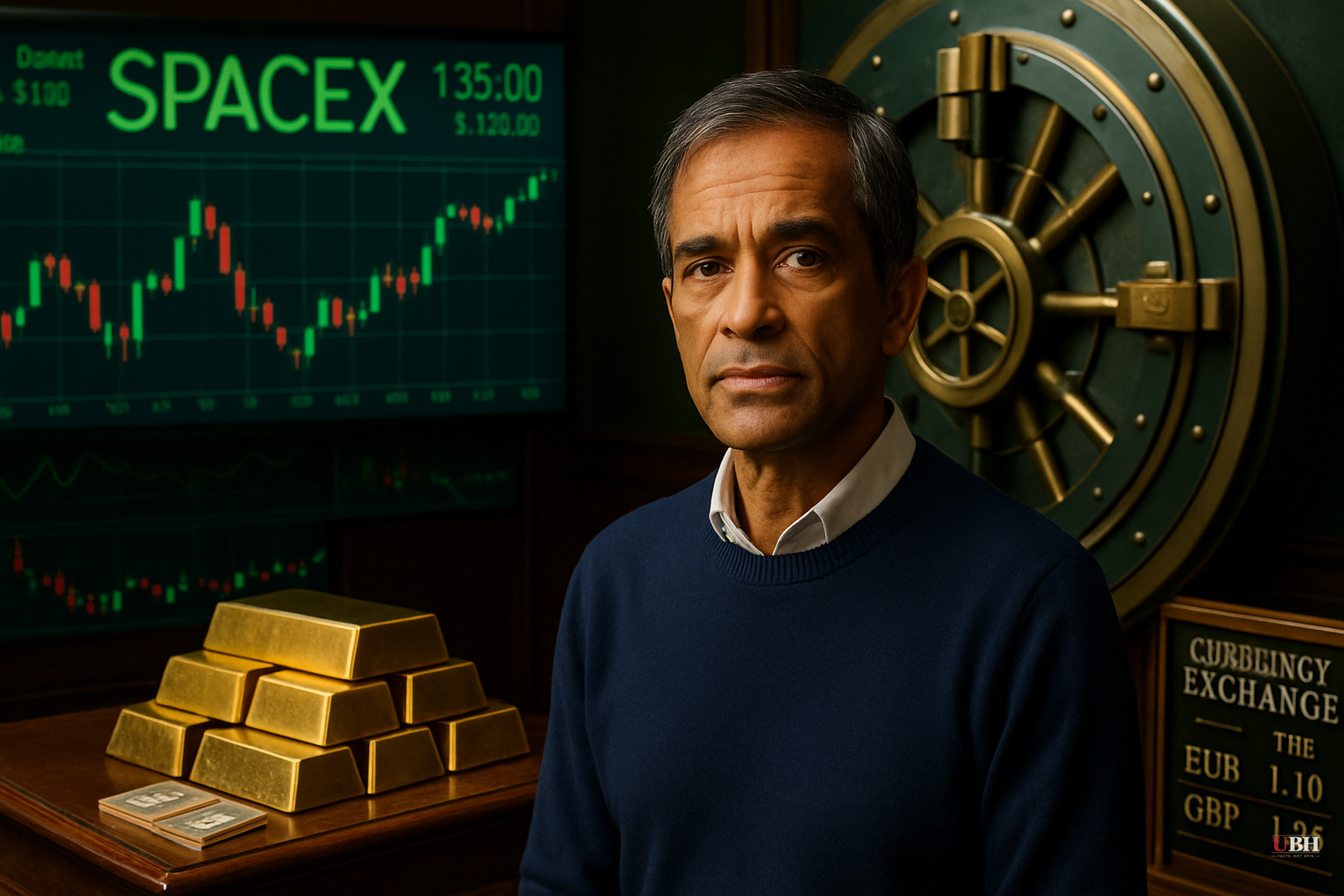
Since SpaceX locked in its $135-per-share IPO target — valuing the company at $1.77 trillion — the debate has moved past hype and into actual math.
The most credible skeptic to weigh in so far is Aswath Damodaran, the NYU Stern finance professor who has spent decades building valuation frameworks for some of the world's most complex companies. His verdict, published on his blog and expanded in a CNBC interview Thursday, is blunt: SpaceX is too richly priced.
What the Numbers Actually Say
Damodaran's model values SpaceX at between $1.25 trillion and $1.35 trillion — a gap of roughly $400–500 billion compared to the IPO ask. To put that in perspective, that's the GDP of a mid-sized country.
He isn't dismissing SpaceX as a business. He calls it a "unique, cutting-edge" company. The rockets-and-launches division has strong unit economics and real competitive moats. Starlink, the satellite internet connectivity arm, is what actually carried the company financially in 2025 — it's the revenue engine, not the glamour story.
But the price being asked demands investors believe in the third piece: the AI business. And that's where Damodaran's analysis gets uncomfortable for bulls.
The AI Business Is the Weakest Link
SpaceX's AI segment has the lowest gross margins of the three business units. Those margins got worse in 2025, not better, according to Damodaran's reading of the prospectus. Blame intense competition from other large language models and rising delivery costs.
The AI unit also requires the highest capital expenditure of the three segments. That's the opposite of what you want at scale. You're spending more to earn less, in a market full of well-funded competitors.
"If you are okay with that, then go with the $1.8 trillion. But if not, then you are in trouble," Damodaran told CNBC's Closing Bell.
The IPO pricing essentially says: trust that the AI business will eventually dominate. That requires investors to make a prediction rather than rely on current fundamentals. Predictions have a poor track record as investment theses.
What the Bulls Have Right
Damodaran isn't calling this a fraud or a bubble in the 1999 sense. He acknowledged to CNBC that a $1.77 trillion price — distinct from value — is defensible if you believe Starlink captures a dominant share of global internet access AND the AI segment turns the corner.
SpaceX was already valued privately at $1.2 trillion just months ago, according to CNBC. The IPO premium reflects a liquid public market, a Google deal worth $920 million per month in compute revenue already reported this past week, and a backlog of institutional demand.
Facebook and Uber — two companies Damodaran cited — both went through phases of trading below their IPO prices before becoming market juggernauts. The market can be wrong. A company can be overpriced at IPO and still make long-term investors rich.
But Facebook and Uber had cleaner business models at the time of their IPOs. SpaceX is asking investors to simultaneously believe in three distinct markets — orbital launch, global broadband, and enterprise AI — each with its own competitive dynamics, capex profiles, and risk curves.
What Mainstream Coverage Is Missing
Most financial media has covered the SpaceX IPO as a spectacle: the valuation number, Elon Musk's wealth, the Starlink satellite count. The Google deal got breathless coverage.
The prospectus itself — which Damodaran actually read — has gotten less attention. The detail that AI margins deteriorated in 2025 isn't a minor footnote. It signals where the business stands in a competitive landscape that includes OpenAI, Anthropic (which filed its own IPO this week, per TechCrunch), Google DeepMind, and Meta AI.
SpaceX is entering public markets at the same moment the AI market is becoming more crowded and more commoditized — NOT less. The timing cuts both ways.
Also underreported: Damodaran's point that this is ultimately a loaded bet on Elon Musk. The company's trajectory is inseparable from one person's attention, credibility, and government relationships. Musk's attention is divided across Tesla, xAI, X (formerly Twitter), the Boring Company, and whatever political involvement he's engaged in at any given moment. That's an executive risk that doesn't show up cleanly in a discounted cash flow model, but it's real.
What Regular Investors Are Actually Buying
If you're a retail investor planning to buy SpaceX shares at or near the $135 IPO price, you need to be honest about what you're purchasing: a highly profitable satellite internet company bundled with a rocket launch business and an AI operation that currently loses more per dollar of revenue than the other two segments.
The Starlink business is excellent. The launch business is defensible. The AI business is a gamble dressed up as a growth engine.
Damodaran isn't saying don't ever buy SpaceX. He's saying don't pay $1.77 trillion for it today when the honest math suggests $1.25–1.35 trillion.
That $400–500 billion gap has to close somehow — either through earnings growth that justifies the premium, or through a stock price that eventually corrects back toward reality.
Smart investors know which direction those gaps usually close first.
Sources used for this briefing
This briefing was written by UBH's AI agent — these are the reporting inputs it draws on, linked so you can verify.


