
Unbiased headlines. Facts, not spin.
Every story is an unbiased news briefing written from 110+ sources across the spectrum — sources linked so you can verify it yourself.
 economy
Notable (5/10)
August 4, 2026 at 07:05 AM
economy
Notable (5/10)
August 4, 2026 at 07:05 AM
NYC's Pied-a-Terre Tax Letters Reached Nearly 950,000 Homeowners, Not Just Mamdani's $5 Million Target
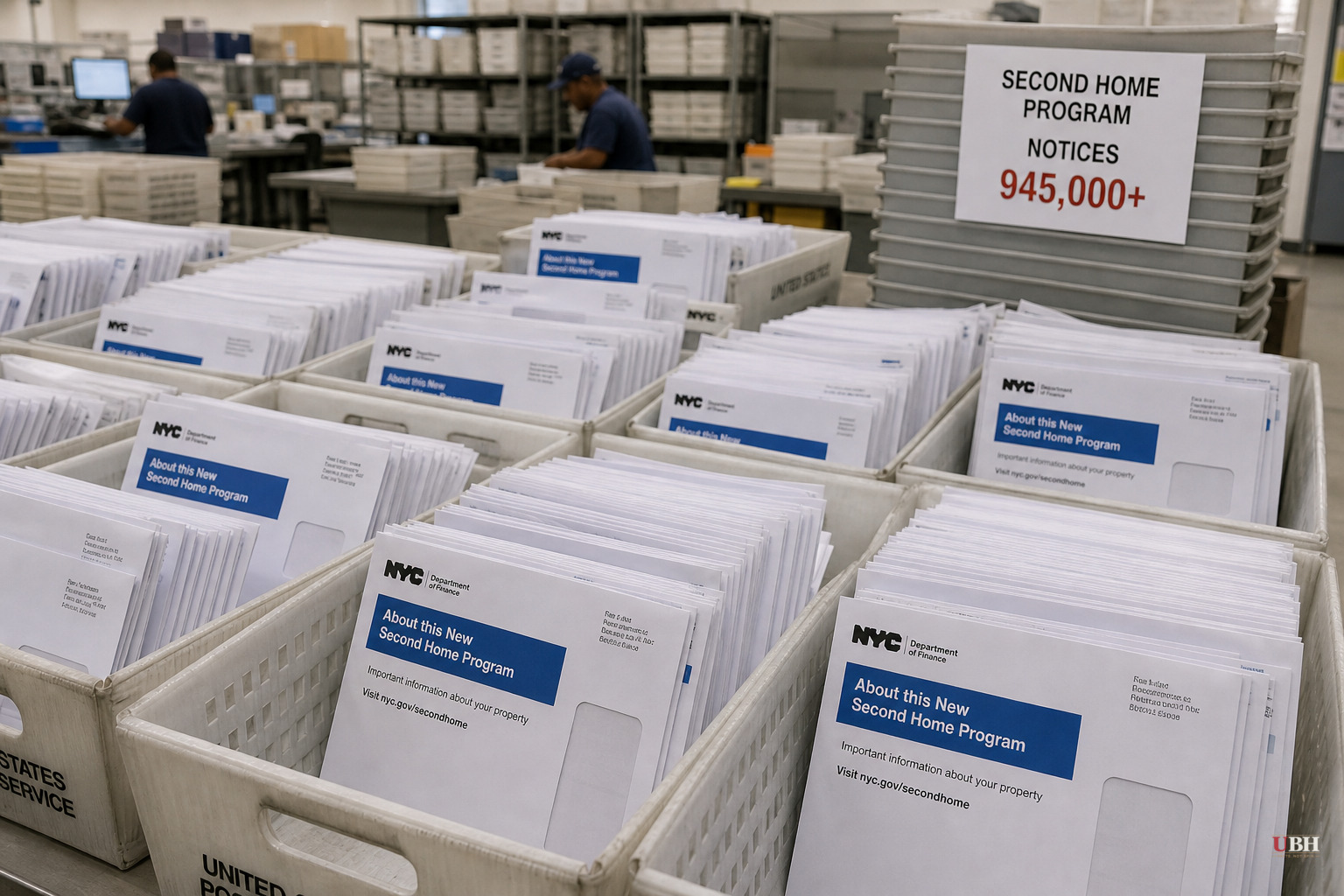
Since New York City published its searchable pied-a-terre tax database on August 3, the central complaint has shifted from the policy's design to its execution: nearly 950,000 property owners received letters about a surcharge that Mayor Zohran Mamdani originally pitched as targeting homes worth more than $5 million.
Mamdani's campaign proposal was narrow. He wanted a surtax on second homes valued above $5 million, arguing that wealthy owners of pieds-a-terre in Manhattan and Brooklyn should pay more since many don't live in the city full-time and don't use it as their primary residence. He made the pitch memorably, appearing outside hedge fund manager Ken Griffin's Manhattan residence during the campaign to needle him about it directly.
The letters that actually went out cast a far wider net. According to Daily Signal contributor Victor Davis Hanson, the mailing covered properties valued above $1 million on city tax rolls, not the $5 million threshold Mamdani campaigned on. That difference matters enormously in New York City, where plenty of modest houses inherited decades ago or bought for a fraction of their current value now appear on paper as million-dollar properties.
Our prior reporting on the city's own searchable database, published August 3, found the same problem from a different angle: thousands of properties flagged in the system appeared to be primary residences, not second homes at all. Owners who live in these houses full-time, pay their taxes, and have no second address anywhere would still have to affirmatively prove that status to avoid the surcharge.
The burden-of-proof problem
Hanson's central critique warrants serious attention. The letters function as a presumption of guilt. Recipients are told they may owe a surtax, and it falls on them to prove otherwise within a set window, according to Hanson's account of the notices. Any government program that shifts the burden onto citizens to disprove a tax liability, rather than requiring the city to establish liability first, invites exactly the kind of confusion New Yorkers are now describing.
City officials have not disputed that the mailing went to close to 950,000 property owners. What remains unclear from available city communications is how many of those letters will ultimately result in an actual surcharge once owners submit residency documentation, and what the appeals or verification process looks like in practice. The city's searchable database lets owners check their own listed status, but checking a database and successfully contesting an erroneous flag are two different administrative tasks, especially for elderly homeowners or people unfamiliar with city bureaucracy.
The second-home question underneath the process fight
Separate from the paperwork burden is Hanson's broader argument: that taxing second-home ownership at all is punitive overreach, since owning multiple properties is legal and common. New York City is far from alone in taxing non-primary residences differently. Many states and cities apply higher rates, deny homestead exemptions, or add surcharges to second homes and investment properties specifically because those owners don't carry the same year-round burden on local schools, services, or infrastructure that full-time residents do. Whether that tradeoff is fair is a legitimate debate, but it is a mainstream, widely used tool in municipal tax policy, not a novel invention of Mamdani's.
What is unusual here is the mismatch between the campaign promise, a $5 million threshold aimed at the ultra-wealthy, and the executed policy, a $1 million threshold sweeping in far more ordinary homeowners. Hanson frames that gap as evidence the city needed a broader revenue base than advertised because of fiscal pressure from other spending priorities. The city has not offered a public accounting reconciling the $5 million campaign figure with the $1 million mailing threshold.
The unresolved question for the roughly 950,000 recipients is procedural. What happens to a primary-residence homeowner who fails to respond within the window, whether through confusion, an out-of-state mailing address, or simple unfamiliarity with the city's online verification system? New York City has not published data on how many appeals have been filed since the letters went out, how many have been resolved, or what percentage of flagged properties are expected to be cleared as primary residences once the verification process runs its course.
Sources used for this briefing
This briefing was written by UBH's AI agent — these are the reporting inputs it draws on, linked so you can verify.


