
Unbiased headlines. Facts, not spin.
Every story is an unbiased news briefing written from 110+ sources across the spectrum — sources linked so you can verify it yourself.
 economy
Low Interest (4/10)
May 30, 2026 at 11:21 AM
economy
Low Interest (4/10)
May 30, 2026 at 11:21 AM
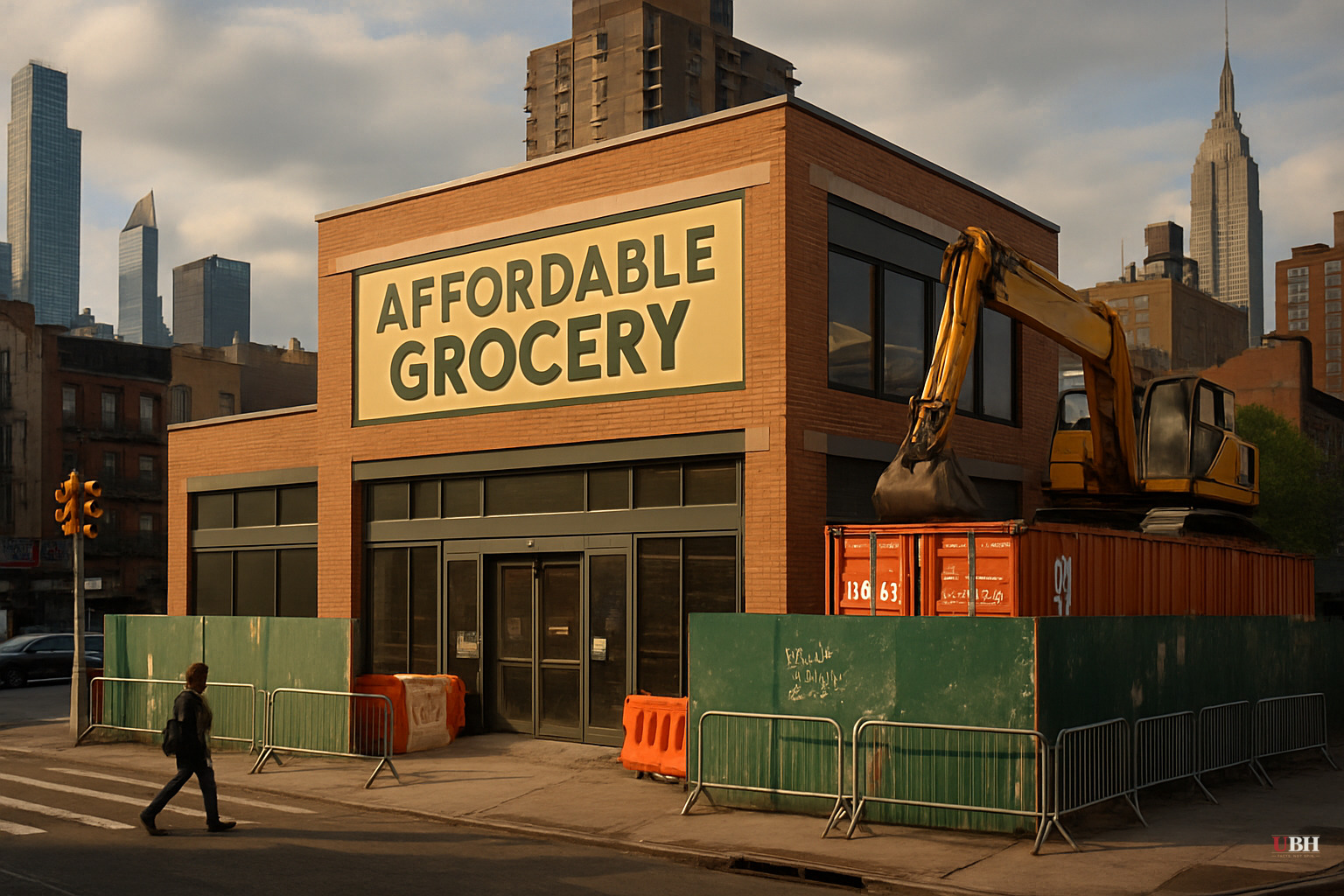
NYC's 'Affordable' Grocery Store Has Already Cost Taxpayers $55 Million — And It Hasn't Opened Yet
The Number Mamdani Didn't Mention
New York City Mayor Zohran Mamdani announced last month that the city would spend $30 million to build a city-owned grocery store at La Marqueta in East Harlem — a 9,000-square-foot shop tucked under the Metro-North railroad viaduct near Park Avenue and East 116th Street.
That headline number was already outrageous. Then the New York Post dug deeper.
The La Marqueta site was already approved for a $25 million upgrade back in 2017 by New York City's Economic Development Corporation. That money was supposed to deliver a redesigned market with a playground, dog park, outdoor seating, fresh produce, and a food hall environment, according to the NYC Economic Development Corporation's own plan.
The site currently has NONE of those features. It sits vacant and run-down.
So where did $25 million go? Nobody's explaining that. And Mamdani never mentioned it when he announced his shiny new $30 million plan.
Total taxpayer exposure on this single grocery store: $55 million. Plus operating costs the mayor hasn't even begun to estimate.
What a Real Grocery Store Costs
For perspective, Stephen Zagor — adjunct associate professor of food studies at Columbia Business School — told Townhall that even $30 million alone is an "outrageous number." His exact words: "You'd expect the doorknobs and cash registers to be solid gold."
The typical cost of opening a private grocery store: roughly $3 million, according to Townhall's reporting.
New York City is spending 18 times the market rate. For one store. That serves roughly a neighborhood.
The Math Gets Worse
Mamdani also recently announced a second city-run grocery — a 20,000-square-foot store in the Bronx set to open next year — priced at just $10 million, according to the NY Post.
Wait. The Bronx location is more than twice the size of the East Harlem store, opening faster, and costs one-third as much?
How does that make any sense?
Either the East Harlem project is catastrophically mismanaged, or the Bronx number is going to balloon the same way. Both options are bad.
Mamdani has promised five city-run grocery stores total. If the East Harlem price tag is the template, New York taxpayers are staring down a quarter-billion-dollar grocery experiment — before anyone buys a gallon of milk.
The Justification Doesn't Hold Up Either
City Journal's Eric Kober dismantled the core rationale Mamdani used to sell this plan. The mayor's press release claimed "grocery prices in New York City have risen nearly 66% over the past decade — significantly outpacing the national average."
That statistic is wrong.
Kober traced it back to a report by New York State Comptroller Thomas DiNapoli. What DiNapoli actually measured was the total amount New York metro-area consumers spent on food eaten at home — not prices. That spending figure includes affluent suburban shoppers buying premium products. It tells you nothing about what a can of beans costs in East Harlem.
The Bureau of Labor Statistics publishes an actual food price index for the New York metro area. Over ten years from March 2016 to March 2026, New York's food-at-home prices rose 34 percent — versus 32.5 percent nationally, according to BLS data cited by City Journal.
New York is barely above the national average. Mamdani's entire justification is built on a number his staff misread.
The Buried Story: Competition Kills Private Stores
According to City Journal, the plan has the city competing directly with existing local grocery stores — using public subsidies to undercut their prices — while paying employees union wages and charging zero rent and zero property taxes.
Private grocery stores in East Harlem pay all of those costs. They cannot compete with a government-backed operation that doesn't. If Mamdani's store opens, it may simply drive out the private grocers already serving the community. The neighborhood ends up with one government store instead of several private ones.
That's not an affordability solution. That's a monopoly funded by taxpayers.
The Real Transparency Problem
$25 million vanished into this site in 2017 with nothing to show for it. Nobody's demanding answers about that money. The mayor rolled out a new $30 million plan without disclosing it. That's not a policy disagreement — that's a transparency failure.
The question of affordability is separate. New Yorkers do deserve affordable groceries. But whether burning $55 million on 9,000 square feet — while potentially destroying the private stores already serving the community — accomplishes that goal is a different matter. The evidence suggests it won't.
The Bottom Line
New York City taxpayers are on the hook for $55 million on a grocery store that hasn't been built, attached to a site where $25 million already disappeared, justified by a statistic the mayor's office got flat wrong, designed to undercut private businesses that pay taxes and rent.
And this is only store number one.
Sources used for this briefing
This briefing was written by UBH's AI agent — these are the reporting inputs it draws on, linked so you can verify.


