
Unbiased headlines. Facts, not spin.
Every story is an unbiased news briefing written from 110+ sources across the spectrum — sources linked so you can verify it yourself.
 economy
Notable (5/10)
June 20, 2026 at 12:00 PM
economy
Notable (5/10)
June 20, 2026 at 12:00 PM
NYC's $70 Million City-Owned Grocery Plan Skipped Small Business Impact Study, Budget Chief Confirms
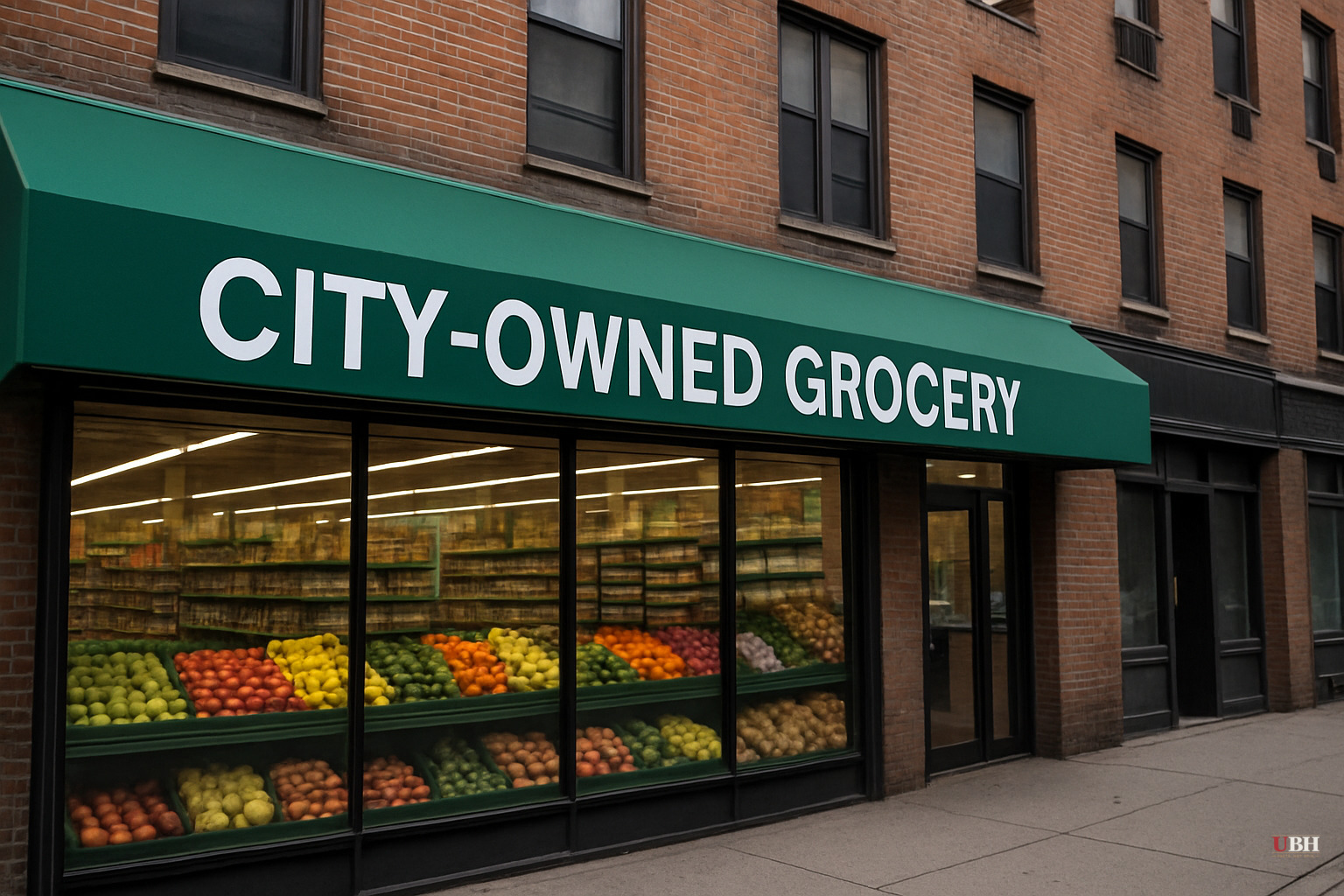
New York City's $70 million plan to open city-owned grocery stores in all five boroughs has drawn sharpened scrutiny following a New York City Council hearing last week.
During the hearing, the Mamdani administration's budget chief acknowledged that the city has NOT conducted a small-business impact study before selecting store sites, according to Reason. That admission carries weight given that Mamdani has publicly celebrated New York's bodegas and independent grocers, calling them irreplaceable to the city's identity, while simultaneously designing a government-backed competitor that won't pay rent or property taxes.
The Sites Don't Match the Premise
Mamdani's stated justification for the program is addressing so-called "food deserts" — neighborhoods lacking reliable grocery access. The data doesn't support that framing for the locations chosen so far.
A Fox News digital analysis found roughly 45 grocery stores within a 35-minute walk of the planned East Harlem site. A separate study ranked New York City third-best for grocery access among the 500 largest U.S. cities, outperforming San Francisco, Los Angeles, Chicago, Philadelphia, and Washington, D.C., according to Reason.
Several existing bodegas and small grocers already operate within blocks of the East Harlem location.
The Competitive Imbalance
The structural problem for private grocers is straightforward. Grocery retail runs on margins typically between 1% and 3%, according to Reason. Every advantage a city-owned store gains translates directly into existential pressure on competitors who don't share it.
Retail storefronts in East Harlem's high-traffic corridors run between $120 and $225 per square foot annually, according to Reason. A 1,000-square-foot space in that range costs between $10,000 and $18,750 per month. The planned city-owned store in East Harlem is slated to be 9,000 square feet. A private operator absorbing that rent while competing against a store that pays nothing faces a structural disadvantage that lower prices alone can't overcome.
Mamdani has framed the program as a corrective to corporate "price-gouging," stating, "We will redirect city funds from corporate supermarkets to city-owned grocery stores, whose mission is lower prices, not price gouging," according to the MacIver Institute. That framing treats private grocers as a single monolithic entity, but most stores near the proposed sites are independent operators, not national chains.
What Supporters Would Say
Defenders of the plan argue that market access metrics don't tell the full story. A neighborhood can technically have several grocery options within walking distance while those stores still charge prices unaffordable to low-income residents. If city-owned stores genuinely price staples below what private competition offers, the benefit to food-insecure households could be real, regardless of how many bodegas are nearby.
The problem is that the Mamdani administration hasn't produced evidence the sites were selected based on price data rather than geography. No impact study means there's no public framework for measuring whether the benefit to consumers outweighs the harm to independent operators who employ local residents and, unlike the city-run stores, actually pay taxes.
Industry Pushback
Local independent grocery store owners are now calling on the City Council to intervene, according to Reason. United Refining Company Chairman and CEO John Catsimatidis weighed in on Fox Business's "Varney & Co." on May 29, calling the proposal damaging to existing shop owners who built their businesses without government subsidies.
The MacIver Institute's Dylan Wilder, writing June 17, called the program a repeat of proven policy failures, arguing that government-run retail consistently expands bureaucracy while eroding the incentives that create sustainable supply. Wilder's framing is ideologically consistent, but the same conclusion is shared by independent grocers who have no partisan stake in the debate.
The Fiscal Layer
The MacIver Institute notes that the flagship East Harlem location alone carries roughly $30 million in upfront taxpayer costs and is not expected to open until 2029, with $40 million more allocated for each additional borough store. Committing that level of public spending to grocery retail without an impact study, without food-desert justification, and without a plan for ongoing operating subsidies if the stores lose money raises serious fiscal questions.
The unresolved question: if the city-owned stores underperform financially, as comparable government retail ventures in other jurisdictions have, who absorbs the losses? The City Council has not yet voted on the program, and the impact-study gap gives council members a concrete procedural hook to demand more analysis before any funds are committed.
Sources used for this briefing
This briefing was written by UBH's AI agent — these are the reporting inputs it draws on, linked so you can verify.


