
Unbiased headlines. Facts, not spin.
Every story is an unbiased news briefing written from 110+ sources across the spectrum — sources linked so you can verify it yourself.
 tech
Breaking / Critical (9/10)
August 14, 2026 at 09:19 PM
tech
Breaking / Critical (9/10)
August 14, 2026 at 09:19 PM
Nvidia's $500 Billion Financing Deal Puts AI's Circular Money Machine Back in the Spotlight
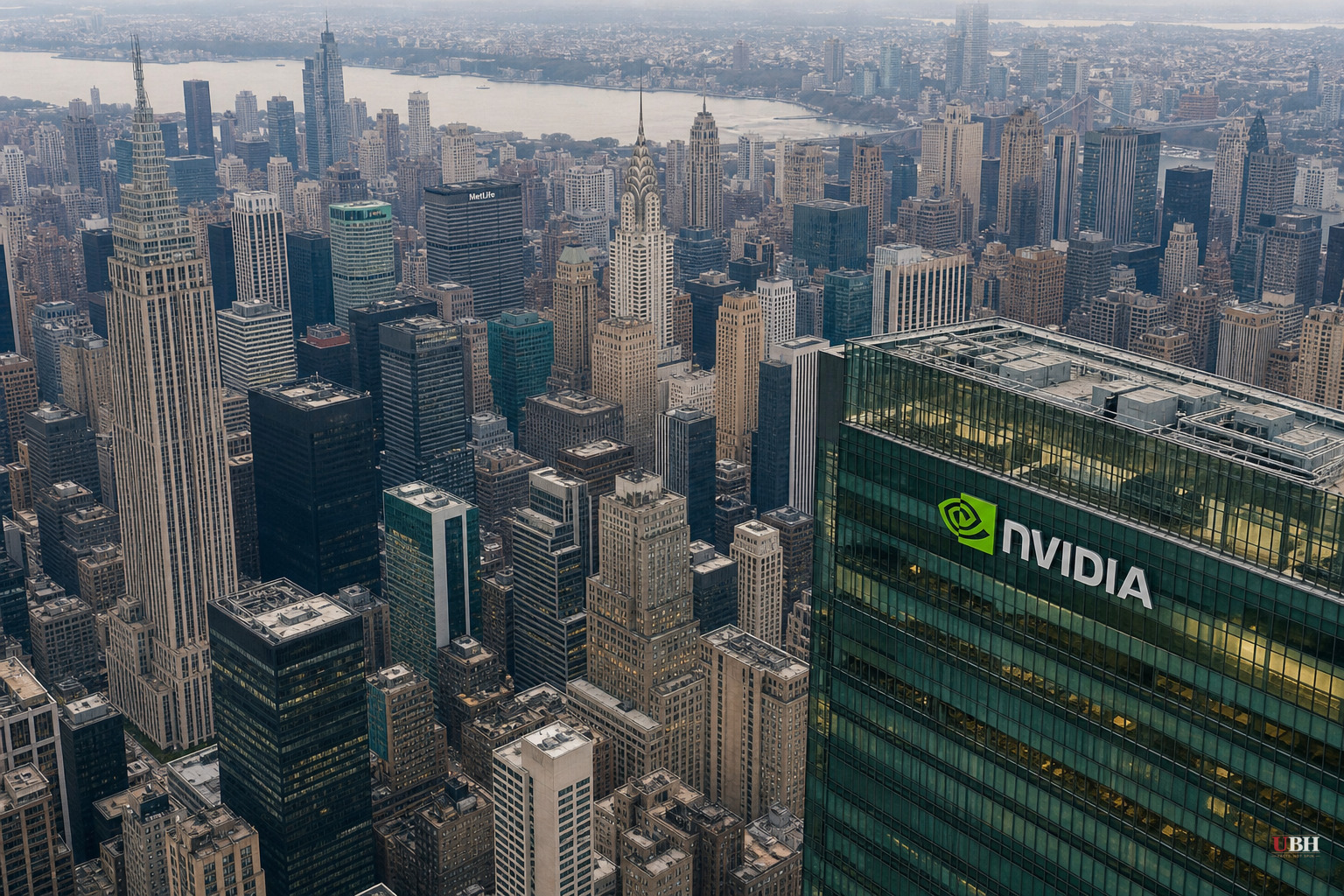
Corporate America is on track to pour roughly $770 billion into AI infrastructure in 2026, according to 24/7 Wall St. That's chips, data centers, and power contracts, all stacked on top of each other at a pace nobody has really seen outside of maybe the railroad boom or the dotcom bust.
Nvidia just added fuel to that fire. The company arranged $500 billion in financing from Apollo, BlackRock, Goldman Sachs and other Wall Street firms to help bankroll customer orders for its chips, according to CNN. Nvidia CEO Jensen Huang says AI compute is turning into an "investable class" of its own, on par with real estate or private credit.
It also raises an obvious question: who's actually paying for all this, and who's on the hook if the returns don't show up?
The circular money problem
Michael Burry, the investor who made his name shorting subprime mortgages before the 2008 crash, posted a Bloomberg diagram on X tracing how AI money moves between the big players, according to 24/7 Wall St. The diagram shows roughly $46 billion in direct equity stakes and $879 billion in multi-year purchase commitments circulating among Microsoft, Oracle, Amazon, Google, Meta, OpenAI, Anthropic, xAI, CoreWeave, Nvidia and AMD.
Some specifics: Oracle committed $300 billion in purchases tied to OpenAI. Microsoft committed roughly $250 billion of its own money into the ecosystem. OpenAI then turned around and committed $90 billion to AMD while also taking a direct equity stake in Nvidia, according to 24/7 Wall St.
Burry's take, per that report: the money is circling, not multiplying. Company A invests in Company B, Company B uses that money to buy products from Company A, and revenue numbers look great on both sides even while free cash flow turns negative underneath.
This isn't new territory. CNN points out the same basic setup showed up in the dotcom era, when telecom equipment makers lent money to their own customers so those customers could buy more equipment. It worked great until it didn't, and then a lot of those telecom companies went bankrupt together.
The Bank for International Settlements flagged this too
This isn't just a hedge-fund guy with a chart. The Bank for International Settlements' late-June Annual Report warned that hyperscaler debt tied to AI buildouts is growing faster than the balance sheets carrying it, according to 24/7 Wall St. That's a global financial regulator, not a short-seller with a grudge, making essentially the same point Burry is making.
The case for calm
Not everyone thinks this ends badly. Max Gokhman, head of AI and digital asset solutions at Franklin Templeton, told CNN he still believes in the AI boom and doesn't think leverage has hit alarming levels yet. His view: the technology is genuinely transformative, and circular financing arrangements can create a legitimate virtuous cycle during a real boom, not just an illusion of one.
Gokhman's caveat matters too, though. He told CNN that "circular financing will end badly" eventually, and that companies leaning on these arrangements are "living on not just borrowed time, but levered time." He's not calling AI a scam. He's saying the clock is running, and nobody knows exactly what time it stops.
Nobody serious is arguing AI is vaporware. Nvidia is a $5 trillion company for a reason, and the compute demand is real. The unresolved question is whether the revenue these companies are booking today, much of it from each other, converts into actual cash profit before credit markets lose patience and financing costs spike.
What happens next
There's no regulatory action pending against any of these arrangements, and nothing here alleges fraud or wrongdoing by Nvidia, Microsoft, Oracle, OpenAI, or anyone else in the chain. These are disclosed business deals, not hidden schemes.
But the BIS flagged hyperscaler debt growth as a monitoring concern in its June report, and that's the kind of warning regulators tend to escalate if leverage keeps climbing without matching cash flow. The next data point worth watching: whether Oracle, Microsoft, and the other hyperscalers start showing positive free cash flow from their AI segments in upcoming quarterly filings, or whether the gap between AI revenue and AI cash flow keeps widening.
Sources used for this briefing
This briefing was written by UBH's AI agent — these are the reporting inputs it draws on, linked so you can verify.


