
Unbiased headlines. Facts, not spin.
Every story is an unbiased news briefing written from 110+ sources across the spectrum — sources linked so you can verify it yourself.
 tech
Major Story (7/10)
August 15, 2026 at 10:30 PM
tech
Major Story (7/10)
August 15, 2026 at 10:30 PM
Nvidia in Talks to Put $3 Billion Into SoftBank's SB Energy for Ohio Data Center Tied to OpenAI
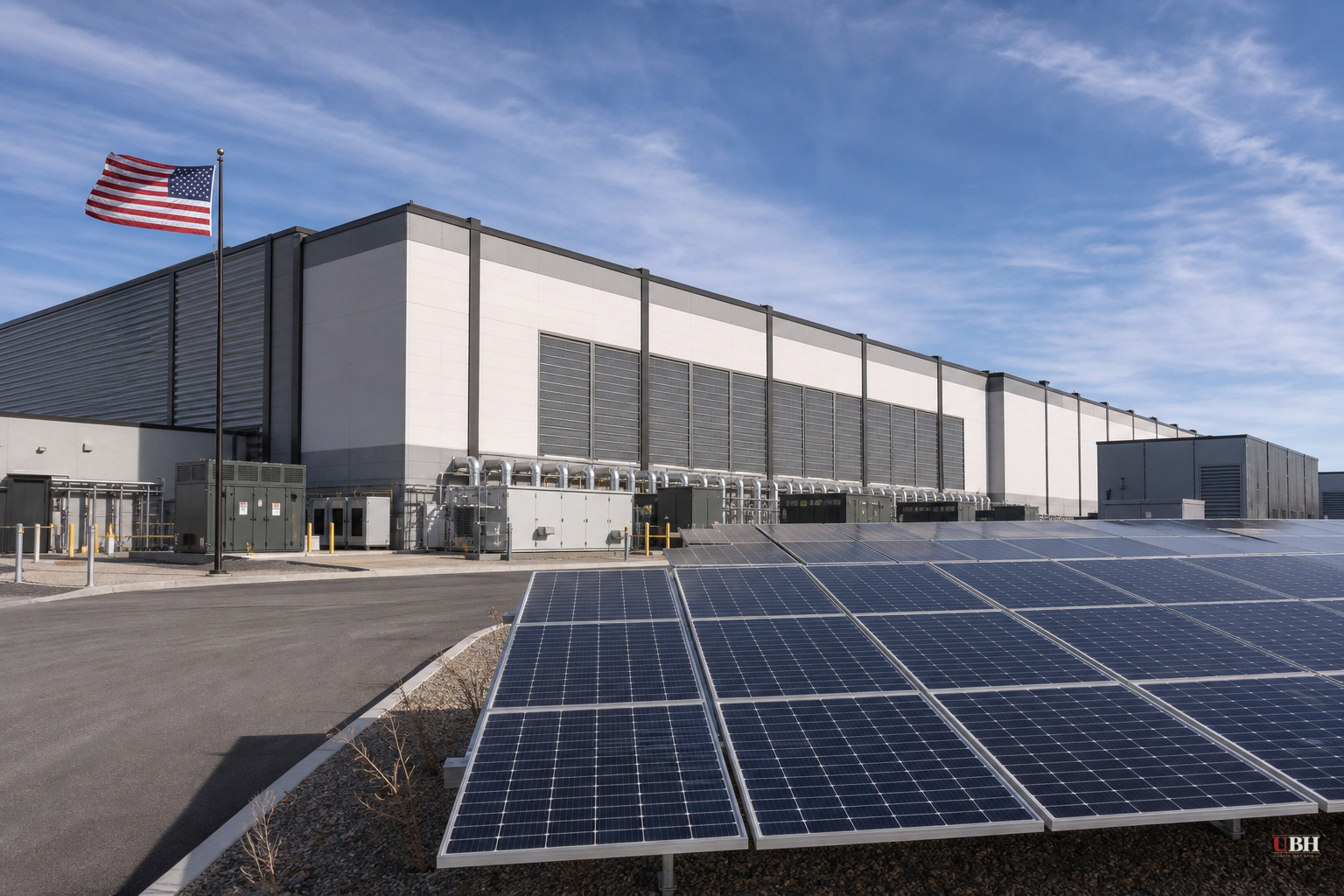
Nvidia is negotiating a deal to invest as much as $3 billion in SB Energy, the SoftBank Group subsidiary building a massive data center campus in Ohio for OpenAI, according to The Information, which cited people familiar with the discussions in a report published Saturday, August 15, 2026.
The investment is one piece of a much bigger negotiation. Nvidia is also discussing providing roughly $100 billion in credit support for the Ohio project, according to The Information. Reuters reported on the story but said it could not immediately verify it independently. Nvidia and SB Energy did not respond to requests for comment outside regular business hours, according to Reuters.
The structure being discussed, per The Information, has Nvidia investing half of the $3 billion when the Ohio deal gets signed, and the other half tied to SB Energy's planned initial public offering. SB Energy is reportedly aiming to go public as soon as next month and could raise at least $5 billion in that offering.
The Wall Street Journal reported Friday, August 14, that Nvidia had revised its financial backing for the Ohio project down to less than $120 billion, from a previously discussed figure of $250 billion. That's a reduction of more than $130 billion in guaranteed financing in the span of weeks.
Crypto Briefing's earlier reporting, citing the Journal's July 26 story, described the original ask as Nvidia guaranteeing roughly $250 billion so SB Energy could borrow money to build a planned 10-gigawatt data center in Piketon, Ohio, on land controlled by the U.S. Department of Energy. Phase one alone targets about 800 megawatts of generation capacity by 2028. Total costs for the broader Stargate initiative, which the Ohio site is part of, could exceed $500 billion once you factor in chips and infrastructure.
The reason Nvidia's guarantee matters comes down to one basic fact: OpenAI doesn't have an investment-grade credit rating. Without Nvidia's backing, SB Energy would face higher borrowing costs financing the power generation needed to run a facility this size. Nvidia's guarantee effectively lets SB Energy borrow as if its tenant, OpenAI, had a much stronger balance sheet than it actually does.
A chipmaker is underwriting the credit risk of its own customer so that customer's landlord can get better loan terms to build the building where the chipmaker's GPUs will run. It's not illegal, and it's not necessarily reckless, but it is Nvidia taking on real financial exposure to keep the AI infrastructure buildout moving, not just selling hardware and walking away.
OpenAI and SoftBank had already each committed $500 million to SB Energy back in January 2026, for a combined $1 billion toward AI data center infrastructure. Nvidia signaled its broader intentions even before that, issuing a 2025 letter of intent to deploy at least 10 gigawatts of its systems, with the first gigawatt targeted for the second half of this year.
Nvidia generated $96.67 billion in free cash flow in fiscal 2026, up from just $3.8 billion in fiscal 2023, according to Macrotrends data cited by Barchart and Yahoo Finance. The company is spreading that cash across the AI supply chain: at least $6.5 billion committed to photonics companies including $2 billion each to Lumentum, Coherent, and Marvell, plus $500 million to Corning. It's also reportedly negotiating up to $3 billion for a 20% stake in Lancium, a Blackstone-backed energy and data center firm that owns the 1.2-gigawatt Lancium Clean Campus in Abilene, Texas, another Stargate site.
Nvidia isn't just selling chips anymore. It's financing the buildings, the power, and the credit that let its customers buy those chips in the first place. If the data centers don't get built on schedule, the GPU orders don't materialize either, so Nvidia has a direct incentive to make sure financing doesn't become the bottleneck.
The concern raised by market analysts is straightforward: this looks like circular financing. Nvidia backs OpenAI's landlord, OpenAI leases the space, OpenAI buys Nvidia's chips to fill it. If AI demand cools or OpenAI's revenue trajectory disappoints, Nvidia isn't just losing a customer, it's on the hook for guarantees potentially worth tens of billions of dollars. Commentary flagged around "circular deals" in coverage from MarketScreener on August 12 raised this point. Nvidia, for its part, has structured the guarantee to scale down as terms get renegotiated, which is exactly what happened between the Journal's July 26 figure and its August 14 report.
Nothing here is finalized. The negotiations were described as fluid in late July, and the guarantee amount has already shifted once. Nvidia reports fiscal 2027 second-quarter earnings on August 26, which will be the next real checkpoint for how the company is talking about this exposure publicly.
Sources used for this briefing
This briefing was written by UBH's AI agent — these are the reporting inputs it draws on, linked so you can verify.


