
Unbiased headlines. Facts, not spin.
Every story is an unbiased news briefing written from 110+ sources across the spectrum — sources linked so you can verify it yourself.
 energy
Notable (6/10)
Event date: August 16, 2026
energy
Notable (6/10)
Event date: August 16, 2026
NuScale Says Proposed TVA Nuclear Program Could Hit 8 Gigawatts, Would Nearly Double TVA's Existing Fleet
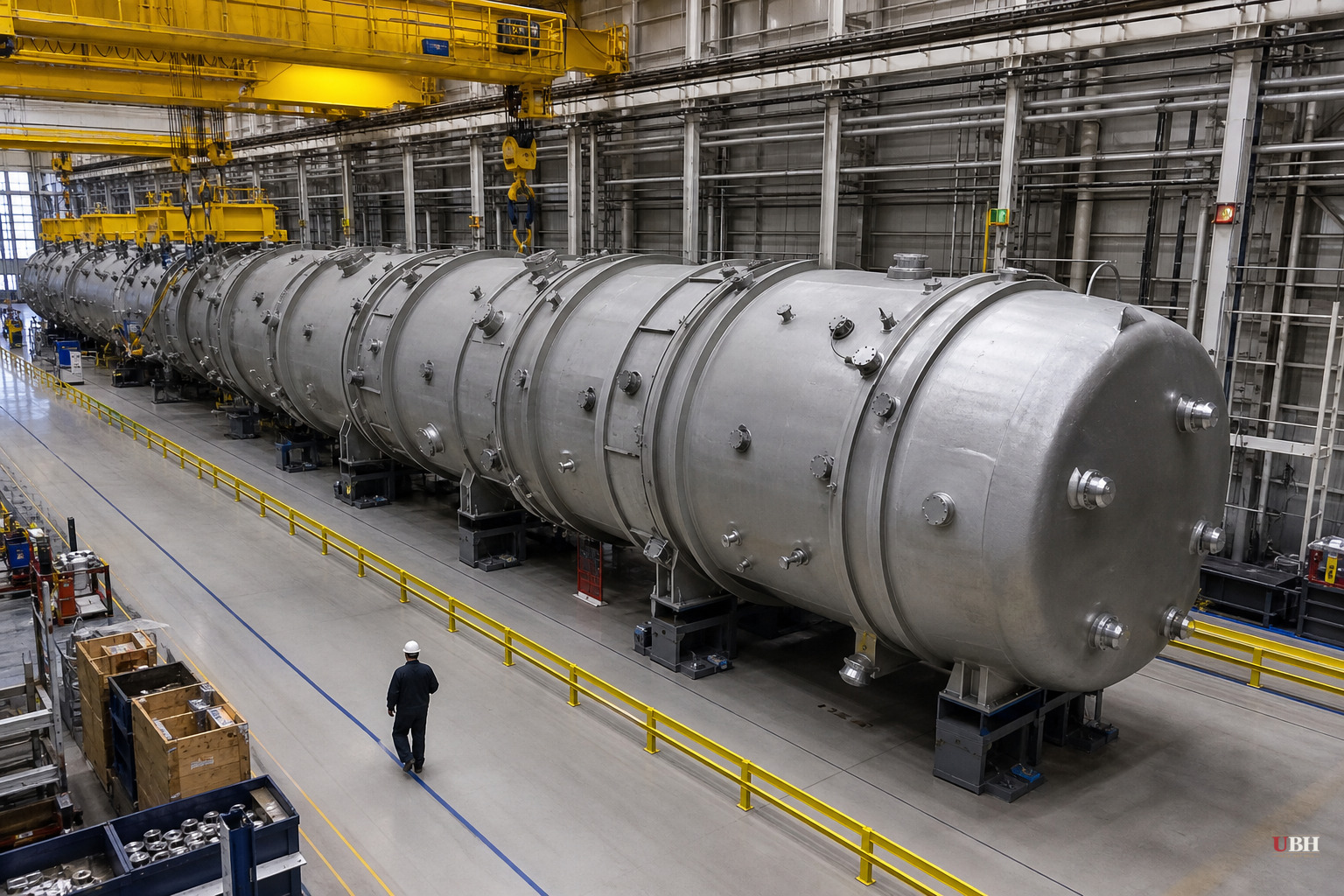
NuScale Power told investors on its Q2 2026 earnings call that a proposed nuclear power program connected to the Tennessee Valley Authority could scale to between 6 and 8 gigawatts of capacity. CEO John Hopkins called it a potential contender for the largest small modular reactor deployment program in U.S. history, according to a report via 247wallst.com and confirmed in NuScale's own August 5, 2026 earnings release.
The numbers are large enough to matter. TVA currently runs about 8.3 gigawatts of nuclear capacity across its whole fleet, according to the reporting. NuScale is talking about a program that could come close to doubling that, using a reactor design that has never been built at commercial scale anywhere in the country.
What's actually been agreed to, and what hasn't
This is not a signed, binding deployment contract for six power plants. It's a collaborative agreement, first announced September 2, 2025, that outlined up to 6 gigawatts of potential capacity. Hopkins' newer comments push the ceiling to 8 gigawatts as Southeast power demand forecasts rise, but the arrangement still runs through ENTRA1 Energy, NuScale's exclusive strategic partner, and any actual power sales to TVA would depend on future power purchase agreements that have not been finalized.
Under the proposed structure, ENTRA1 and NuScale would operate as a 50/50 joint venture. ENTRA1 would finance, own, and operate six nuclear plants using NuScale's reactor technology across TVA's Southeastern service territory. NuScale supplies the design. ENTRA1 takes on the capital risk. TVA, if it signs on, gets to buy carbon-free baseload power without building or owning the plants itself.
NuScale holds one real, tangible advantage here that no competitor can currently claim: it is the only SMR design with full U.S. Nuclear Regulatory Commission certification, covering its 77 megawatt-electric module and related configurations, according to NuScale's own press release. The company says it has more than 60 supply chain partners under contract, including fuel supplier Framatome and heavy-forging manufacturer Doosan Enerbility, and it ended Q2 with $1.9 billion in cash and investments, as reported by The Motley Fool.
Why the skepticism is fair
Anyone who remembers NuScale's last big swing has reason to demand hard commitments before treating this as anything but a proposal. The company's Carbon Free Power Project with Utah Associated Municipal Power Systems was supposed to be the proof-of-concept demonstration plant. It was canceled in late 2023 after costs spiraled, per 247wallst.com's reporting. Going from a canceled single demonstration project to a proposed six-site, 8-gigawatt fleet in under three years is a massive leap. It's fair for investors, ratepayers, and TVA's own board to demand hard commitments, cost estimates, and construction timelines.
The Motley Fool put the scale in useful context: the largest conventional nuclear plant in the U.S. today has four reactors and 4.65 to 4.8 gigawatts of total capacity. NuScale is talking about a program that could exceed that using unproven modular technology deployed across six separate sites simultaneously. The distinction between "proposed" and "built" matters.
The demand driving all of this is real
Whatever happens with TVA, the underlying pressure is not manufactured. Global data center electricity consumption is projected to hit 565 terawatt-hours in 2026, up 26% from 447 terawatt-hours in 2025, according to Gartner research reported by Breitbart via Tom's Hardware. AI-optimized servers alone are expected to draw 175 terawatt-hours this year, an 84% jump, and Gartner projects AI hardware will out-consume conventional servers by 2027. Gartner analyst Linglan Wang said power availability, not chip supply, is now the binding constraint on AI expansion.
That demand crunch is why Chevron and Microsoft struck a 20-year power deal, described by CPA and market analyst Dan Geltrude on Fox News as a "tremendous breakthrough" showing tech companies turning to traditional energy producers to lock in supply. It's also why more than 75 data center projects worth a combined $130 billion were blocked in early 2026 over local opposition tied to power and water concerns, per Breitbart's reporting.
The Daily Signal raised a related and legitimate point: data center growth doesn't have to mean higher household electricity bills, but it depends entirely on how states structure the deal. Texas's Senate Bill 6 requires large data center operators to help fund grid upgrades themselves rather than passing the cost to ordinary ratepayers. Whether TVA and its regulators build similar ratepayer protections into any NuScale-ENTRA1 arrangement is an open question.
TVA has not confirmed a signed power purchase agreement, and no construction has begun at any of the six proposed sites. The next concrete marker to watch is whether ENTRA1 and TVA move from "advancing discussions," as Hopkins described it, to an actual signed contract with disclosed pricing and timelines.
Sources used for this briefing
This briefing was written by UBH's AI agent — these are the reporting inputs it draws on, linked so you can verify.


