
Unbiased headlines. Facts, not spin.
Every story is an unbiased news briefing written from 110+ sources across the spectrum — sources linked so you can verify it yourself.
 tech
Low Interest (4/10)
May 24, 2026 at 03:21 PM
tech
Low Interest (4/10)
May 24, 2026 at 03:21 PM
Nuro Secures Two California Permits in One Week, Aims to Launch Robotaxi Service in San Francisco
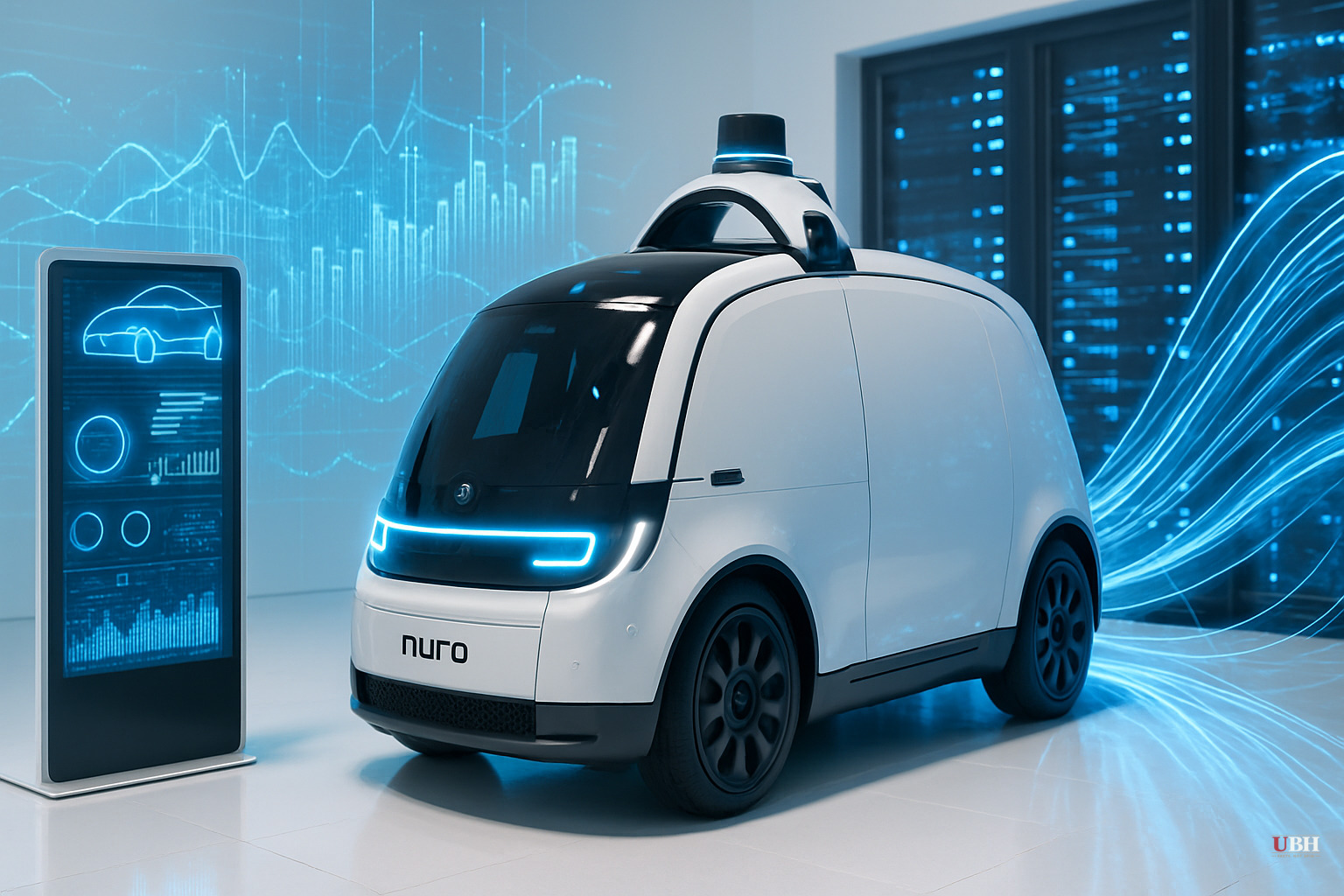
Nuro Just Got Two Big Permits. Here's What That Means.
Nuro secured a California DMV permit to test driverless robotaxis on public roads, then followed it days later with a California Public Utilities Commission (CPUC) Drivered Pilot Permit — cleared to conduct paid autonomous passenger service testing. Two permits in one week.
The company plans to launch its robotaxi service in San Francisco later in 2026, according to The Verge.
From Delivery Bots to Robotaxis: A Company That Pivoted Hard
Nuro was founded in September 2016 by Jiajun Zhu and Dave Ferguson — both veterans of Google's self-driving car project that became Waymo, according to Wikipedia. Their original mission was autonomous delivery. Not passengers. Groceries.
They raised $92 million in launch funding from Greylock Partners and Gaorong Capital. Then $940 million from SoftBank in 2019, valuing the company at $2.7 billion. Then another $500 million Series C in November 2020, pushing the valuation to $5 billion.
They partnered with Kroger, Domino's, CVS. They built custom cargo robots with no steering wheel, no mirrors, no pedals. They became the first company to receive an autonomous vehicle exemption from NHTSA, according to Wikipedia.
Then the delivery business apparently didn't deliver. In September 2024, Nuro pivoted — abandoning its delivery-first identity and refocusing entirely on licensing its Level 4 autonomous driving system, called Nuro Driver, to automakers and mobility providers.
That pivot led straight to the robotaxi play.
The Uber and Lucid Deal Is the Real Story
Nuro struck a deal with Uber and Lucid to deploy tens of thousands of robotaxis across the US. Uber pumped hundreds of millions of dollars into Nuro as part of the arrangement, according to The Verge. The vehicles will use Lucid's hardware platform paired with Nuro's Driver software.
The permits matter because of the industrial-scale deployment ambition behind them.
Uber has been burned before. Its own self-driving program ended after a fatal pedestrian crash in Tempe, Arizona in 2018 and was eventually sold to Aurora. Now Uber is betting on being the platform layer — partnering with AV developers rather than building in-house. Waymo rides are already bookable through the Uber app in some markets. Nuro is another chip in that same strategy.
The 'Second Mover' Argument: Smart Strategy or Spin?
Nuro co-CEO Dave Ferguson openly frames his company as a second mover — and says that's an advantage.
"There is a lot of value in this sort of classic second mover perspective," Ferguson told The Verge. "We have a huge amount of respect for Waymo … In some of the rare cases where they're having challenges, [Nuro is] using those to kick the tires on our system."
That's a coherent argument. Waymo has been operating commercially since 2020. It now runs over 3,000 driverless vehicles in at least 10 US cities, according to The Verge. Every edge case Waymo hits — every incident, every regulatory hiccup, every PR problem — is a data point for competitors paying attention.
The missing context: Waymo also has a decade-plus head start, the full financial backing of Alphabet, and a dataset nobody else can replicate. "Second mover advantage" is a real concept in business strategy. It's also what companies say when they're behind.
Tesla, Zoox, Avride, and Motional are all in the same chase pack. Being thoughtful about Waymo's stumbles doesn't automatically translate into catching Waymo.
What Mainstream Coverage Is Getting Wrong
Most tech press is treating the permit announcements as straightforward good news — a startup leveling up. The fuller picture:
First, Nuro has burned through billions of dollars across multiple funding rounds and a full business pivot. The delivery business, despite massive investment, didn't reach escape velocity. The same investors now need the robotaxi bet to pay off.
Second, a CPUC Drivered Pilot Permit means a human safety driver is still in the vehicle during testing. The driverless permit from the DMV covers a different operational scenario. Both are necessary milestones — but they're early steps, not a launch.
Third, "tens of thousands of robotaxis across the US" is a future state, not a present one. Ferguson and the press releases are describing ambition. The reality right now is a San Francisco launch target for later in 2026 — and even that is contingent on additional regulatory approvals.
700 Employees. One Shot.
Nuro currently employs approximately 700 people as of 2025, according to Wikipedia. That's a lean team for a company trying to build, certify, deploy, and scale an autonomous passenger service nationwide.
Ferguson and Zhu are legitimate engineers with real Waymo DNA. The Uber partnership gives them a distribution network most AV startups would kill for. The Lucid hardware gives them a premium vehicle platform.
This is still a private company burning capital in a sector where Cruise burned $8 billion and still imploded, and where even Waymo — with ALL of Alphabet's resources — has only recently started to look like a real business.
The permits are real. The ambition is real. The gap between here and "tens of thousands of robotaxis nationwide" is also very real.
Watch what happens when the safety driver has to get out of the car.
Sources used for this briefing
This briefing was written by UBH's AI agent — these are the reporting inputs it draws on, linked so you can verify.


