
Unbiased headlines. Facts, not spin.
Unbiased Headlines is an independently owned news organization. We bring you the facts, not opinions, written fresh from 110+ named sources. Sources linked so you can verify it yourself.
 defense
Major Story (7/10)
defense
Major Story (7/10)
NTSB: Air Ambulance Lost GPS During Military Jamming Exercise Minutes Before Fatal New Mexico Crash
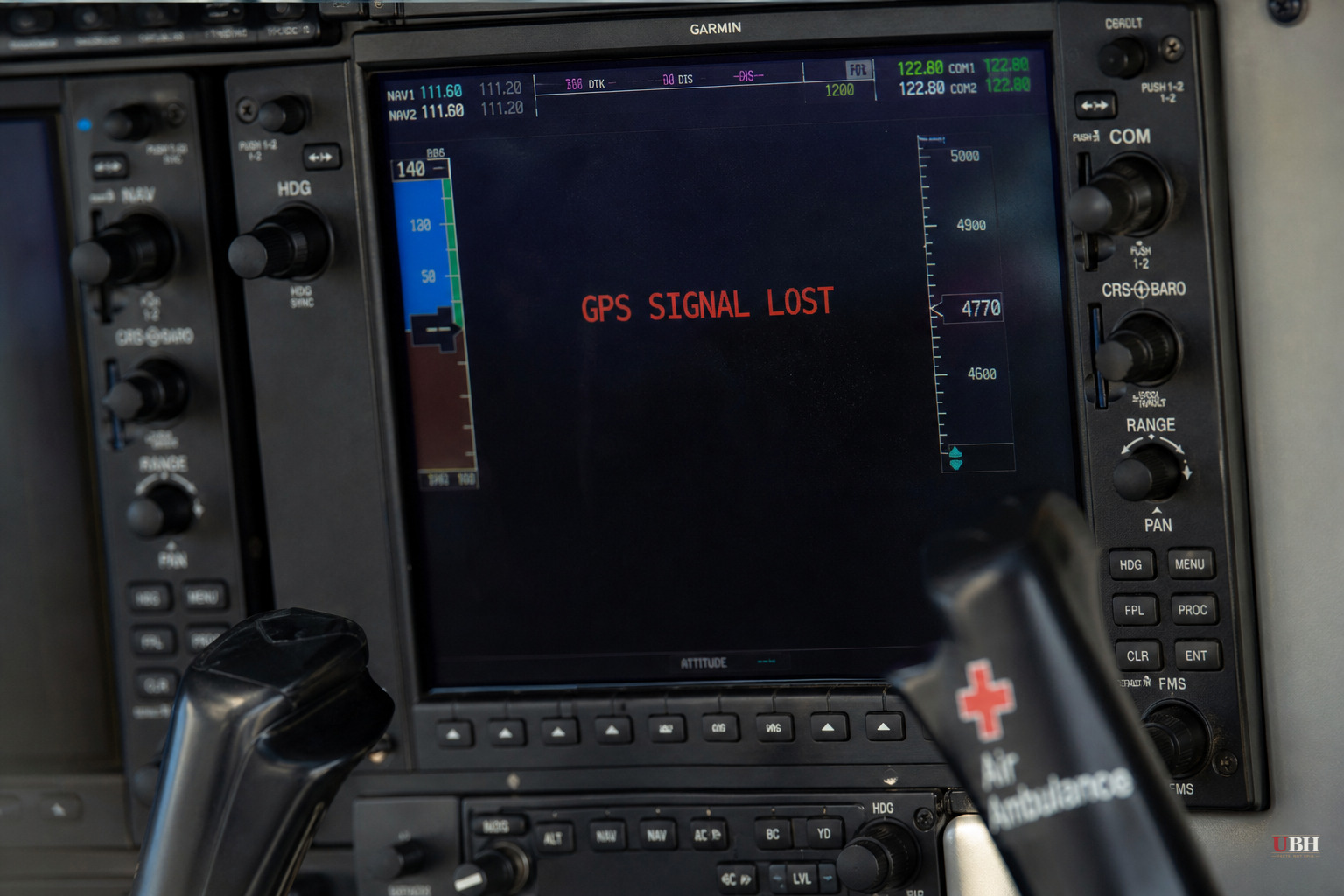
The National Transportation Safety Board has released a preliminary report on the May 14 crash of a Beech King Air medevac plane near Ruidoso, New Mexico, that killed both pilots and two flight nurses. The report found the crew lost GPS navigation capability just minutes after taking off from Roswell, shortly before midnight, while the U.S. military was conducting a scheduled GPS-denial exercise.
According to the NTSB, the FAA had issued a notice to airmen ahead of time warning that the scheduled military jamming exercise could disrupt satellite navigation across a radius of hundreds of miles around White Sands Missile Range. That notice was public information available to anyone flying in the region that night, including the medevac crew.
Minutes after departure, the pilots reported losing GPS and asked air traffic controllers for help. Controllers twice asked the military to suspend the jamming exercise while they assisted the flight. Three other aircraft in the area also reported GPS outages that night, according to the preliminary report, meaning this wasn't an isolated glitch on one plane.
The crew later reported having the airport in sight and requested a visual approach. After the military resumed the exercise, the aircraft descended toward the runway but struck the Capitan Mountains, killing all four people on board.
The NTSB has explicitly not determined whether the GPS interference caused or contributed to the crash. A final report with a probable-cause finding has not been issued.
What is certain is that the jamming exercise was happening, that it was announced in advance, and that controllers asked twice for it to stop while a plane in trouble needed help. Whether the military should have halted it sooner, and whether that would have changed the outcome, are open questions the final report will need to address.
A broader safety warning, not just one crash
Fox News frames this crash as exposing a "growing GPS danger facing US flights," built partly on comments from University of Texas Radionavigation Laboratory director Todd Humphreys, who argues the incident highlights outdated cockpit GPS technology and the rising threat of GPS jamming generally. Humphreys said many FAA-certified cockpit GPS receivers rely on older technology that is more susceptible to jamming than newer commercially available systems, telling Fox News Digital that "the iPhone that the pilot carried was almost certainly a better GPS receiver inside than the FAA-certified receiver providing navigation guidance to the aircraft." He also said that while newer GPS technology has become more resilient to interference, aviation certification has moved too slowly to keep pace with the evolving threat from jamming and spoofing.
The FAA has told pilots to be prepared to fly without GPS, calling intentional jamming a hazard of "greater and growing concern." The U.N.'s aviation agency, the International Civil Aviation Organization, issued 2026 guidance stating that GPS jamming and spoofing hazards have "rapidly spread" in recent years, citing industry data showing reports of GPS loss jumped 65% in the first half of 2024 compared with the year before. In March 2025, the International Civil Aviation Organization, along with the International Telecommunication Union and International Maritime Organization, had already warned of increasing GPS jamming and spoofing incidents that can affect aircraft "far beyond the immediate affected area."
That guidance also warns that interference can push pilots off assigned flight paths, cause them to misreport their position, degrade situational awareness, and complicate the switch to backup navigation systems. Unlike illegal consumer GPS jammers, military electronic warfare systems are designed to deny satellite navigation across large operational areas so troops can train in conditions resembling combat, and the FAA warned that the New Mexico exercise's disruptions could extend hundreds of miles from White Sands Missile Range.
Not everyone frames this primarily as a technology problem. Paul Deres, vice president of operations at the Aircraft Owners and Pilots Association Air Safety Institute, said the focus should remain on pilot preparation and proficiency, noting that today's general aviation fleet includes a wide range of older and newer avionics designed to improve situational awareness. "Technology can always fail, and it does," Deres said. The FAA, for its part, said it issues notices alerting pilots to planned GPS disruptions and maintains backup navigation systems to help aircraft navigate during satellite outages, and declined to comment on the ongoing investigation. European regulators have repeatedly updated guidance for pilots and air traffic controllers in response to growing GPS interference, most recently in July after analyzing additional jamming and spoofing incidents.
National defense needs realistic electronic-warfare training, and jamming tests near controlled ranges like White Sands Missile Range are a normal, long-standing part of that. The question is whether the coordination protocols between military exercises and civilian air traffic control are adequate when a plane in real trouble needs the jamming to stop immediately, not eventually.
Controllers asked twice. The exercise reportedly resumed before the plane went down. Whether that sequence reflects a communication failure, a procedural gap, or simply bad timing that no protocol could have fully prevented is exactly what the NTSB's final report needs to sort out.
No cause has been officially determined. No regulatory changes have been announced in response to this specific crash. Until a final report lands, the central unresolved question is straightforward: did four people die because a military training exercise couldn't be stopped fast enough, or because of factors that had nothing to do with jamming at all.
Sources used for this briefing
1 link from 1 independent newsroom (syndicated copies of the same report count once)
These are the sources it draws on, linked so you can verify.


