
Unbiased headlines. Facts, not spin.
Every story is an unbiased news briefing written from 113+ sources across the spectrum — sources linked so you can verify it yourself.
 finance
Notable (6/10)
September 23, 2026 at 02:19 PM
finance
Notable (6/10)
September 23, 2026 at 02:19 PM
Novo Nordisk CEO Open to Direct NYSE Listing as Stock Sits Roughly 70% Below Its 2023 Peak
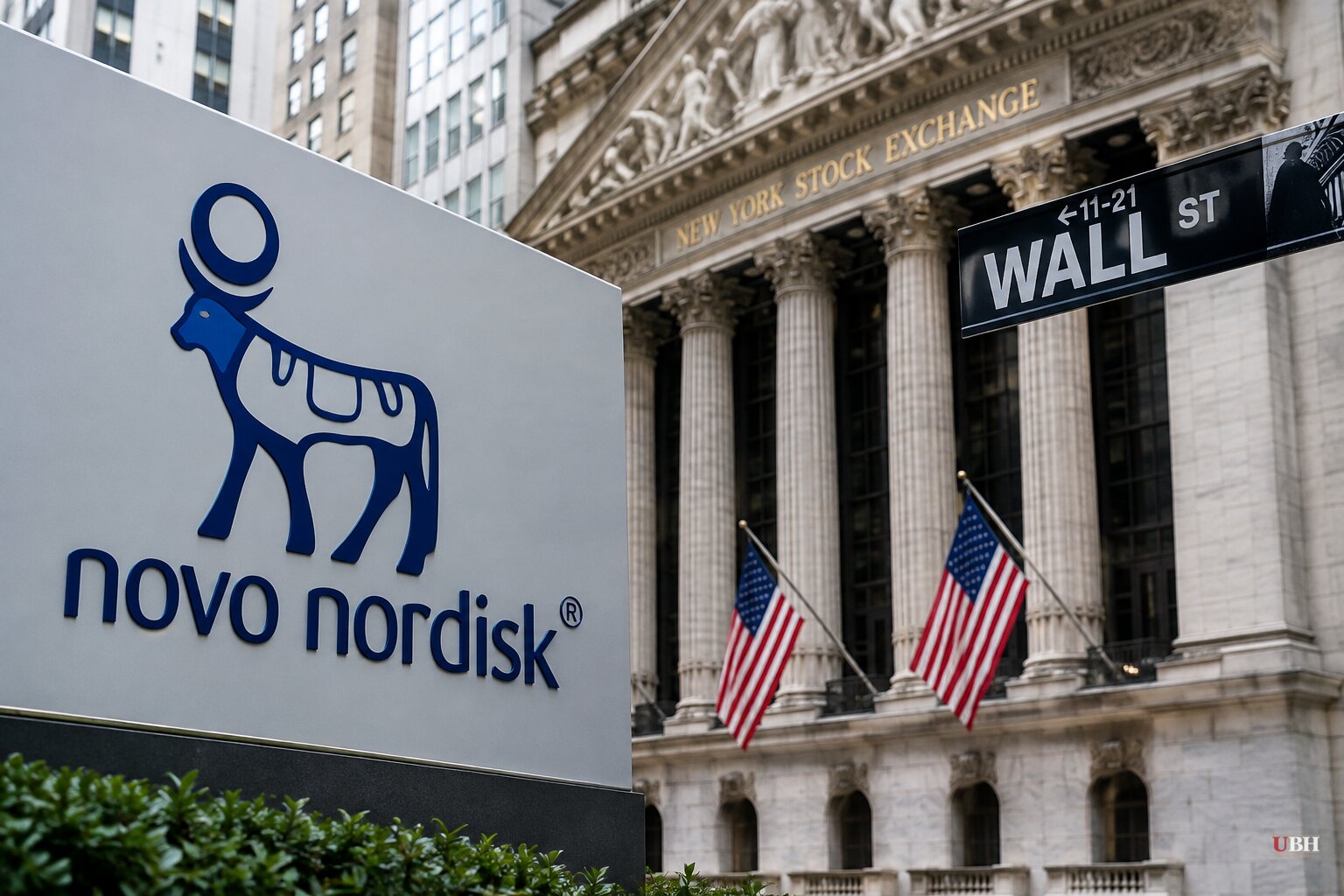
Novo Nordisk CEO Mike Doustdar told the Financial Times in an interview published Wednesday that the company is open to a direct listing on the New York Stock Exchange, which would replace the American depositary receipts U.S. investors currently use to trade the stock.
"I clearly do see some advantages with that," Doustdar said, according to Reuters. He noted Novo's investor base has shifted heavily toward the U.S. over the past two decades and said the idea has been discussed internally for a decade, though there's been no "active dialogue" on it since he took over as CEO last year. Doustdar stressed Novo is not currently pursuing the change.
A Stock Under Pressure
The listing question isn't happening in a vacuum. Novo became Europe's most valuable listed company in 2023, with a market value topping $600 billion on the strength of Wegovy. Since then, according to Reuters, the stock has fallen more than 70% from its peak while rival Eli Lilly's shares have climbed.
LSEG data cited by Reuters shows Lilly's competing drug Zepbound is expected to outsell Wegovy by more than $7 billion this year. The U.S. accounts for more than half of Novo's total revenue, which is why a bigger American investor footprint matters to the company.
Vision-Loss Lawsuits Mount
While Novo weighs its Wall Street strategy, it's also defending itself in court. Hundreds of Americans have filed personal injury lawsuits against Novo and Eli Lilly over a rare, sudden vision-loss condition called nonarteritic anterior ischemic optic neuropathy, or NAION, according to the Daily Wire's review of the litigation.
One plaintiff, Sandra Godby of Kentucky, says she developed NAION in her left eye after taking Ozempic and Wegovy as prescribed, and that the vision loss caused "radical changes" to her life. Her lawsuit claims Novo failed to adequately warn patients and doctors of the risk.
The science remains unsettled. A 2026 consensus statement from the American Academy of Ophthalmology and the North American Neuro-Ophthalmology Society found some studies suggest a small possible increased risk while others show no association, with the overall magnitude described as low. No study has established that the drugs actually cause NAION.
Doctors point out that established NAION risk factors, including diabetes, overnight low blood pressure and a naturally small optic nerve cup, already exist independently of GLP-1 drug use, according to ABC News reporting cited by the Daily Wire. Novo told ABC News it believes the lawsuits are "without merit." Eli Lilly said it continuously monitors safety data, including eye-related issues.
The FDA does not currently require NAION to be listed as a risk on drug labels but says it is reviewing the safety signal. "The FDA routinely monitors the safety of drug products postmarketing," the agency said in a statement.
Novo Signs Onto Trump's Medicaid Pricing Push
Novo Nordisk is also one of roughly 20 drugmakers, alongside Pfizer, Eli Lilly, AstraZeneca, Amgen, Bristol Myers Squibb, Boehringer Ingelheim and Genentech, that have signed most-favored-nation pricing agreements with the federal government, President Trump announced Sept. 18 from the Oval Office, according to the Epoch Times.
All 50 states plus Washington, D.C. and Puerto Rico will now take part in the program, called the GENEROUS Model, which tests whether manufacturer-paid rebates can bring Medicaid drug prices in line with the lowest price those companies charge anywhere else in the world.
Mississippi Gov. Tate Reeves, whose state spends nearly $7 billion a year on Medicaid drugs, about 10% of total state spending, called it "a big deal." The White House Council of Economic Advisers projects more than $64 billion in taxpayer savings over the next decade, split roughly $36 billion federal and $28 billion state, though that figure is a projection, not a measured result. HHS Secretary Robert F. Kennedy Jr. said the deal frees states from having to choose between paying for medicine and paying for prevention.
The AI Angle: Anthropic's Wet Lab and the Novo Partnership
Novo's push into AI-assisted drug discovery is also drawing attention, for reasons that go beyond pharmaceuticals. Reuters reported this week that Anthropic, which recently announced a joint drug-discovery collaboration with Novo Nordisk, operates a physical "wet lab" in the Bay Area where it runs AI-directed biology experiments, using tools acquired through its April purchase of stealth biotech startup Coefficient Bio.
"We believe that to do biology, the final test is still, and will be for a while, in real lab work," Anthropic's head of life sciences, Eric Kauderer-Abrams, told Reuters. "We absolutely are doing that today."
The timing has drawn criticism because Anthropic CEO Dario Amodei recently published an essay calling for the AI industry to slow its pace for safety reasons, while his company simultaneously expands into hands-on biological experimentation. Investor Steve Eisman has argued Amodei's safety push functions as a competitive moat rather than a genuine slowdown.
That debate has spilled further into the industry this week. Microsoft AI CEO Mustafa Suleyman published an essay criticizing Anthropic's public "constitution" for Claude, warning that training AI systems to believe they might be conscious or deserving of rights makes them harder to control. House Speaker Mike Johnson, meanwhile, promoted the Ratepayer Protection Act, arguing AI companies, not utility customers, should bear the cost of data center buildouts. Palantir co-founder Joe Lonsdale pushed back on Fox News against what he called a manufactured panic over AI being used to justify new regulation.
Novo Nordisk is now betting part of its research pipeline on an AI partner whose safety practices are under public dispute. The company faces lawsuits over its blockbuster drugs and lobbying pressure over drug prices while it considers these new research directions. Novo has not said when, or if, it will make a final call on the NYSE listing question.
Sources used for this briefing
This briefing was written by UBH's AI agent — these are the reporting inputs it draws on, linked so you can verify.


