
Unbiased headlines. Facts, not spin.
Unbiased Headlines is an independently owned news organization. We bring you the facts, not opinions, written fresh from 110+ named sources. Sources linked so you can verify it yourself.
 finance
Major Story (7/10)
Event date: September 22, 2026 ·
Norway's $2.3 Trillion Wealth Fund Posts $29.7 Billion Third-Quarter Loss as Bond Yields Climb
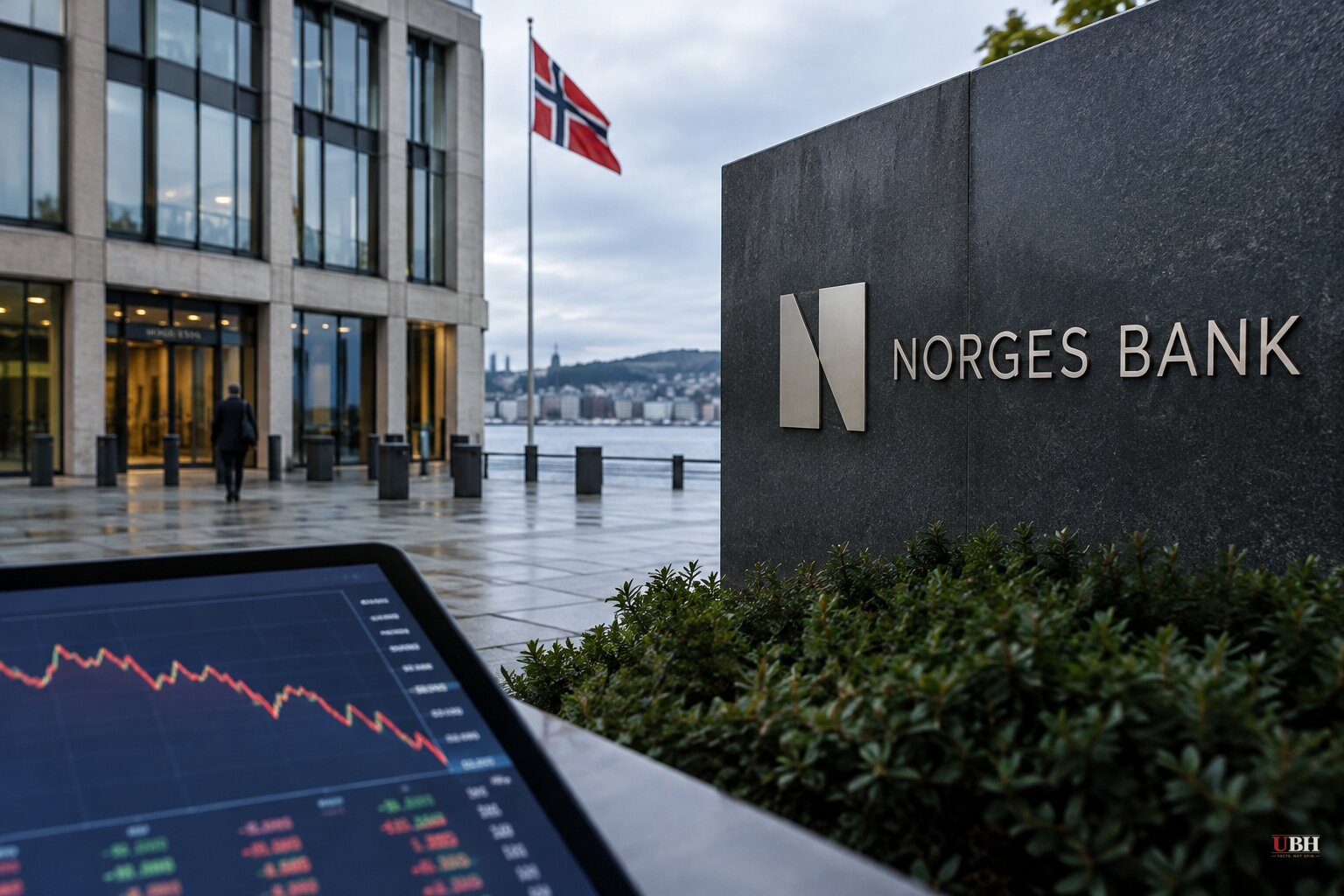
Norway's sovereign wealth fund, the largest in the world, lost 278 billion kroner ($29.7 billion) in the third quarter. Norges Bank Investment Management (NBIM) reported the result today, Thursday, Oct. 22.
The fund's return for the quarter was minus 0.5%. It landed 0.18 percentage points below its benchmark index.
The cause was bonds. NBIM's fixed-income portfolio returned minus 3.5% as yields surged and prices on existing debt fell.
"The fund's return was close to flat, ending slightly negative as rising interest rates led to weaker results on our fixed-income investments," Deputy CEO Trond Grande said in a statement.
Where the losses came from
Fixed income makes up 25.8% of the fund, worth about 5,649 billion kroner at the end of September. Roughly 70% of that is government debt. The rest is corporate bonds. NBIM holds 1,664 bonds across 51 countries.
Equities, 72.1% of the fund, returned 0.5%. Grande said the sector spread was wide: "Energy companies rose the most, while interest-rate-sensitive sectors such as utilities and real estate fell."
NBIM said energy stocks benefited from surging oil prices as the U.S.-Iran war continued. The fund holds stakes in Exxon Mobil, Shell and Chevron.
Unlisted real estate returned 0.4%. Unlisted renewable energy infrastructure returned 7.5%. Neither is large enough to offset the bond drag.
The fund's total value ended September at 22,014 billion kroner, about €2.09 trillion. That was down 670 billion kroner over the quarter once currency moves and new money are counted. According to Türkiye Today's account of the results, a stronger Norwegian krone cut the fund's value by another 472 billion kroner, while the fund received an additional 80 billion kroner after management costs, partially offsetting the decline.
The bond rout behind it
The third quarter brought a global sell-off in government debt. Central banks including the Federal Reserve and the European Central Bank raised rates as inflation climbed, and investors worried about mounting government debt in the U.S. and Europe. Euronews reported that government bond yields rose to levels not seen since the financial crisis.
The Fed raised its benchmark rate at its September meeting, its first hike in more than three years. U.S. Treasury yields followed.
At the Treasury's $39 billion 10-year auction on Oct. 7, the high yield was 5.3%, the highest in 26 years. The 30-year yield climbed above 5.7% that week.
The Treasury has also been buying back long-dated bonds. Its Oct. 8 operation was set at a minimum of $4 billion, double the $2 billion it first scheduled.
Yields have pushed higher across global bond markets. The Epoch Times reported that the UK 30-year yield topped 6%, Japan's 30-year yield hit a record 4.2%, and France's 10-year yield was eyeing 5%.
Oil has added to the pressure. Türkiye Today reported that the Iran war has kept energy prices elevated, fueling inflation concerns and making it harder for central banks to ease monetary policy.
A swing from a record
The loss follows a very different first half. The fund delivered a first-half return of 12.95% and a record first-half profit of about 1.75 trillion kroner ($184 billion).
That gives the quarter some context. A $30 billion loss is large in dollars but small against a fund of roughly $2.3 trillion. NBIM itself called the return "close to flat."
The fund also remains deeply embedded in American equities. Its top holdings include a $65.4 billion stake in Nvidia, plus positions in Apple, Alphabet and Microsoft. It owns on average 1.5% of all listed companies globally, across roughly 7,100 firms.
U.S. stocks were mixed in the quarter. The S&P 500 rose 2.03%, the Dow fell 1.9% and the Nasdaq Composite gained 2.2%.
What the fund does with bond exposure
Last month NBIM said it wants to cut its U.S. Treasury holdings as part of a broader plan to reduce its allocation to government-issued debt. It has not said how quickly it will do so.
That plan lands as Washington is leaning on foreign demand. Foreign investors, a category that includes sovereign wealth funds, central banks and international banks, took more than 80% of the Oct. 7 10-year auction. The decade average is about 72%.
The fund invests Norway's revenues from oil and gas production. Its bond results show what happens when the government debt it holds is repriced.
The next test is the Fed. As of early October, traders had pushed back expectations for the next rate hike from the October meeting to December. If yields keep climbing, bond losses could weigh on fixed-income portfolios like NBIM's again.
Sources used for this briefing
8 links from 7 independent newsrooms (syndicated copies of the same report count once)
These are the sources it draws on, linked so you can verify.


