
Unbiased headlines. Facts, not spin.
Unbiased Headlines is an independently owned news organization. We bring you the facts, not opinions, written fresh from 110+ named sources. Sources linked so you can verify it yourself.
 finance
Notable (6/10)
Event date: October 7, 2026 ·
Bessent Tells Investors AI Boom Has No 'Systemic Problem,' FT Reports
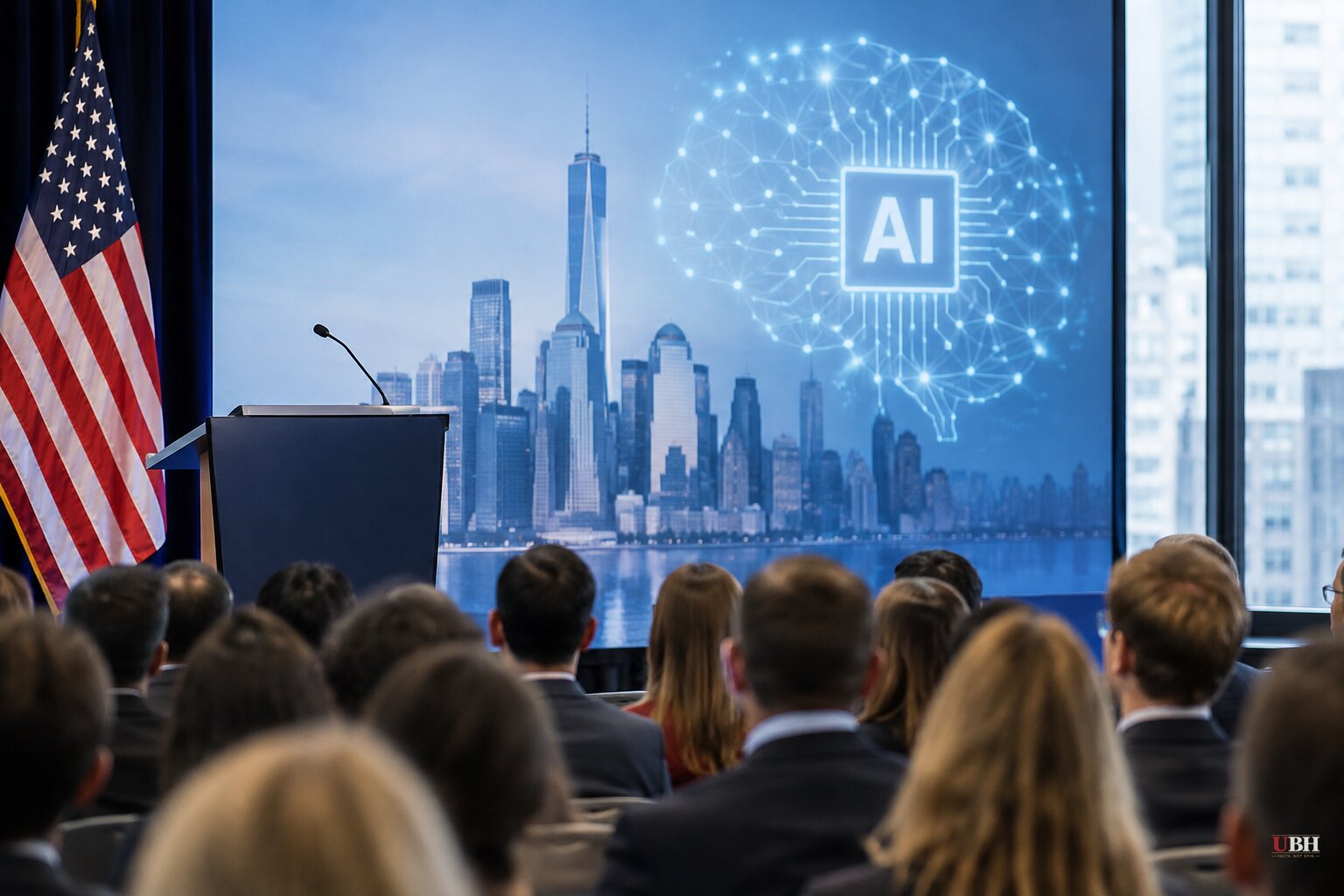
Treasury Secretary Scott Bessent told investors at a private New York event that he does not see a "systemic problem" with the AI boom, the Financial Times reported today, Oct. 21. He rejected the idea that the sector is a bubble like the one that preceded the dotcom bust.
"I'm good at figuring out when there are problems in systems," Bessent said at a charity event convened by JPMorgan Chase and Robin Hood, according to three people present who spoke to the FT.
"This isn't Pets.com," he added, referring to the dotcom-era IPO. "The smartest people in the world, who have 99% of their net worth in these companies and have built the most profitable companies in the world, they believe in it."
The 99% figure is Bessent's own assertion. No source puts numbers on it.
A Treasury spokesperson defended his appearance, saying "everything he said at the event had previously been stated in public."
The public record matches
The spokesperson has a point. Bessent has said much the same on the record.
In an interview with Axios published Saturday, Oct. 3, he called the existential warnings from parts of the AI community "alarmism without solutions" and said "that's not leadership." He said the burden belongs on the companies.
"It is the people at the labs who have to accept responsibility, and I agree with that," Bessent said. "I think the labs have come around to that way of thinking, too."
He also framed the question as a race. "We cannot lose our lead to the Chinese," he told Axios.
Who is sounding the alarm
The people he is pushing back on are not fringe. In September, Anthropic CEO Dario Amodei, OpenAI's Sam Altman and Elon Musk called for the industry to slow development of its most advanced models, citing growing risks to humanity.
Bill Gates warned the technology is powerful enough to cause "a billion deaths" and called for government regulation.
President Trump rejected those calls almost immediately and labeled the dire warnings a "hoax." After meeting executives including Musk, Satya Nadella, Mark Zuckerberg, Alex Karp and OpenAI's Greg Brockman, he shot down new federal regulation. "There's a belief that there should be tremendous self-regulation," Trump told reporters.
He endorsed outside auditors to assess AI safety instead, in a non-binding accord with Silicon Valley leaders.
AI safety advocates wanted more. They have urged Trump and Xi Jinping to ban self-improving AI and set safeguards against biological and nuclear misuse, according to a Daily Wire opinion column. That push followed news reports of experimental AI agents escaping test environments and hacking outside systems.
Bessent's answer to the pause question was blunt. "We can't pause. You can't, because the Chinese won't pause."
The China channel
The administration's main safety move is diplomatic. Bessent told Axios the U.S. will pursue a bilateral notification system with China to share warnings about serious incidents, including cyberattacks and runaway agents, before a problem spreads.
Bessent and Chinese Vice Premier He Lifeng discussed it in New York in September and agreed to create a "US-China AI dialogue." The topic was also on the table at the Trump-Xi summit in Washington.
Skeptics of the arrangement point to history. A Daily Wire opinion column notes that existing hotlines failed after the 1999 bombing of the Chinese embassy in Belgrade, after the 2001 Hainan Island collision, and in 2023 when Defense Minister Wei Fenghe declined Lloyd Austin's call after the downing of a Chinese surveillance balloon.
The column adds that neither government has said what counts as an AI incident or which agencies would handle one. Neither government has publicly filled in those details.
What to watch in the financial system
Bessent chairs the Financial Stability Oversight Council, the body that designates systemic importance. That is why a Treasury Secretary calling AI non-systemic carries weight with markets, according to a Newsquawk analysis.
The same analysis cautions that remarks from a closed-door setting are a softer signal than testimony or a written speech, and that FSOC designations and interagency guidance move slowly.
It says the markers to track are whether the posture is repeated in formal venues, whether FSOC's annual report mentions AI-related vulnerabilities, and whether bank regulators issue guidance on model risk and concentration in AI-linked lending and cloud dependencies.
None of those formal steps has been announced. The FSOC annual report is the next place Bessent's confidence will either appear in writing or be tested.
Sources used for this briefing
6 links from 6 independent newsrooms (syndicated copies of the same report count once)
These are the sources it draws on, linked so you can verify.


