
Unbiased headlines. Facts, not spin.
Unbiased Headlines is an independently owned news organization. We bring you the facts, not opinions, written fresh from 110+ named sources. Sources linked so you can verify it yourself.
 finance
Major Story (7/10)
Event date: September 21, 2026 ·
Tokenized Stock Volume on Robinhood Chain Hit $11.31 Billion in September as Goldman, Microsoft and Alphabet Object on OKXICE
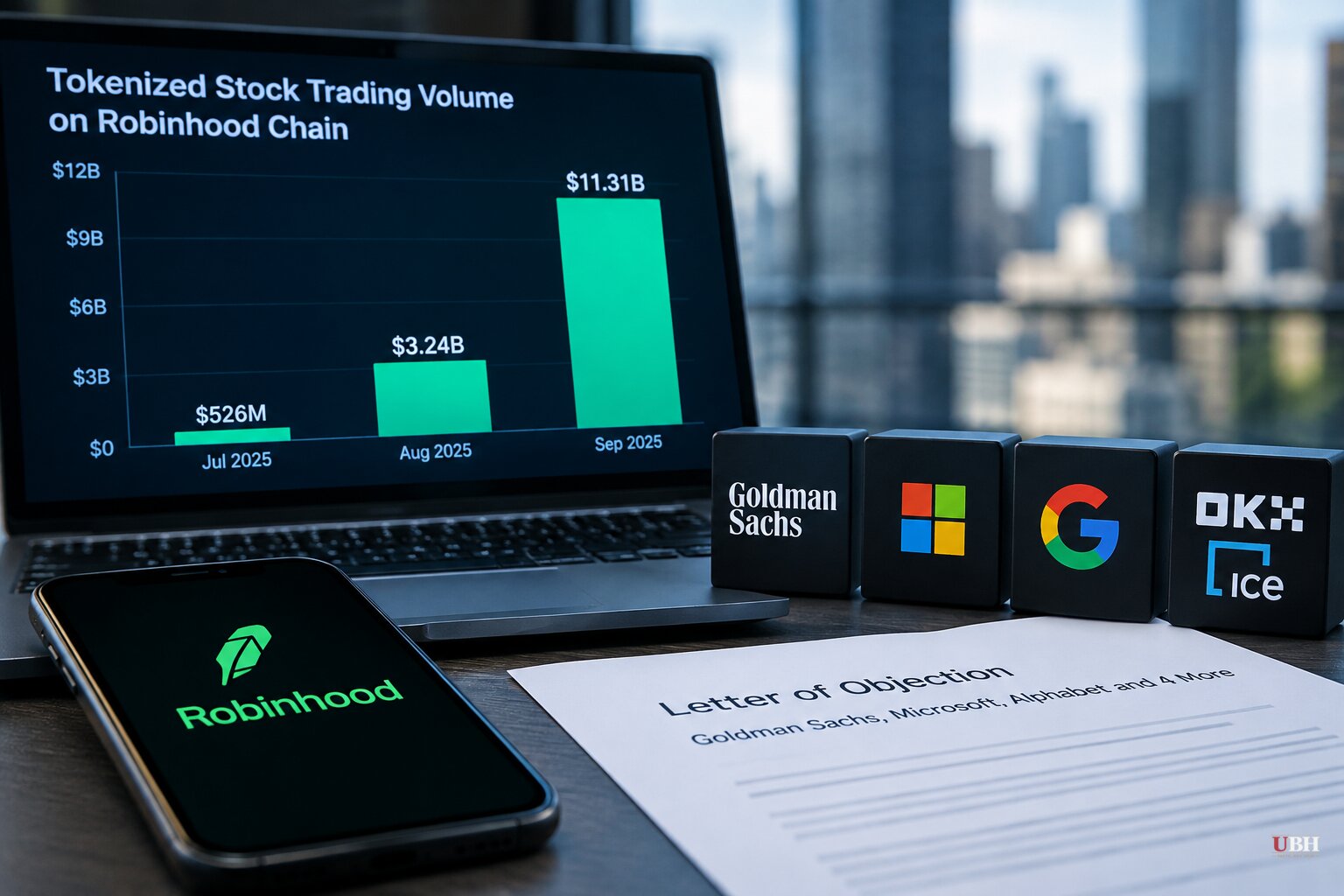
Since the SEC put out a temporary innovation exemption for tokenized stocks last month, trading has surged overseas while major U.S. companies have moved to block it at home.
Bitwise Asset Management's latest quarterly staking report, published Tuesday, puts numbers on the first half of that split. On Robinhood Chain, the brokerage's newly launched network for users and AI agents to trade assets onchain, tokenized stock volume was $526 million in July. It rose to $2.21 billion in August and then to $11.31 billion in September. That is trading volume, not the value of assets held.
Other platforms show the same pattern
The Bitwise report also shows non-crypto markets made up 36.5% of Hyperliquid's perpetuals volume last quarter, up from 32.7% the quarter before. Tokenized equities were the fastest-growing category on Solana.
Trading in these products is concentrated overseas, where tokenized products are more widely available. Supporters of tokenization argue it can improve accessibility and liquidity across financial assets.
The U.S. companies saying no
OKXICE, the tokenized securities venue launched jointly by the crypto exchange OKX and Intercontinental Exchange, the parent of the New York Stock Exchange, disclosed new objections in a public notice on Monday. Goldman Sachs, Microsoft, Qualcomm, Caterpillar, McDonald's, Western Digital and Alphabet have objected to having tokenized versions of their shares traded on the platform.
They join an earlier group of objectors: CoreWeave, UnitedHealth, Broadcom, Applied Digital, AppLovin and Cerebras. As of Wednesday, CNBC reports, 16 companies have objected to having tokenized versions of their shares traded on OKXICE. That does not mean they or others will object to tokenization by every company involved, but it highlights resistance to this particular model and venue.
The objections are possible because of the SEC's innovation exemption, which creates a temporary pathway for tokenized stocks in the U.S. but requires that companies be able to object to having their shares represented as tokens. Under the exemption, the venue must notify companies of its intention to tokenize their shares, then wait 30 days after a company receives the notice before trading the token. OKXICE disclosed on Oct. 4 that it would make more than 60 tokenized stocks available for trading.
What a token actually gives you
The central dispute is what a token holder owns. The debate centers on whether investors should receive the same economic and shareholder rights as they would with traditional shares, particularly voting rights.
The issue first came into focus in September after a public fight between the CEOs of Robinhood and AMC over Robinhood's stock-token model.
The overseas and U.S. products are also not the same thing. "Offshore, most of this activity is price exposure through onchain perps and wrapped tokens that never needed a company's permission, while the U.S. framework is trying to put real shares onchain, and that gives issuers a say," said Mirza Uddin, chief operating officer of Injective.
"Right now companies like Goldman and Microsoft see all of the risk and none of the upside – a token they don't control trading 24/7 with unclear voting rights," he added.
What comes next
ClearStreet analyst Owen Lau said companies may not yet realize the full benefits of tokenization and that he expects some will eventually embrace it, citing an expanded investor base, 24/7 access and increased distribution. "The divergence is not driven by U.S. versus non-U.S., it's driven by investors versus issuers," Lau said.
Andrew Cuomo, co-chairman of OKXICE, called the objections "a very natural response," saying the model was designed to let companies opt in or opt out and that many would want to wait and see how it goes rather than be the first to participate. "The SEC model is designed to accommodate both approaches," he said, adding that there are limits on how many companies can participate and on the volume that can be traded.
Crypto industry watchers are monitoring whether adoption picks up in the U.S. under a temporary exemption that gives issuers a say.
Sources used for this briefing
7 links from 6 independent newsrooms (syndicated copies of the same report count once)
These are the sources it draws on, linked so you can verify.


