
Unbiased headlines. Facts, not spin.
Unbiased Headlines is an independently owned news organization. We bring you the facts, not opinions, written fresh from 110+ named sources. Sources linked so you can verify it yourself.
 finance
Major Story (7/10)
OCC Finalizes GENIUS Act Stablecoin Rule, Drops Presumption Against Third-Party Rewards
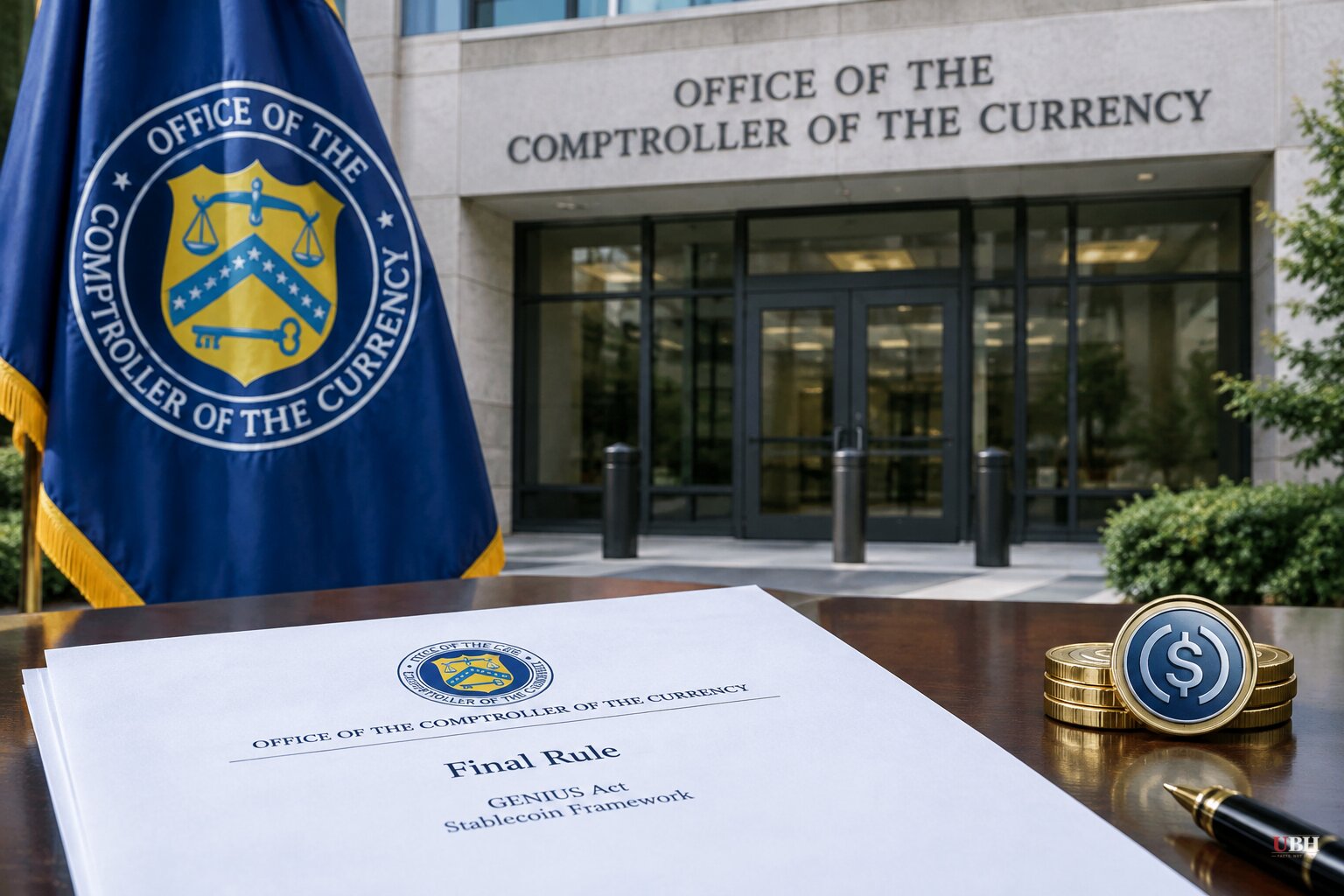
The Office of the Comptroller of the Currency finalized its rules implementing the GENIUS Act today, Oct. 21, 2026. The rule takes effect Jan. 18, 2027.
The OCC is the first federal banking regulator to finalize its core rules under the law, which was enacted July 18, 2025. The Federal Reserve and the FDIC have only issued proposals so far.
What the rule covers
The final rule runs more than 700 pages. Most of it sits in a new part of the federal regulations, 12 CFR 15. It sets standards for stablecoin activities, reserve assets, redemption procedures, risk management, audits, reporting and supervision.
It also covers custody, issuer applications and registrations, oversight of foreign issuers, and the transition of state-qualified issuers to federal regulation. It spells out when an issuer's approval can be revoked or rescinded. Amendments to existing OCC rules on capital adequacy, prompt corrective action and regulatory assessments come with it.
Bank Secrecy Act compliance, anti-money laundering requirements and sanctions administered by the Office of Foreign Assets Control are not in this rule. The OCC reserved those for separate rulemaking in coordination with the Treasury Department.
The OCC said the final text incorporates or addresses comments filed after its Feb. 25, 2026 proposal. Existing issuers with substantially complete OCC applications pending can seek temporary compliance waivers.
The yield fight
The biggest change from the proposal is what the OCC left out. The February draft would have created a rebuttable presumption that certain affiliate and third-party arrangements amounted to indirect yield if they offered incentives tied to holding stablecoins. The final rule drops that presumption.
The statute bars issuers from paying customers amounts "solely in connection with the holding, use, or retention" of a payment stablecoin. It does not explicitly address rewards paid by exchanges and other third parties. Banking groups call that gap the "stablecoin loophole."
Instead of a presumption, the OCC said it "will apply the language of the statute to the facts and circumstances of any particular arrangement." An OCC official told reporters, "We will just let the market develop and address it as it comes," and said the agency may issue more guidance later. The official declined to say whether existing exchange rewards programs comply with the rule.
The agency did point to the word "solely." A reward that "might be made, at least in part, for other reasons" would fall outside the statutory ban, according to the OCC's discussion in the rule.
The OCC also rejected requests to exempt rewards programs that predate the GENIUS Act. Existing programs get no safe harbor and will be assessed like any other. U.S. exchanges that have long paid rewards for stablecoin use will need the agency's sign-off, and the agency has declined to give examples of what crosses the line.
Banks and crypto firms still at odds
Banks wanted a tougher rule. They have argued that interest-like payments on stablecoin balances held in accounts could pull deposits out of banks and reduce lending. Brooke Ybarra, a senior vice president at the American Bankers Association, said in a recent Crypto in America interview that the industry was relying on the OCC's rulemaking.
That reliance grew after the Clarity Act, the crypto industry's market-structure bill, failed in the Senate in September. Stablecoin yield was among the sharpest disputes in those negotiations.
The ABA's position on the wider GENIUS rulemaking is on the record. In comments on Treasury's August licensing proposal, the group said, "The final rule should close paths that would let issuers and intermediaries evade the Act's protections and prohibitions." It also asked for clear lines so that ordinary services to issuers do not expose banks to criminal liability for another party's violation.
The crypto industry reads the statute differently. It has interpreted GENIUS as permitting the exchange rewards programs that have become routine, since the ban is written around issuers. The OCC's case-by-case approach leaves that reading untested for now.
The rest of the rulebook
The OCC's rule is one piece of a larger build-out. The Fed issued two proposals Sept. 24, 2026. One sets application requirements for state member banks seeking to run a stablecoin issuing subsidiary. The other sets requirements for Fed-supervised issuers and custodians. The Fed asked 277 specific questions, and comments are due Nov. 30.
On Sept. 30, Treasury, acting for the Stablecoin Certification Review Committee, issued an interim final rule on how state regimes get certified as "substantially similar" to the federal framework. That certification is a prerequisite for approval under a state regime. Treasury posed 35 questions, and comments are also due Nov. 30.
Across regulators, the statute's basics hold. Reserves must cover outstanding tokens at least 1:1. State-qualified issuers with eligible outstanding issuance of $10 billion or less may opt for state regulation. Treasury has said it expects the general effective date to be Jan. 18, 2027, with certain issuance and sales restrictions starting July 18, 2028.
The market is led by Tether's USDT and Circle's USDC, with a growing list of entrants.
The rule goes live Jan. 18, 2027. The open question is how the OCC treats the first rewards arrangement that lands in front of it. With no presumption, no safe harbor and no examples, issuers and exchanges have only the "solely" language to go on. The Fed's Nov. 30 comment deadline is the next formal step in the larger rulebook.
Sources used for this briefing
7 links from 7 independent newsrooms (syndicated copies of the same report count once)
These are the sources it draws on, linked so you can verify.


