
Unbiased headlines. Facts, not spin.
Unbiased Headlines is an independently owned news organization. We bring you the facts, not opinions, written fresh from 110+ named sources. Sources linked so you can verify it yourself.
 finance
Major Story (7/10)
Event date: October 20, 2026 ·
Bank Indonesia Rate Decision Due Wednesday After MSCI Warning Set Off Record $82 Billion Stock Rout
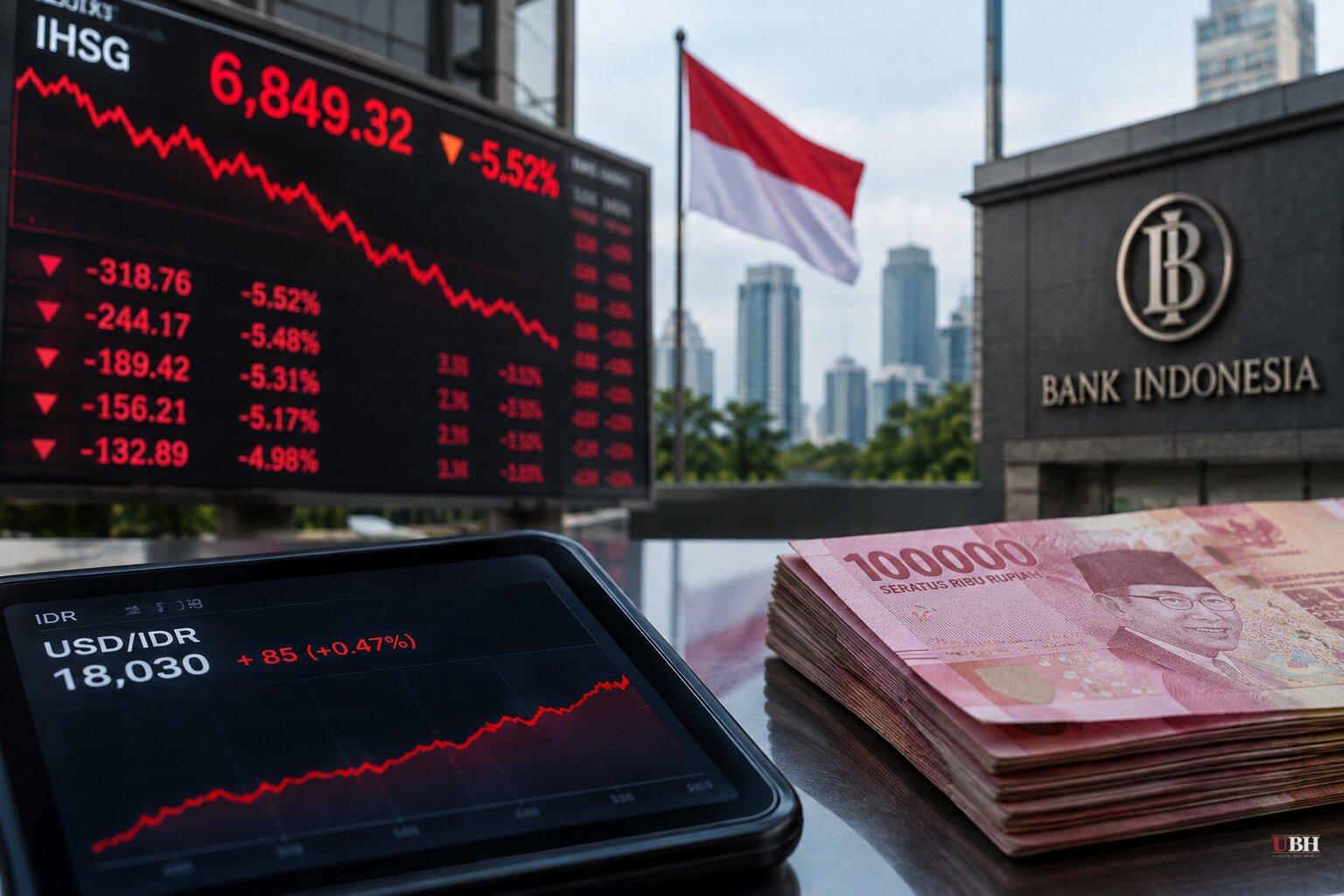
Since MSCI said on Friday, Oct. 16 that it is considering moving Indonesia from emerging-market status to "standalone," the country's markets have been in a scramble. Bank Indonesia's rate decision was due at 2 p.m. Jakarta time on Wednesday, Oct. 21.
The central bank has held its benchmark seven-day reverse repo rate at 5.75% since June. It has raised rates by a combined 100 basis points since May.
The rout
Indonesia has held emerging-market status since 1989. A move to standalone would skip the frontier tier entirely, which is harsher than the January warning of a possible downgrade to frontier.
MSCI's concerns, as described in the market reporting, are that Indonesia has not improved ownership transparency or cracked down on coordinated trading.
The Jakarta Composite Index fell 14.8% over Friday and Monday, a record two-day drop of about $82 billion in value. It hit a six-year low on Monday. Even after Tuesday's bounce of roughly 3% to 4%, depending on the tally, the index is down about 40% this year, making it the world's worst-performing major stock market.
The rupiah weakened to 18,030 per dollar on Tuesday, close to its June record low, and is down about 8% this year.
What Jakarta did about it
After an online meeting with MSCI on Monday, the Indonesia Stock Exchange said it will remove from its benchmark index any stock with a high concentration of ownership in one person or entity. IDX president director Jeffrey Hendrik said the affected stocks make up roughly 18% of total index weight. "We are doing what is best for our market," he said.
The exchange also halved the daily down limit on share prices to 7% from 15%. Shares priced at 14 rupiah or less now have a one-rupiah down limit.
President Prabowo Subianto met Monday with the finance minister, the Bank Indonesia governor and the head of the Financial Services Authority. OJK chief Friderica Widyasari Dewi said the regulator will keep pushing reforms on transparency and liquidity, and will enforce rules against violations tied to coordinated trading.
Gary Tan, a portfolio manager at Allspring Global Investments, said removing tightly held stocks should address some investability concerns, but that implementation is the test, given possible domestic pushback. He said the larger risk to flows now comes from active funds rather than passive ones.
The rate call
Economists were divided heading into the decision. By late Tuesday, 19 of 38 economists surveyed expected a hike, 17 of them by 25 basis points and 2 by 50.
Citi dropped its call for no change and now expects a pre-emptive 50-basis-point increase to 6.25%. Capital Economics and PT Bank Permata expect 25 basis points, to 6%. Enrico Tanuwidjaja, an economist at United Overseas Bank, said a 50-point move was not off the table.
Citi's Helmi Arman said the point of a hike would be to stop equity outflows from spilling into bonds and triggering capital flight by domestic investors. He expects a one-off move, followed by support such as government foreign-currency borrowing or more bilateral currency swaps with foreign central banks.
Jason Tuvey, deputy chief emerging markets economist at Capital Economics, said that holding rates would risk "disappointing investors and fueling further downward pressure on the currency." He added that a hold "could also revive concerns among investors that Bank Indonesia is kowtowing to political pressure."
Governor Destry Damayanti has leaned the other way. She has favored targeted tools such as currency intervention and hedging incentives over broad rate increases that cool the wider economy. She has said the $146.3 billion in foreign-exchange reserves at the end of September is enough to stabilize the rupiah.
Inflation gives the bank room either way. Headline inflation rose to a three-month high of 3.28% in September, inside the 1.5% to 3.5% target range, while core inflation eased to 2.84%.
DBS Bank's Radhika Rao said Bank Indonesia could also raise yields on its short-term SRBI bills to attract inflows and step in to steady the bond market. CIMB economists argued that a hike now would bolster credibility.
The money at stake
Foreign investors have net sold more than $5 billion of Indonesian stocks this year, according to estimates from Josua Pardede, chief economist at Permata, and from market analysts.
Goldman Sachs estimates a standalone designation could trigger about $5.6 billion in passive equity outflows, with another $2.7 billion at risk if FTSE Russell follows. Pardede puts passive outflows at $3 billion to $5 billion, with another $15 billion of actively managed foreign money exposed to reassessment.
Pardede said, "Market confidence can deteriorate much faster than economic fundamentals." He expects precautionary selling through the first half of 2027 and mechanical selling if MSCI confirms the move by June. He warned that foreign equity exits could push the rupiah lower and spark selling in government bonds.
Danamon economist Irman Faiz noted that an equity-index downgrade would not by itself force bond selling, but a reset in Indonesia's risk profile could lift the yields investors demand on government debt.
The pressure comes on top of a firmer dollar, higher Treasury yields and more expensive oil.
Whether the exchange's index changes and the trading limits satisfy MSCI remains open. A rate hike can steady the rupiah in the short run, but it does not settle that. MSCI has not said when it will make its final decision, and Pardede's timeline points to June.
Sources used for this briefing
7 links from 6 independent newsrooms (syndicated copies of the same report count once)
These are the sources it draws on, linked so you can verify.


