
Unbiased headlines. Facts, not spin.
Unbiased Headlines is an independently owned news organization. We bring you the facts, not opinions, written fresh from 110+ named sources. Sources linked so you can verify it yourself.
 finance
Notable (6/10)
Event date: October 19, 2026 ·
DayOne Weighs Delay or Half-Size US IPO After Data Center Selloff, People Familiar Say
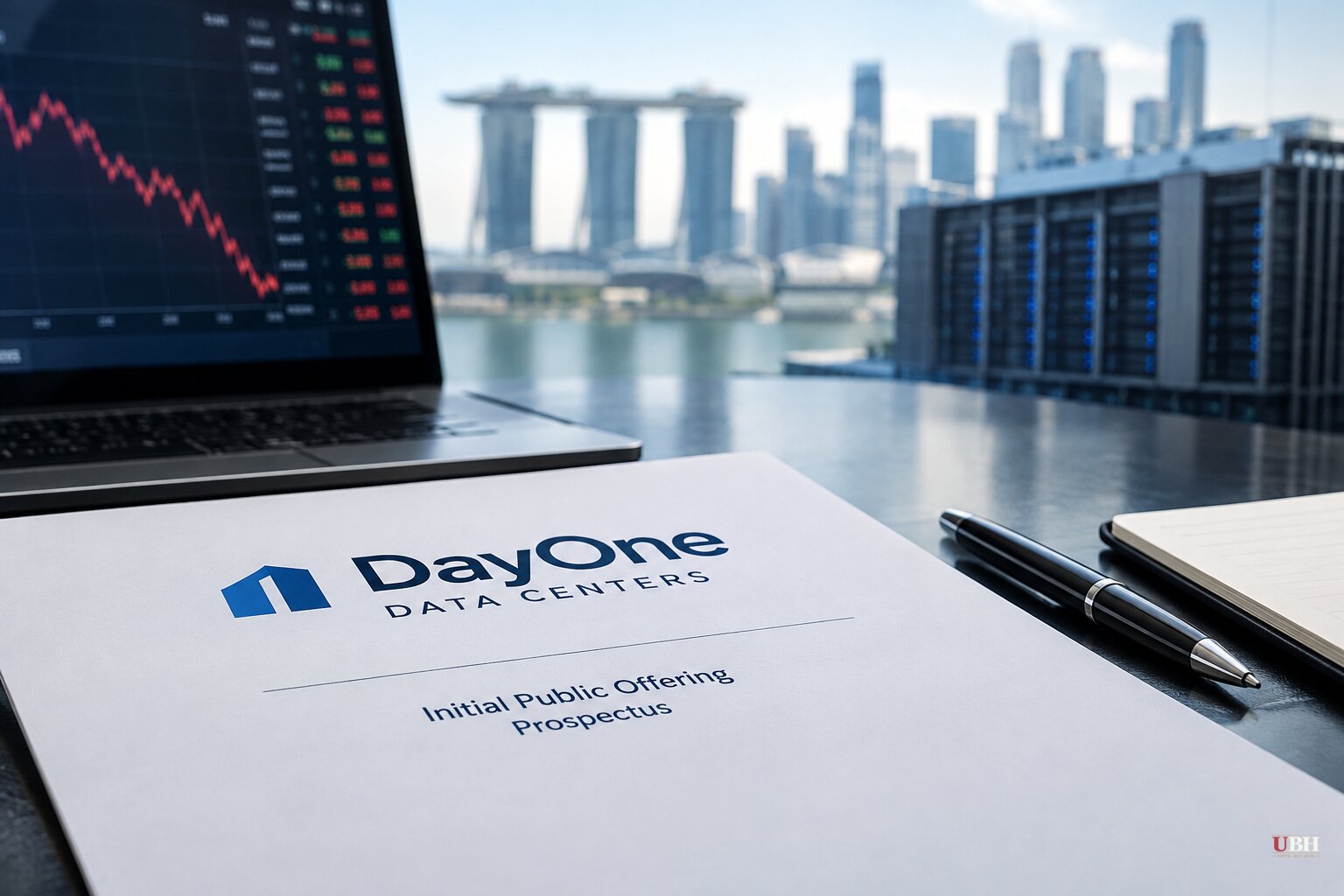
DayOne Data Centers is weighing a delay or a smaller US initial public offering as volatility hits the data center sector, according to people familiar with the matter who spoke to Bloomberg News. No final decision has been made. DayOne declined to comment.
The Singapore-based company had been considering raising as much as $5 billion as soon as the fourth quarter, at a valuation of about $20 billion, the people said. A scaled-back deal would raise $2.5 billion to $3 billion, roughly half the original target.
The people said DayOne is still talking to potential investors. It could yet go ahead in the coming weeks if the market allows. DayOne's backers include Coatue and Hillhouse, and it has been raising billions of dollars in private funding rounds to build out its pipeline.
A crowded exit door
DayOne is not the only data center name getting a cold reception.
Australia's Firmus Grid pulled a roughly $5 billion IPO after investors balked at its valuation. AirTrunk delayed a planned real estate investment trust listing in Singapore to 2027. South Korea's Elice fell 32% in its Seoul trading debut on Oct. 20. Shares of Australia's Nextdc plummeted on Oct. 21 after it cut earnings guidance.
Bloomberg News also reported that CoreWeave shares have more than halved since their May peak, and that Nscale is facing pushback over its target IPO valuation.
Two customers, 85% of revenue
DayOne's own IPO filing explains some of the investor caution. Its largest customer, described in the filing as "a global technology company with a leading short-form video platform serving a worldwide audience," accounted for 69.4% of revenue in 2025 and 69.2% in the six months ended June 30, 2026. The second-largest customer accounted for 12.3% and 15.1% in those periods.
The Information has identified the largest customer as ByteDance, TikTok's parent. Asia Tech Review noted that the filing's own wording points that way as well.
The company warns in the filing that its business "has been and we expect will continue to be highly dependent" on its customers, who it expects to keep accounting for a large share of revenue. Long-term contracts are standard in the data center business, since nobody buys land and builds a facility without committed demand. TikTok has pledged to spend as much as $25 billion on data centers in Southeast Asia, according to Asia Tech Review. That is a large potential revenue stream for DayOne. It also means the company's fortunes depend on very few buyers.
DayOne's revenue climbed from $178.1 million in 2024 to $484.3 million in 2025, and reached $512.0 million in the first half of 2026. The company remains loss-making, with a net loss of $367.1 million in 2025 that it cut to $77.2 million in the first half of 2026.
The political backlash
The market jitters coincide with a political fight over the facilities themselves.
Voters will decide 34 data center-related ballot measures in seven states in November: California, Florida, Illinois, Kansas, Nevada, Ohio and Wisconsin. Ohio alone has 20 of them, spread across 17 jurisdictions, according to Fox News.
A Fox News national poll conducted last month found 71% of voters oppose building AI data centers in their area, including 46% who strongly oppose. A narrow majority, 52%, supported building them in remote locations, while 44% opposed. Sixty percent of voters held a negative view of AI against 37% positive, a 23-point gap that has more than doubled since a July Fox poll.
Ohio's Senate race has become the test case. Sen. Jon Husted, a Republican, led the Senate push for the Ratepayer Protection Act, which would make data centers pay for the power and infrastructure they require instead of shifting costs to ratepayers. Democratic challenger Sherrod Brown, who served as Ohio's senator from 2007 to 2025, has hammered Husted over data center development.
"Jon Husted gave out billions of dollars in sweetheart tax cuts to bring data centers to Ohio," Brown wrote on X on Sept. 13. On Sept. 2 he wrote that Ohioans "don't want to see our utility bills spike, our water sucked up, or our farm land devoured."
President Donald Trump, campaigning for Husted, has defended the buildout. "Look, there's so much money to be made for Ohio, you can't just turn them off," he said.
Breitbart News obtained Brown's August 2026 financial disclosure, which shows his wife, Connie Schultz, holds between $250,001 and $500,000 in the Invesco Select Risk: Growth Investor Fund and between $15,001 and $50,000 in the Nuveen Lifecycle Index 2020 fund. By Breitbart's tally of fund holdings, the funds have indirect exposure to Amazon, Microsoft, Nvidia, Meta and Alphabet, all companies with data center projects in Ohio.
The disclosure shows diversified funds, not direct stock purchases. It does show that a candidate attacking the industry has family savings tied, through broad funds, to the companies behind it.
Even the pro-buildout states disagree
The industry's own geography is contested. TRG Datacenters gave Virginia a perfect 100 on its readiness index and ranked Ohio second at 88.2. Regulatory tech firm Labrynth ranked Texas first and put Virginia tenth.
In Texas, ERCOT expects data centers alone to need more than 22,000 megawatts by 2030. Texas Agriculture Commissioner Sid Miller has called for a statewide pause on big projects, according to Yahoo Finance. CNBC's 2026 Top States for Business rankings warned that Virginia's grid is strained and public backlash is growing, with some localities considering outright bans.
In Ohio, SoftBank is building what has been billed as the world's largest data center in Pike County, to be powered by a gas plant and 18 small nuclear reactors.
What comes next
DayOne has made no final decision, and the people familiar with its deliberations said it could still proceed in the coming weeks. Whether it launches at $5 billion, shrinks to $3 billion or waits will show how much investors will pay for a business with two customers and billions in capital needs. Some investors are hoping the volatility passes after the US midterm elections on Nov. 3. Ohio voters will deliver their own verdict on the local side of the buildout in November.
Sources used for this briefing
7 links from 7 independent newsrooms (syndicated copies of the same report count once)
These are the sources it draws on, linked so you can verify.


