
Unbiased headlines. Facts, not spin.
Unbiased Headlines is an independently owned news organization. We bring you the facts, not opinions, written fresh from 110+ named sources. Sources linked so you can verify it yourself.
 finance
Major Story (7/10)
Event date: October 19, 2026 ·
CFTC and SEC Write Crypto Rules Without Congress While CFTC Staff Is Down 21% From Its Decade Average
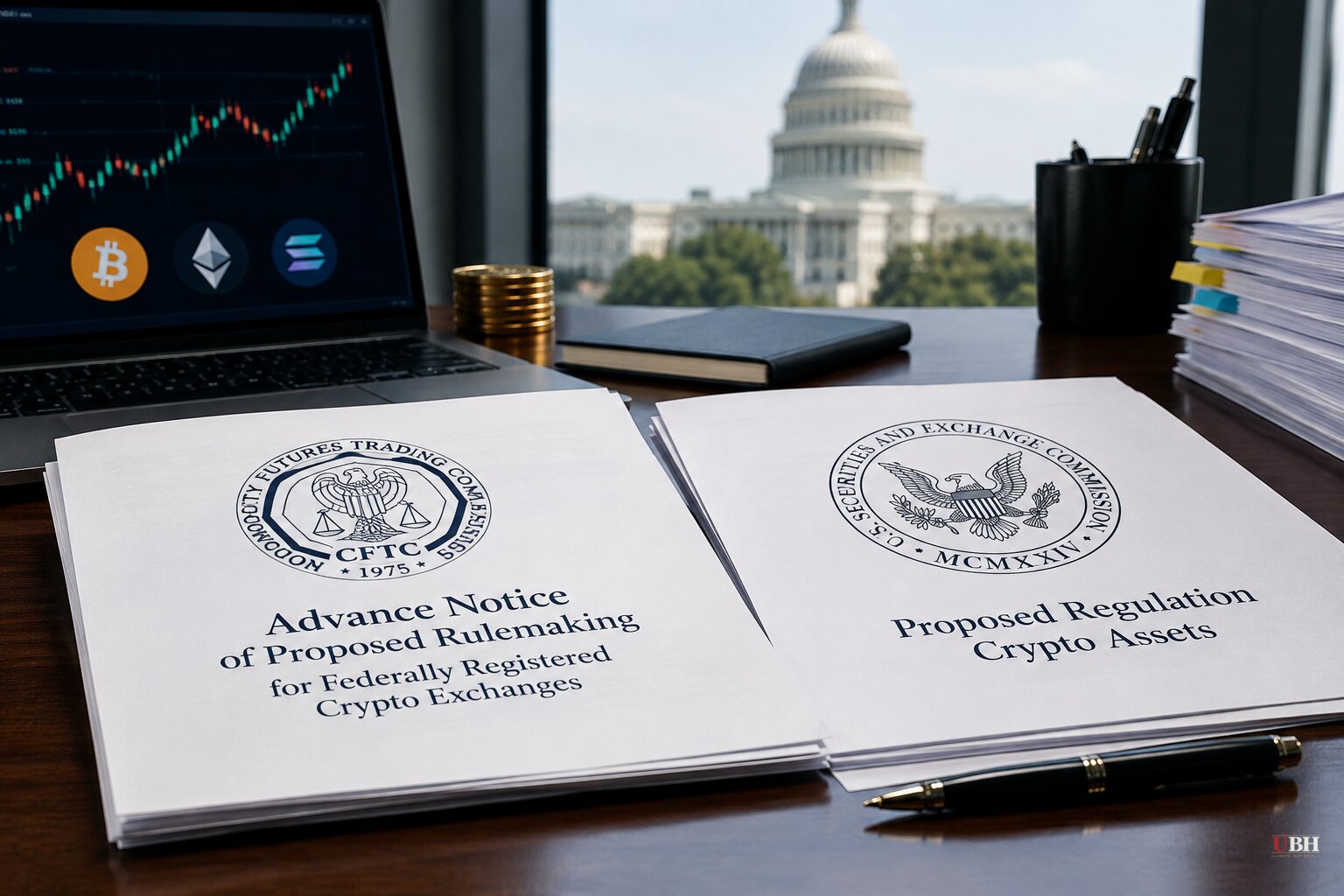
Since the CLARITY Act failed in Congress, the two main crypto regulators have started writing their own rules. The CFTC put out an advance notice on Oct. 5, and the SEC's proposal from August has just finished its public comment period.
The open question is whether either agency has the people to enforce what it writes.
What the CFTC proposed
The Oct. 5 advance notice covers two planned rules: Regulation Crypto Asset Transactions and Regulation Crypto Asset Markets. They would set out how exchanges that let retail customers trade crypto on margin, with leverage or with financing could register and operate under one national framework.
Most U.S. crypto exchanges today are licensed state by state as money transmitters. Those licenses were built to police fraud and money laundering, not market manipulation, conflicts of interest or the safekeeping of customer assets.
The legal hook is not new. Under the Commodity Exchange Act, as amended by Dodd-Frank in 2010, retail commodity trades offered on a leveraged, margined or financed basis are treated like futures. They must happen on a CFTC-registered exchange unless the commodity is actually delivered within 28 days. Federal courts have held that bitcoin and other virtual currencies are commodities under the act.
The CFTC has enforced that provision against crypto firms for years. What it never did was spell out how a firm could comply. A commentary in The Hill argues the new framework fixes that, and that the agency is not claiming new power, only writing rules for authority Congress gave it 16 years ago.
The same commentary says exchanges would have to show the tokens they list are hard to manipulate, looking at who holds the supply, when insider tokens unlock and whether new tokens are minted or bought back. Customer money would sit with regulated brokers under capital, segregation and anti-money-laundering rules. Spot-only exchanges would stay under state law unless they opt in.
The commentary also points to FTX. When it collapsed, customer funds at its CFTC-regulated subsidiary stayed safe. Its state-licensed U.S. arm offered no such protection.
The SEC's parallel track
The SEC proposed Regulation Crypto Assets in August. The agency describes it as a "clear and fit-for-purpose framework for certain investment contracts involving crypto assets."
The proposal includes a safe harbor that would keep token issuers from being treated as selling "investment contracts." It also includes exemptions for offerings up to a set size.
The 60-day comment period drew about 140 comments. The MiCA Crypto Alliance, a group that helps organizations implement the EU digital asset framework, largely backed the disclosure changes and urged the SEC to better define crypto-specific concepts and data structures. SkyBridge Capital founder Anthony Scaramucci said the rules respond to "organic adoption" and "represent a return to the Commission's proper role." Six comments were anonymous.
Legal experts have noted that rules written by an agency can be overturned more easily than an act of Congress. Both the SEC and the CFTC are also still short of permanent leadership.
The staffing problem
The CFTC's capacity is the other side of the ledger. By the end of 2025, the agency had 21% fewer employees than its previous 10-year average, according to U.S. Office of Personnel Management data. Staffing fell 22% between January 2024 and January 2025 alone.
Enforcement fell further. The CFTC brought nearly 80% fewer enforcement actions in 2025 than its annual average over the prior decade, according to its own annual reports.
Jeff Le Riche, a CFTC enforcement lawyer from 2005 to 2025, ties the two numbers together. He says the agency began losing staff soon after the 2024 election because the incoming administration had campaigned on being friendlier to crypto.
"In order to show results to that industry, some people were punished for bringing those cases," Le Riche said. "The end result was that a lot of the people that worked on those cases either left or were forced out." He said the shrinkage "castrated the enforcement team."
Joe Konizeski, a CFTC enforcement lawyer for 26 years, was among the dozens pushed out in 2025.
The cases at issue included fraud actions under the Biden administration against Gemini, Mirror Trading, Voyager, Celsius, FTX and the prediction market Polymarket.
The agency did not address Le Riche's claim directly. CFTC spokesman Zach Fulton said in a statement that the CFTC "remains committed to promoting integrity and responsible innovation in U.S. derivatives markets," and that Chairman Michael Selig "is grateful to the dedicated staff who continue to support this mission each day."
The OPM figures alone do not show when the losses came or why. The 22% drop from January 2024 to January 2025 covers a window that ends around the change of administration. The 2025 enforcement decline is the number tied to the new leadership, and Le Riche is the source for the motive.
What comes next
The CFTC notice is an advance notice, not a final rule. The agency has not published a proposed rule text or a compliance timeline.
The SEC now has to work through the roughly 140 comments on Regulation Crypto Assets before it can finalize anything. Whether a CFTC with a fifth fewer staff and an enforcement pace nearly 80% below its decade average can supervise exchanges handling hundreds of billions of dollars a week is a question neither agency has answered.
Sources used for this briefing
3 links from 3 independent newsrooms (syndicated copies of the same report count once)
These are the sources it draws on, linked so you can verify.


