
Unbiased headlines. Facts, not spin.
Unbiased Headlines is an independently owned news organization. We bring you the facts, not opinions, written fresh from 110+ named sources. Sources linked so you can verify it yourself.
 finance
Notable (6/10)
Tesla Q3 net income falls 43% to $787 million as flat revenue meets higher AI spending
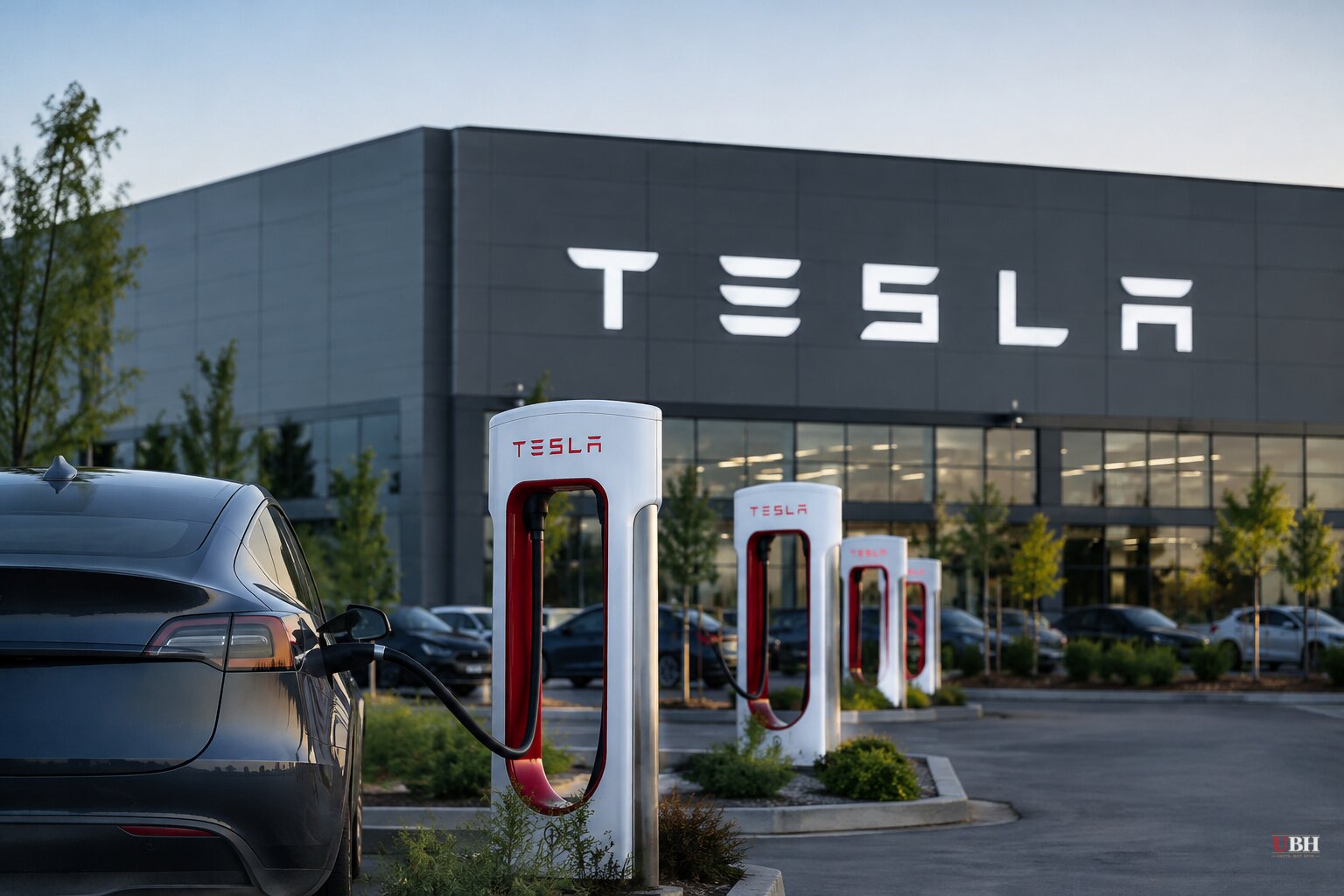
Tesla reported third-quarter results after the market close today, Oct. 21. Revenue was $28.05 billion, against $28.1 billion a year ago. Net income attributable to common stockholders was $787 million, down from $1.37 billion. Diluted earnings per share fell to $0.22 from $0.39.
The adjusted number was better. Non-GAAP EPS came in at $0.48, ahead of the $0.45 FactSet consensus. It was still down from $0.50 a year earlier.
Where the money went
Gross margin was 19.6%, up from 18.0% a year ago and 16.8% in the second quarter. Automotive gross margin excluding regulatory credits was 18.1%, up from 16.3% in Q2.
Operating income still dropped 56% to $718 million, from $1.62 billion. Operating margin fell to 2.6% from 5.8%.
Operating expenses rose 39% to $4.78 billion. R&D alone jumped 69% to $2.76 billion. Stock-based compensation, which includes the 2025 CEO pay package, hit $1.17 billion, up from $663 million a year ago, according to Electrek.
Tesla's own explanation, per its report, is higher operating expenses tied to AI and R&D projects, increased stock-based compensation and lower regulatory credit revenue. Those credits fell to $113 million from $417 million in Q3 2025.
Per Electrek, GAAP net income also included a $288 million unrealized gain on Tesla's bitcoin holdings, partly offset by a $142 million unrealized loss on its SpaceX equity investment.
Revenue by business
Automotive revenue fell 3% to $20.56 billion. Energy storage and solar revenue dropped 16% to $2.88 billion. Services and other, which covers charging, insurance and repair, grew 33% to $4.61 billion and kept the total flat.
Tesla delivered 486,532 vehicles, down about 2% from a year ago. That beat the roughly 462,000 analysts expected. It produced 464,391, up 4%.
Storage deployments were 13.7 GWh, up from 12.5 GWh a year ago but short of the roughly 15.9 GWh analysts expected.
Cash and capital spending
Capital expenditures were $4.73 billion, more than double the $2.25 billion a year ago. Free cash flow was $1.53 billion. That compares with $3.99 billion a year ago and negative $1.09 billion in Q2.
The market had braced for a much heavier burn. Maeil Business Newspaper reported that expectations ran to roughly $8 billion in capex and a deficit near $5 billion in free cash flow.
Tesla ended the quarter with $45.4 billion in cash and investments. CFO Vaibhav Taneja said facility investments "will be primarily covered by operating cash flows."
FSD, Cybercab and the regulator
Active Full Self-Driving subscriptions rose 67% year over year to 1.74 million, according to Tesla. Maeil Business reported that more than 75% of new North American deliveries came with FSD. On the earnings call, Musk said, "The biggest driver of demand is FSD." He said EU approval of FSD is expected in the first quarter of next year.
Tesla began Cybercab rides in Austin on Sept. 3. Maeil Business reported that NHTSA has sent Tesla a 21-item questionnaire about how the vehicle, which has no steering wheel or pedals, was self-certified to federal safety standards. Answers are due Oct. 30. Tesla has not publicly detailed its response.
Tesla says Optimus production has started at Fremont, the Semi is in production in Nevada, and it plans to keep spending on AI infrastructure, battery materials and chip manufacturing.
Two readings of the same quarter
The company's case is that margins are recovering, cash flow is positive, and the spending builds businesses in autonomy and robotics. Tesla says it will keep maximizing factory utilization while investing in those areas.
The skeptical case is that profit is still falling. Ars Technica noted that the credit revenue Tesla once leaned on is shrinking as other automakers build their own EV lineups. It also noted that the U.S. government has eliminated the credits. Its read is that the profit drop reflects AI hardware spending plus the cost of the CEO's compensation package.
Electrek made a similar point on spending. Operating income fell even as gross margin rose, because AI and Optimus costs grew faster than gross profit.
Market reaction
Shares were down about 3.3% in after-hours trading at roughly $373.65, according to Coinpedia's market report. That is an after-hours indication, not a regular-session close. The same report cited a consensus Buy rating with a $402 price target.
The next hard date is Oct. 30, when Tesla's answers to NHTSA on the Cybercab are due. Whether the questions slow the rollout is unresolved.
Sources used for this briefing
7 links from 7 independent newsrooms (syndicated copies of the same report count once)
These are the sources it draws on, linked so you can verify.


