
Unbiased headlines. Facts, not spin.
Every story is an unbiased news briefing written from 110+ sources across the spectrum — sources linked so you can verify it yourself.
 health
Notable (6/10)
June 14, 2026 at 02:18 PM
health
Notable (6/10)
June 14, 2026 at 02:18 PM
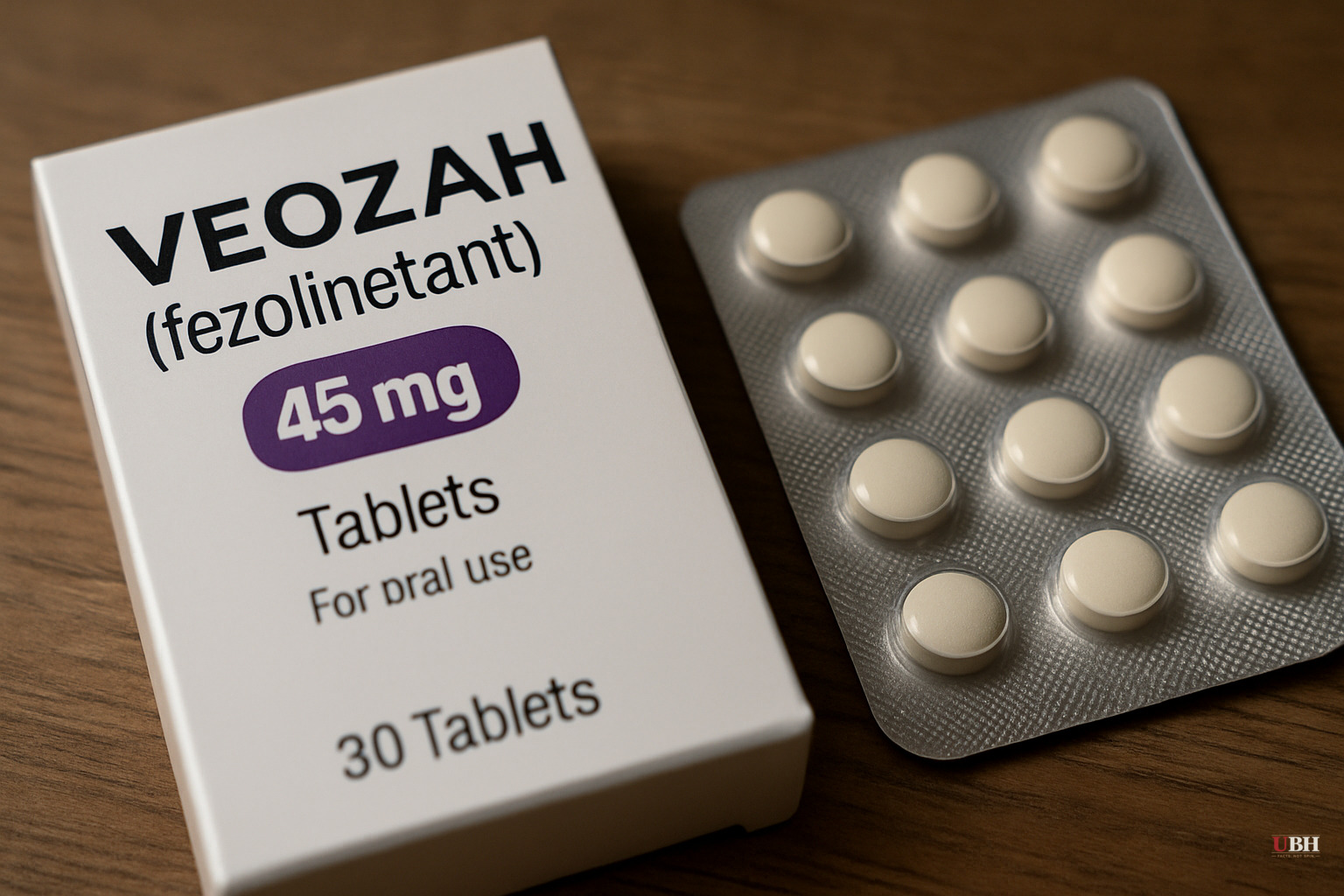
Non-Hormonal Menopause Drug Fezolinetant Reduced Hot Flashes and Anxiety in Real-World Study, Not Just Clinical Trials
What the study found
A real-world study of fezolinetant — brand name Veozah — found the drug significantly reduced both the number and intensity of hot flashes, including night sweats, within four weeks of starting treatment. Depression and anxiety scores improved over the same period, moving from clinically "mild" to "normal" ranges, according to the New York Post's reporting on the research.
Dr. Pauline M. Maki, senior author of the study and a researcher at the University of Illinois Chicago College of Medicine, told the Post she did not anticipate results of that magnitude. "It's a hard level of symptoms to improve," she said.
Why "real-world" matters here
Clinical trials are built with narrow enrollment criteria. Participants tend to be healthier, younger, and less medically complicated than the average woman seeking help at her doctor's office. This is how you isolate a drug's effect cleanly, but it does mean trial results don't always translate to the general population.
This study was designed specifically to close that gap. "You get the kind of people like me, anybody who walks into their doctors office and is seeking help for their hot flashes," Maki said. Replicating both the size of the benefit and the speed of onset in a real-world population strengthens confidence that the drug performs outside controlled conditions.
The scale of the problem it's treating
More than 80% of menopausal women experience hot flashes, and research cited by the Post suggests those symptoms persist for seven to eleven years on average. When they hit at night, the resulting sleep disruption compounds into chronic secondary problems: fatigue, cognitive fog, mood instability.
About 50% of perimenopausal and menopausal women also experience psychological symptoms: anxiety, depression, insomnia, forgetfulness. The mechanism is hormonal. Declining estrogen suppresses serotonin and elevates cortisol, the stress hormone. The hypothalamus, the body's internal thermostat, becomes hypersensitive to temperature shifts, triggering hot flashes.
Where fezolinetant sits in the treatment landscape
Hormone replacement therapy (HRT) remains what Maki called "the gold standard" for hot flashes. It works, and for most women the benefits outweigh the risks. But a meaningful share of women either cannot use HRT due to a history of hormone-sensitive cancers, blood clotting disorders, or cardiovascular risk factors, or prefer not to.
Fezolinetant works differently. Rather than replacing estrogen, it targets a neurokinin B receptor pathway in the hypothalamus that is believed to drive the temperature dysregulation underlying hot flashes. No hormones involved.
The strongest concern worth taking seriously
Skeptics raise a fair point: real-world studies, by their nature, lack the controls that make clinical trials reliable. Participants know they're taking an active drug, placebo effects are harder to account for, and confounding variables multiply. A woman who voluntarily seeks out a new menopause treatment and is monitored closely may simply feel better for reasons unrelated to the drug's pharmacology.
Maki's team addresses this directly. The fact that the real-world findings match the clinical trial results in both magnitude and timeline is precisely what makes this more reassuring. Two different populations, two different study designs, same outcome.
What remains unresolved
The Post's article does not specify the study's sample size, the full duration of follow-up beyond four weeks, or whether the mood improvements persisted long-term. It also does not detail the drug's cost or insurance coverage, both of which determine whether a "real-world" drug actually reaches real-world women. Veozah received FDA approval in May 2023, but access and affordability barriers remain a separate question the study does not answer.
For women weighing fezolinetant against HRT or other alternatives, the open question is long-term safety data beyond the clinical trial window. Maki's real-world study adds confidence on efficacy. The durability and safety profile over years of use is still accumulating.
Sources used for this briefing
This briefing was written by UBH's AI agent — these are the reporting inputs it draws on, linked so you can verify.


