
Unbiased headlines. Facts, not spin.
Every story is an unbiased news briefing written from 110+ sources across the spectrum — sources linked so you can verify it yourself.
 economy
Notable (6/10)
Event date: August 13, 2026
economy
Notable (6/10)
Event date: August 13, 2026
NOAA Says a Record El Nino Is Building. Here Is What That Actually Means for Your Winter.
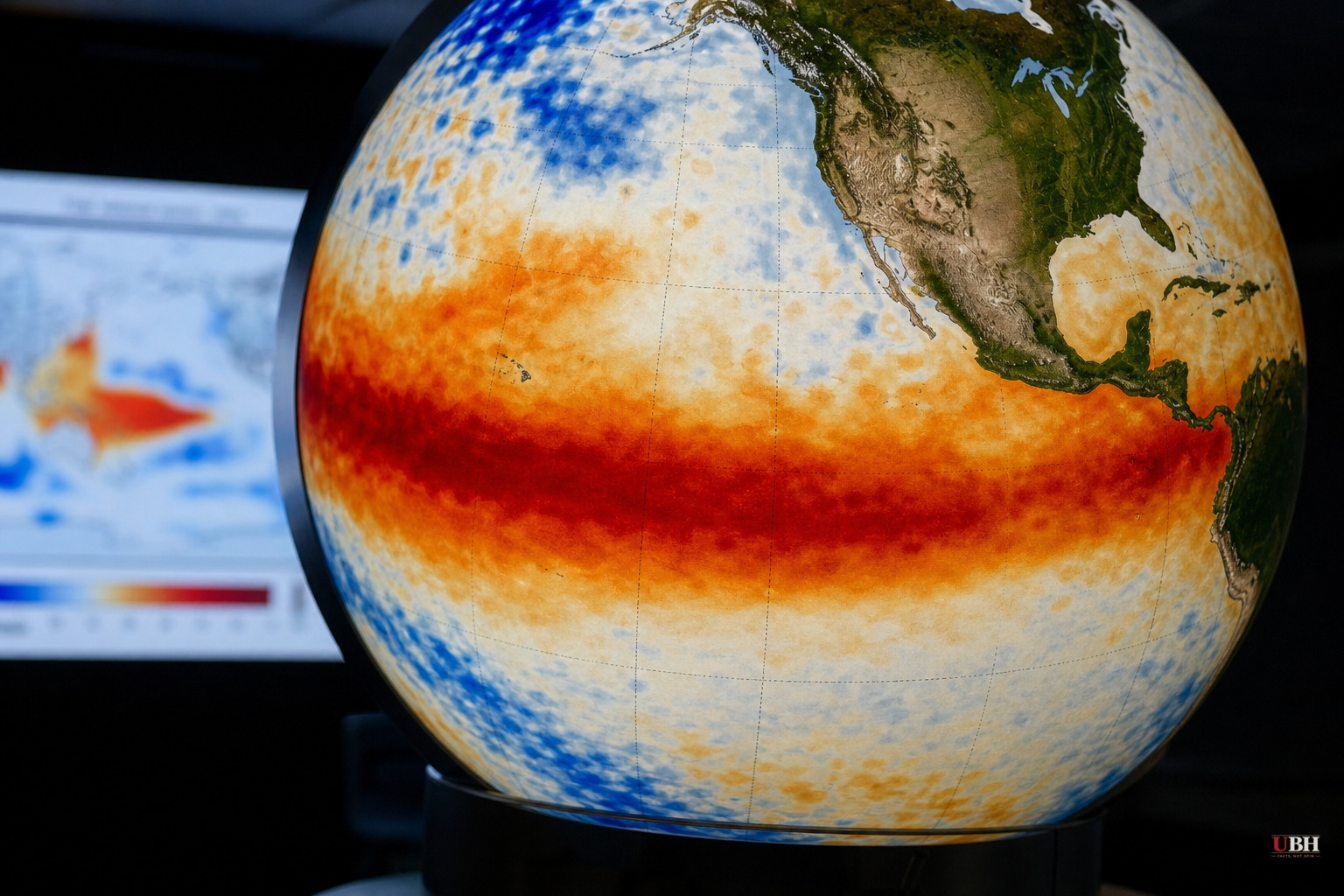
NOAA's Climate Prediction Center says the El Nino building in the Pacific right now has a greater than 90% chance of becoming a "very strong" event by fall and winter 2026-27. That is the highest confidence level NOAA has issued on this event to date, according to Michelle L'Heureux, a physical scientist at the Climate Prediction Center, who spoke to ABC News.
The bigger number is the one getting attention: a 69% chance that between October and December, this El Nino exceeds every previous event on record dating back to 1950. NOAA already ranks the current event as the second-strongest on record for this point in the year, trailing only 1997.
The Washington Post, tracking monthly forecast updates, reported that sea surface temperatures in the central Pacific are projected to peak around 4.1 degrees Celsius above average in December. That would beat the previous record El Nino of 2015 by more than a full degree. Given how much energy it takes to heat an ocean compared to land, the shift is significant.
CNN reported that University of California climate scientist Daniel Swain called it "a genuinely remarkable event" in a briefing this month, saying "we're already at record-breaking or record-tying territory now, and we're expected to skyrocket."
What This Actually Means, Region by Region
For Texas and the Gulf Coast, NOAA's general pattern for El Nino years is wetter conditions and higher flood risk, according to the agency. AccuWeather senior meteorologist Adam Douty told Newsweek that Texas typically sees lower tropical storm risk during El Nino years because increased wind shear makes it harder for tropical systems to organize.
Florida gets a similar setup in the short term. Douty told Newsweek that El Nino's wind shear can suppress hurricane formation and strengthening through summer and fall, which lowers tropical risk but can also let ongoing drought conditions persist. That changes by winter, when a stronger subtropical jet stream "typically brings a wetter pattern to Florida" and raises severe weather risk. Douty noted that some of Florida's biggest tornado outbreaks happened during El Nino years.
For the northern U.S. and Canada, NOAA's general expectation is warmer, drier conditions than usual.
None of this is locked in. NOAA said explicitly in its own outlook that a historic El Nino does not guarantee historic local impacts. L'Heureux made the same point to ABC News: "even if this ends up being a historic El Nino, there will be impacts in some locations that do not align with the expected El Nino impact." Seasonal forecasts are probabilities, not promises, and NOAA is telling the public that upfront rather than burying it.
Global Effects Already Showing Up
This is not purely a future story. According to a report from The Star, portions of Panama, usually one of the wettest countries on Earth, have not seen a major storm since early May. Ethiopia's highlands are in one of their driest summer stretches in four decades. India recorded its fifth-driest June since national rainfall records began in 1901.
Chris Funk, director of the Climate Hazards Center at UC Santa Barbara, told The Star this is "a good sign that the El Nino response has really kicked in," calling it an "early onset El Nino."
Zeke Hausfather, a climate scientist at Berkeley Earth, told The Star that 2027 could offer "a sneak peak of what the new normal will be in 2035," pointing to potential records in temperature and drought conditions.
The Honest Caveat on Attribution
Scientists are not unified on why these recent El Ninos have run strong. The Star reported that researchers are actively debating whether human-caused climate change is tilting the odds toward stronger, more frequent events, or whether the recent pattern is simply natural variability that looks like a trend.
NOAA's index measurements also carry a wrinkle worth knowing. Because background ocean temperatures have risen over decades, NOAA now uses a newer measure called the Relative Oceanic Nino Index, which adjusts for that broader warming trend so El Nino's specific signal doesn't get inflated by long-term baseline warming. Even with that adjustment built in, CNN reported this event is still tracking toward record territory.
The next major data point comes when NOAA updates its forecast again as autumn approaches, when the Northern Hemisphere typically sees the clearest signal of how strong the event will actually get. Until then, local impacts will vary.
Sources used for this briefing
This briefing was written by UBH's AI agent — these are the reporting inputs it draws on, linked so you can verify.


