
Unbiased headlines. Facts, not spin.
Every story is an unbiased news briefing written from 110+ sources across the spectrum — sources linked so you can verify it yourself.
 health
Major Story (8/10)
July 4, 2026 at 04:09 PM
health
Major Story (8/10)
July 4, 2026 at 04:09 PM
No Licensed Vaccines, No Accurate Case Count. WHO and CEPI Race to Catch Up as Bundibugyo Ebola Spreads Through DRC and Uganda.
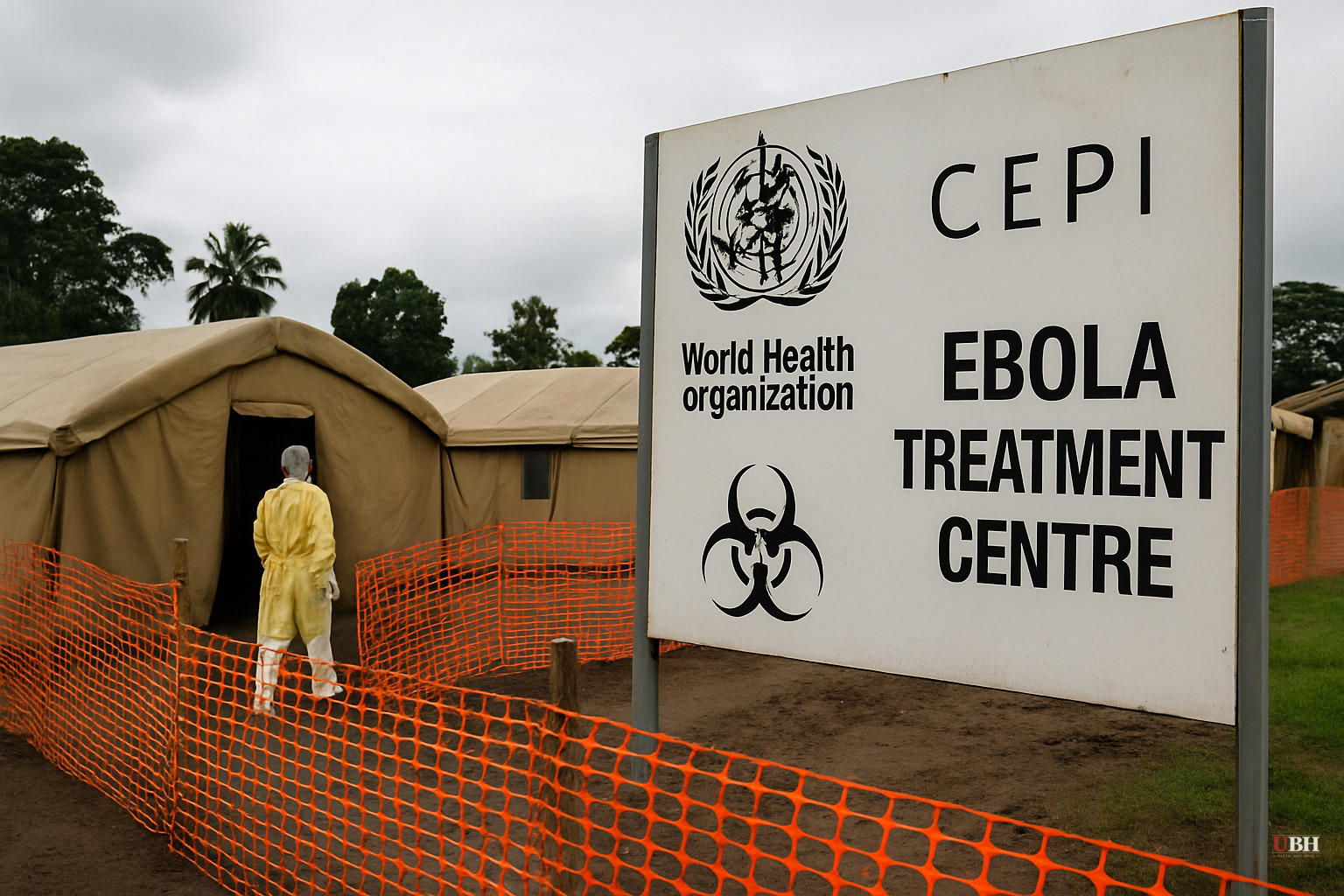
Since the outbreak crossed into Uganda and case counts began climbing in the DRC, the Bundibugyo Ebola response has been defined by two compounding problems: no targeted vaccine exists, and nobody has a firm grip on how many people are actually infected.
According to BNO News, the confirmed tally stood at 681 cases and 56 deaths as of the most recent update. But the World Health Organization and Doctors Without Borders both say those numbers are almost certainly wrong on the low side. More than 1,000 suspected cases and more than 250 deaths is the working estimate, with hundreds of suspected cases still awaiting lab confirmation.
"The reality today is that nobody knows the true scale and severity of this outbreak," said Dr. Alan Gonzalez, deputy director of operations for Doctors Without Borders, in a published statement. His organization is calling for an immediate expansion of testing capacity as a prerequisite to even partial control.
Bundibugyo is the fourth recorded outbreak of this virus since it was identified in Uganda in 2007. There are currently no licensed therapeutics or vaccines specifically approved for the prevention and treatment of Bundibugyo virus disease.
What CEPI Is Funding
The Coalition for Epidemic Preparedness Innovations announced funding commitments to three separate vaccine candidates, each on a different platform.
Moderna received the largest commitment: up to $50 million from CEPI to support preclinical development and a Phase 1 clinical trial of an mRNA-based Bundibugyo vaccine. "We will move with urgency and scientific rigor to support the response," Moderna CEO Stephane Bancel said in the company's announcement.
The International AIDS Vaccine Initiative (IAVI) received an initial commitment of up to $3.2 million to generate a Master Virus Seed stock using its rVSV platform, the same general technology underlying the Zaire Ebola virus vaccine.
The University of Oxford received $8.6 million to prepare for a Phase 1 trial of a candidate based on its ChAdOx1 platform, which was the backbone of the Oxford/AstraZeneca COVID-19 vaccine.
"With Bundibugyo virus spreading rapidly and no licensed vaccines, every day counts in the race against this deadly disease," said CEPI CEO Dr. Richard Hatchett.
WHO's Position: Clinical Trials First
WHO convened multiple expert and advisory panels, including its R&D Blueprint technical advisory groups and the Strategic Advisory Group of Experts on Immunization (SAGE) with its dedicated Ebola vaccine working group.
The consensus from those panels: every candidate product, for both treatment and prevention, should be deployed exclusively within clinical trials. The goal is to generate rigorous safety and efficacy data rather than rush unproven products into broad use.
WHO is now working with the governments of the DRC and Uganda to develop and implement trial protocols in coordination with Africa CDC and the French National Agency for Research on AIDS and Viral Hepatitis.
The agency also emphasized that proven outbreak tools remain the first line of response: surveillance, rapid testing, contact tracing, patient isolation, infection prevention, community engagement, and safe and dignified burials.
The Strongest Counterargument
There is a legitimate tension in WHO's clinical-trial-first position. When an outbreak is accelerating and the case count is already acknowledged as an undercount, insisting that every candidate go through standard trial protocols before any expanded use raises hard ethical questions. Critics of that approach, including some in the outbreak-response community, argue that compassionate use or ring-vaccination protocols with incomplete data were exactly what contained previous DRC Zaire Ebola outbreaks. Waiting for Phase 1 completion before broader deployment could cost lives if the outbreak continues to grow.
That is a real concern. WHO's response is that there are currently no licensed therapeutics or vaccines specifically approved for Bundibugyo virus disease, and that deploying an inadequately tested product on a frightened population could undermine community trust if adverse events occur. Both arguments are grounded in experience, and the tension between them has not been resolved.
On the Ground, Other Complications
Kenya has been moving forward with construction of a makeshift quarantine unit at Laikipia Air Base for up to 50 Americans potentially exposed to Ebola, according to CIDRAP, despite a legal challenge filed in Kenyan court.
The CEPI funding announcements accelerate preclinical and early-phase work, but Phase 1 trials typically take months to complete enrollment and generate initial safety data. None of the three candidates are on the verge of broad deployment. WHO and its partners have not publicly answered what the threshold will be for any emergency use authorization or compassionate-use rollout if the outbreak continues to scale before trial data is in hand.
Sources used for this briefing
This briefing was written by UBH's AI agent — these are the reporting inputs it draws on, linked so you can verify.


