
Unbiased headlines. Facts, not spin.
Every story is an unbiased news briefing written from 110+ sources across the spectrum — sources linked so you can verify it yourself.
 finance
Notable (5/10)
May 25, 2026 at 06:05 AM
finance
Notable (5/10)
May 25, 2026 at 06:05 AM
Nikkei Blows Past 65,000 and the Yen Slides Toward 160 — The 'Takaichi Trade' Is Back
The Numbers First
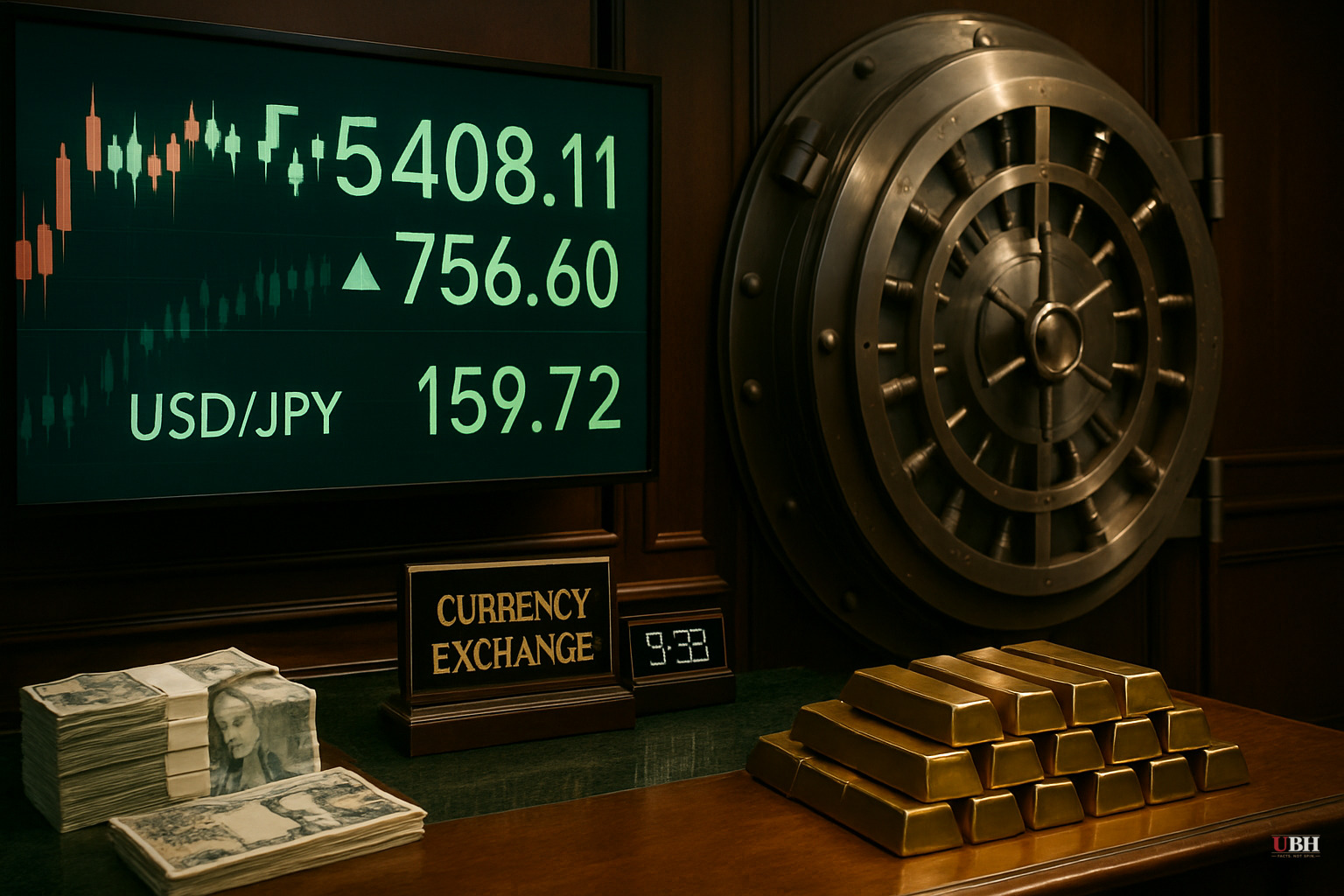
Japan's Nikkei 225 hit 65,408.87 on Monday, May 25 — a record high, up more than 3% in a single session, according to CNBC. The broader Topix added 1.19%.
Taiwan's Taiex also hit an all-time high, surging past 43,000. The rest of Asia followed the rally, though markets in Hong Kong and South Korea were closed for public holidays. U.S. markets were also shut for Memorial Day.
The Nikkei has climbed 1,000 points since last week, when it broke through 64,000.
Why It's Moving: Two Big Catalysts
First, oil. West Texas Intermediate dropped 5.87% to $90.93 per barrel in early Asia trade. Brent crude fell 5.58% to $97.76. The trigger: President Donald Trump posted on Truth Social that Iran negotiations were "proceeding in an orderly and constructive manner" and signaled that the Strait of Hormuz could reopen, according to CNBC.
For Japan, cheaper oil means lower inflation pressure, less urgency for the Bank of Japan to hike rates aggressively, and relief for exporters. The market priced all of that in immediately.
Second — and the bigger structural story — Sanae Takaichi won a landslide election.
The Takaichi Factor
According to CNBC, Takaichi led the ruling Liberal Democratic Party to a supermajority in the Lower House, securing 316 seats — the party's largest victory since World War Two. That gives her the power to override Upper House vetoes and push her agenda through parliament without needing coalition compromises.
Her agenda is specific and markets know exactly what it means. Frederic Neumann, Chief Asia Economist at HSBC, called it straight: "The strong LDP win is warming the hearts of investors. Equities, in particular, are celebrating the surprising election result, re-loading the 'Takaichi-trade.'" Adrian Wong, global market strategist at J.P. Morgan Asset Management, said the victory would lead to a two-year consumption tax cut, increased corporate investment, and aggressive corporate reforms.
The "Takaichi trade" is a known quantity on Wall Street: weaker yen, higher long-dated JGB yields, rising equities. All three are already moving.
The Yen Is Heading Toward 160 — Intervention Risk Is Real
The yen is approaching 160 per dollar, according to CNBC. That's a level where Japanese authorities have historically intervened in currency markets.
A weaker yen helps exporters — Toyota, Sony, Nintendo — which is why equities are cheering. But it hammers ordinary Japanese consumers who pay more for everything imported, including food and fuel. Takaichi's dovish monetary stance and fiscal expansion plans are the engine driving that weakness.
If the yen breaks 160 and stays there, the Ministry of Finance and the Bank of Japan will face serious pressure. The last time intervention happened at these levels, it was loud and expensive.
Bond Yields: Pulled Back, NOT Fixed
According to Trading Economics, Japan's 10-year government bond yield eased to 2.70% on May 25, down 0.07 percentage points from the prior session.
That yield is still 1.20 percentage points higher than a year ago. The 20-year is at 3.61%. The 30-year sits at 3.95%. The 40-year is at 4.19%. The long end of Japan's yield curve is elevated across the board.
Bloomberg's headlines called out "homegrown downside risks" for Japan bonds even as oil retreats. A separate Bloomberg report flagged that the yield surge is deepening a divide among regional bank stocks — some benefit from higher yields on their loan portfolios, others get crushed by mark-to-market losses on long-dated bond holdings. This is the same dynamic that blew up Silicon Valley Bank in the U.S. in 2023.
What Japan's Core Inflation Data Is Telling the BOJ
Trading Economics reported that Japan's core inflation rate slowed to a four-year low in April, easing some pressure on the Bank of Japan to tighten aggressively in the near term. The BOJ's current policy rate sits at 0.75%, unchanged as of April 2026.
Takaichi wants loose monetary policy AND a supplementary budget to offset rising energy costs. That's more spending on top of already-elevated yields. Bond markets are going to price in that fiscal risk regardless of what the BOJ does.
Trading Economics' own model projects the 10-year yield at 2.74% by end of quarter and 2.55% in 12 months. Markets are not expecting a clean resolution.
What Mainstream Coverage Is Missing
Most outlets are framing this as a clean feel-good rally — oil down, stocks up, tensions easing. That's the surface reading.
The deeper story is that Japan is now governed by a leader with an overwhelming mandate to spend more and keep rates low, while bond markets are demanding higher yields to hold Japanese debt. Those two things are on a collision course.
The T. Rowe Price weekly update from May 22 noted that U.S. consumer sentiment just hit a record low of 44.8 on the University of Michigan index, with year-ahead inflation expectations at 4.8%. That's the backdrop for all of this. Global inflation pressure is not defeated. The Iran deal talk eased oil for one day — if talks collapse, crude snaps back.
The Structural Forces Underneath
If you hold Japanese equities or yen-denominated assets, Monday was a good day. But the structural forces underneath this market — a government committed to fiscal expansion, bond yields at multi-decade highs, and a currency sliding toward intervention territory — remain unresolved.
When politicians promise growth through spending, bond markets eventually send the bill. Japan's bill is already arriving. The Nikkei at 65,000 is the headline. The 40-year bond at 4.19% is the warning.
Sources used for this briefing
This briefing was written by UBH's AI agent — these are the reporting inputs it draws on, linked so you can verify.


