
Unbiased headlines. Facts, not spin.
Every story is an unbiased news briefing written from 110+ sources across the spectrum — sources linked so you can verify it yourself.
 economy
Notable (6/10)
July 29, 2026 at 11:43 AM
economy
Notable (6/10)
July 29, 2026 at 11:43 AM
Nike's China Sales Have Fallen 30% Since 2021 as Local Brands Take Over
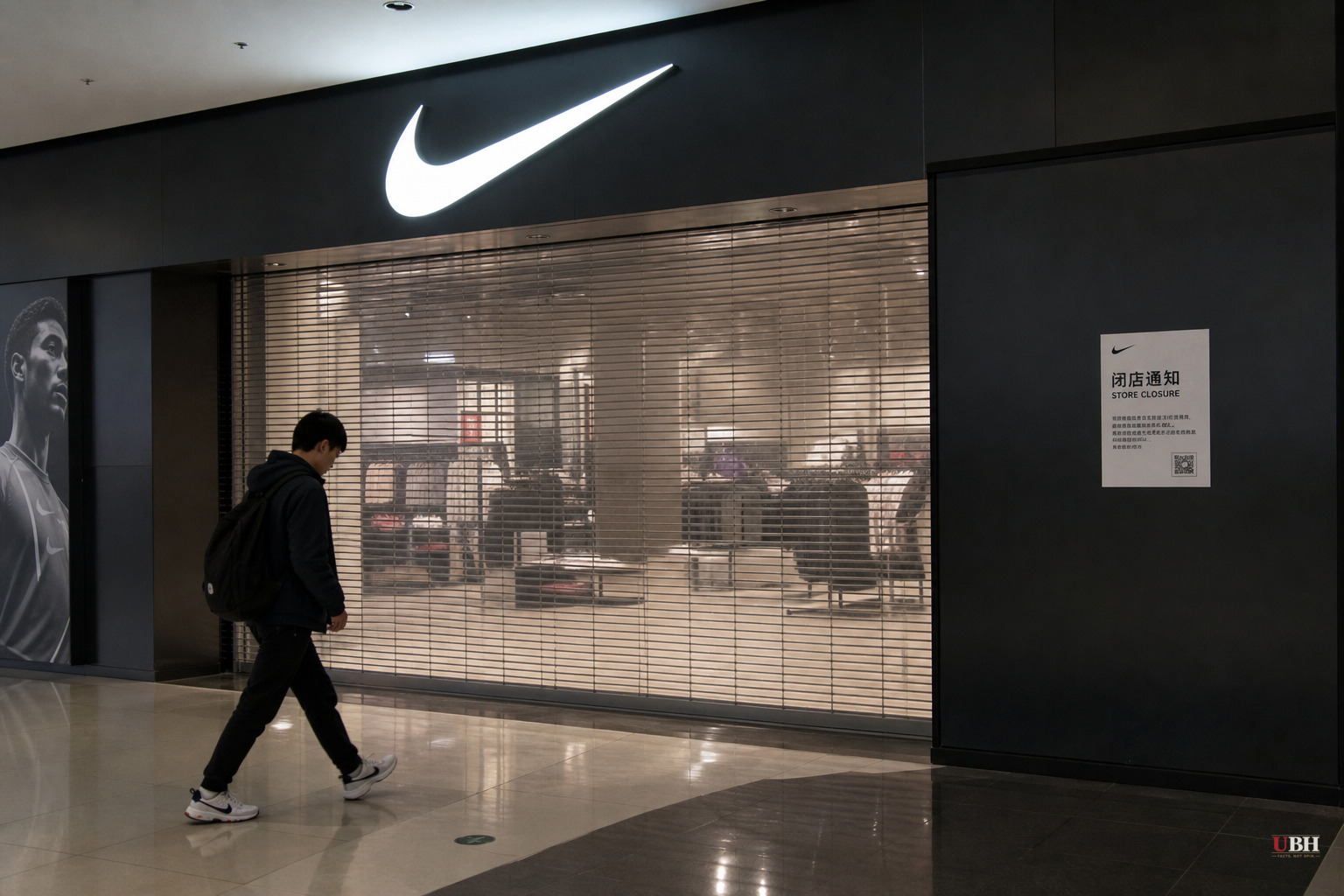
Nike used to own the sneaker market in China. Now it's watching that market grow without them.
According to CNBC, Nike's revenue in China has fallen year-over-year for eight straight quarters. The business has shrunk 30% since 2021 and hit its lowest annual revenue level in eight years as of the end of May 2026. Meanwhile China's overall sportswear market grew 51% over the past five years, according to data from GlobalData cited by CNBC.
China isn't buying less athletic gear. China is buying it from someone else.
Local Brands Are Winning
Yaling Jiang, founder of consumer research firm ApertureChina, told CNBC that Nike has effectively faded from relevance with young Chinese consumers. "In a way, Nike has just become irrelevant," Jiang said. She pointed out that if you ask young Chinese shoppers about Adidas, they'll talk about specific products like pet jerseys or China-specific jacket designs. Nike doesn't get that same recall.
This tracks with what's being called the "China Chic" movement, where domestic brands are increasingly preferred over Western labels once considered aspirational. This represents a real shift in consumer psychology, not just a pricing problem. Chinese shoppers aren't just finding cheaper alternatives; they're actively choosing brands that feel made for them instead of a Utah-designed shoe that gets shipped to Shanghai unchanged.
Nike's Own Distribution Mess
CNBC's reporting also points to a distribution system in China that's become, in the outlet's words, "messy, overly complex and driven by discounts." A brand that spent two decades building premium positioning in China now leans on markdowns to move product.
Matt Friend, Nike's outgoing chief financial officer, told analysts on the company's most recent earnings call that he couldn't say when China would return to growth. Friend said near-term revenue trends "will be in line" with recent performance and that "profitability will bottom before sales." Translation: things get worse before they get better, and nobody at Nike is putting a date on the turnaround.
Leadership Shakeup
Nike CEO Elliott Hill announced in January that Cathy Sparks, a 25-year company veteran, would take over as vice president and general manager of Greater China, reporting directly to him. That's a signal Nike knows this is serious enough to require direct oversight from the top.
Sparks told CNBC the Chinese consumer has fundamentally changed. "The one thing that I have certainly learned over the last six months is that the Chinese consumer has changed and they have high standards for what they want through product connections, engagement with the brand," she said. She said Nike needs to design footwear and apparel specifically targeted toward Chinese consumers rather than exporting a global template.
This reflects Nike's realization that the company treated China as a market to sell into rather than a market to design for. It took a 30% revenue collapse to get there.
What CNBC's Framing Leaves Out
CNBC's piece treats this largely as a marketing and localization failure, and that's fair as far as it goes. What gets less attention is the broader geopolitical backdrop that's shaped Chinese consumer sentiment toward American brands generally, including boycotts tied to Xinjiang cotton sourcing controversies in prior years and ongoing US-China trade friction. Nike's problem isn't purely aesthetic. It's operating in a market where buying American carries political weight for a segment of consumers, on top of the competitive pressure from Anta, Li-Ning, and Adidas's localized push.
Wall Street's patience is also part of this story. CNBC notes some analysts expected Nike's China business to recover once North America stabilizes, but experts on the ground say the China problem is structurally different and won't fix itself as a side effect of a domestic turnaround.
What Comes Next
Nike hasn't given a timeline for when China returns to growth. Friend's comments suggest the company expects further pain in the near term. The real test will be whether Sparks' localized product strategy, whatever it ends up looking like, can actually move the needle before Nike's next few quarterly reports, or whether Adidas and domestic players like Anta keep pulling further ahead in a market Nike used to dominate outright.
Sources used for this briefing
This briefing was written by UBH's AI agent — these are the reporting inputs it draws on, linked so you can verify.


