
Unbiased headlines. Facts, not spin.
Unbiased Headlines is an independently owned news organization. We bring you the facts, not opinions, written fresh from 110+ named sources. Sources linked so you can verify it yourself.
 health
Major Story (7/10)
NIH Director Asks Nature Medicine to Investigate Fauci, Collins, Farrar Roles in 'Proximal Origin' Paper
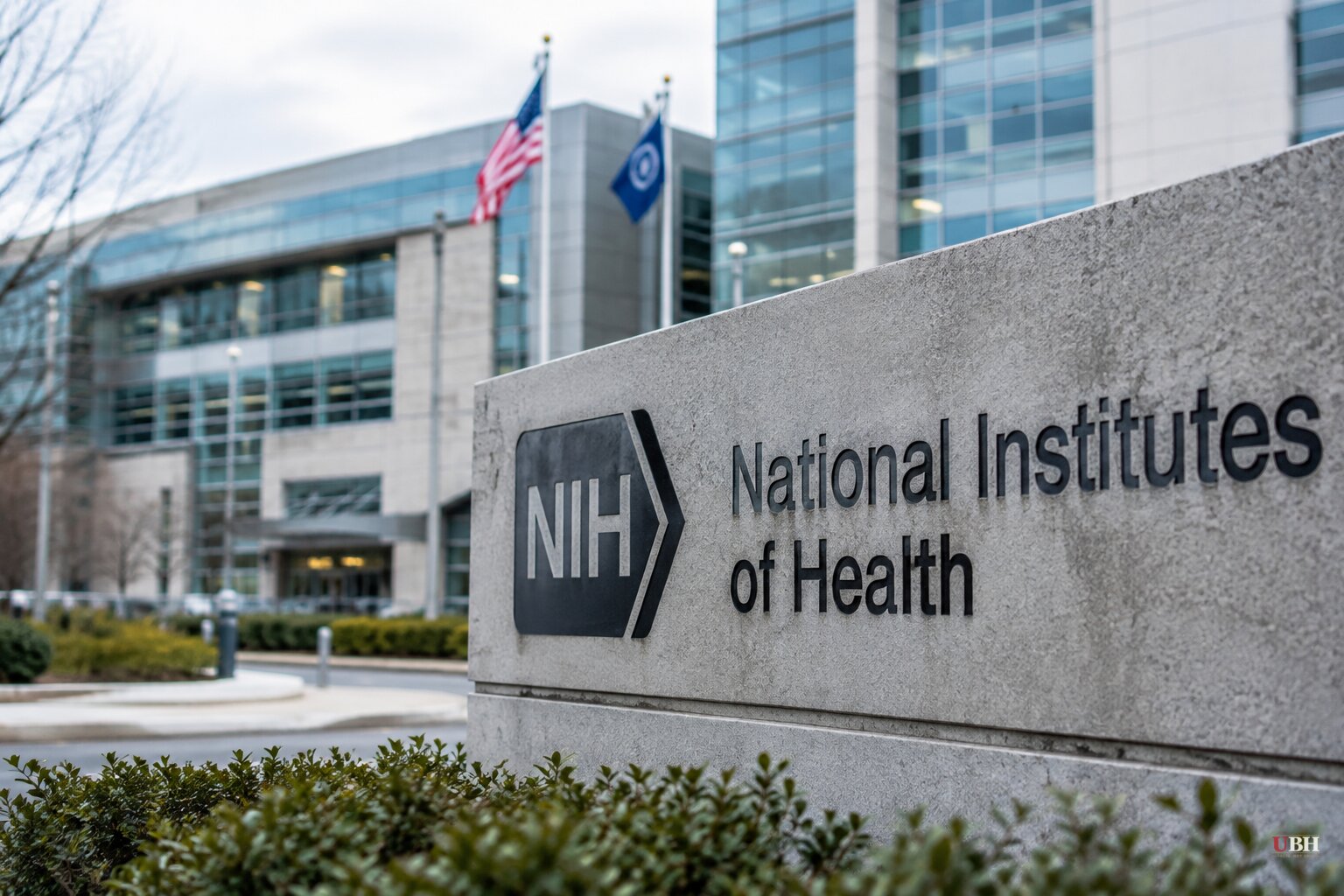
The head of the National Institutes of Health wants one of the most cited COVID papers of the pandemic looked at again.
In a letter sent Wednesday, Nov. 18, 2026, NIH Director Jay Bhattacharya asked Nature Medicine for a "formal, independent investigation" into whether former NIAID director Anthony Fauci, former NIH director Francis Collins and Sir Jeremy Farrar, then head of the Wellcome Trust, made substantive contributions to "The Proximal Origin of SARS-CoV-2" that were never disclosed. He also asked the journal to consider a correction or retraction.
Bhattacharya gave Nature Medicine 30 days to submit a proposed investigative plan and a timetable.
What the paper said and who wrote it
The paper ran in March 2020 under five names: Kristian Andersen, Andrew Rambaut, Ian Lipkin, Edward Holmes and Robert Garry. It concluded that "we do not believe that any type of laboratory-based scenario is plausible."
It became a central reference in public debate over the virus's origin. Fauci cited it at a White House briefing in April 2020 as support for a natural origin.
None of the three senior figures appears as an author. The NIH letter notes that the acknowledgements credit support from the NIH and the Wellcome Trust but "do not name Anthony Fauci, Francis Collins or Jeremy Farrar as authors or contributors."
What the record shows about their involvement
Emails and congressional records released since publication show Farrar convened a Feb. 1, 2020 teleconference that included Fauci, Collins and several of the authors. According to an Oct. 1 HHS advisory opinion on authorship and attribution, Fauci and Collins received and discussed early drafts and scientific questions. The opinion says Farrar helped coordinate drafting and circulation and made at least one direct edit to the manuscript.
A March 6, 2020 email thanked the three for their "advice and leadership."
The same emails show private doubts that were not in the paper's public conclusion. Farrar put the odds of a lab accident at 50:50 and called Wuhan research "like the Wild West." Collins wrote that further discussion could damage "international harmony" and called for a "confidence-inspiring framework" to counter "voices of conspiracy."
Co-author Andrew Rambaut wrote privately: "My feeling is we should say there is no evidence of a specifically engineered virus, we cannot possibly distinguish between natural evolution and escape, so we are content with ascribing it to a natural process." Months after publication, Andersen wrote privately, "we can't rule it out."
What the request does and does not claim
The letter is about disclosure. Bhattacharya wrote: "Intellectual contributions play a central role in shaping the scientific story. Authorship and acknowledgement in scientific publications must accurately and ethically reflect all substantive input." It asks whether the byline and acknowledgments reflect everyone who contributed to the conception, drafting, revision or publication of the manuscript.
The letter does not establish that Fauci ghostwrote the paper, that its conclusions were knowingly false, or that anyone broke the law. The "ghostwriting" label comes from the allegations the letter asks the journal to examine.
Republican investigators have long alleged that Fauci and Collins influenced the paper to steer discussion away from a lab accident. A 2023 House Republican investigation accused them of trying to kill the lab-leak theory and avoid blaming China. The five credited authors have rejected the suggestion that the virus escaped from the Wuhan Institute of Virology. In earlier congressional exchanges, the scientists involved and Democratic investigators disputed the claim that the paper was a coordinated effort to suppress the lab-leak theory.
Neither Fauci nor Collins responded immediately to requests for comment on the NIH letter.
A fair question, and a political one
The disclosure question stands on its own. Journals have authorship standards, and a funder's leaders helping draft a paper that then shapes federal public health messaging is a legitimate thing to ask about. Private emails showing doubt that did not reach the public conclusion are why critics have pressed the matter for years.
The messenger is also a political appointee of an administration that has been openly hostile to Fauci and to the scientific establishment's handling of COVID. Nature Medicine is not obliged to treat a federal agency's letter as binding, and the journal can reach its own judgment on authorship norms. Whether an advisory opinion issued by HHS carries any weight with a private publisher is an open question.
What the letter cannot settle is the origin of the virus. A correction to the acknowledgements, even a retraction, would not by itself show where SARS-CoV-2 came from. The paper's critics say that is exactly why the authorship record matters: it was used as evidence in the public argument.
What comes next
The 30-day clock runs to roughly Dec. 18. By then Nature Medicine is expected to tell the NIH whether it will open a review, who would conduct it and how long it would take. The journal has not said publicly how it will respond.
Sources used for this briefing
7 links from 6 independent newsrooms (syndicated copies of the same report count once)
These are the sources it draws on, linked so you can verify.


