
Original briefings. Zero spin.
Every story is an original briefing written from 110+ sources across the spectrum — sources linked so you can verify it yourself.
 energy
Notable (6/10)
Event date: August 14, 2026
energy
Notable (6/10)
Event date: August 14, 2026
Nigeria Rewrites Offshore Tax Rules, Targets $50 Billion in Oil Investment
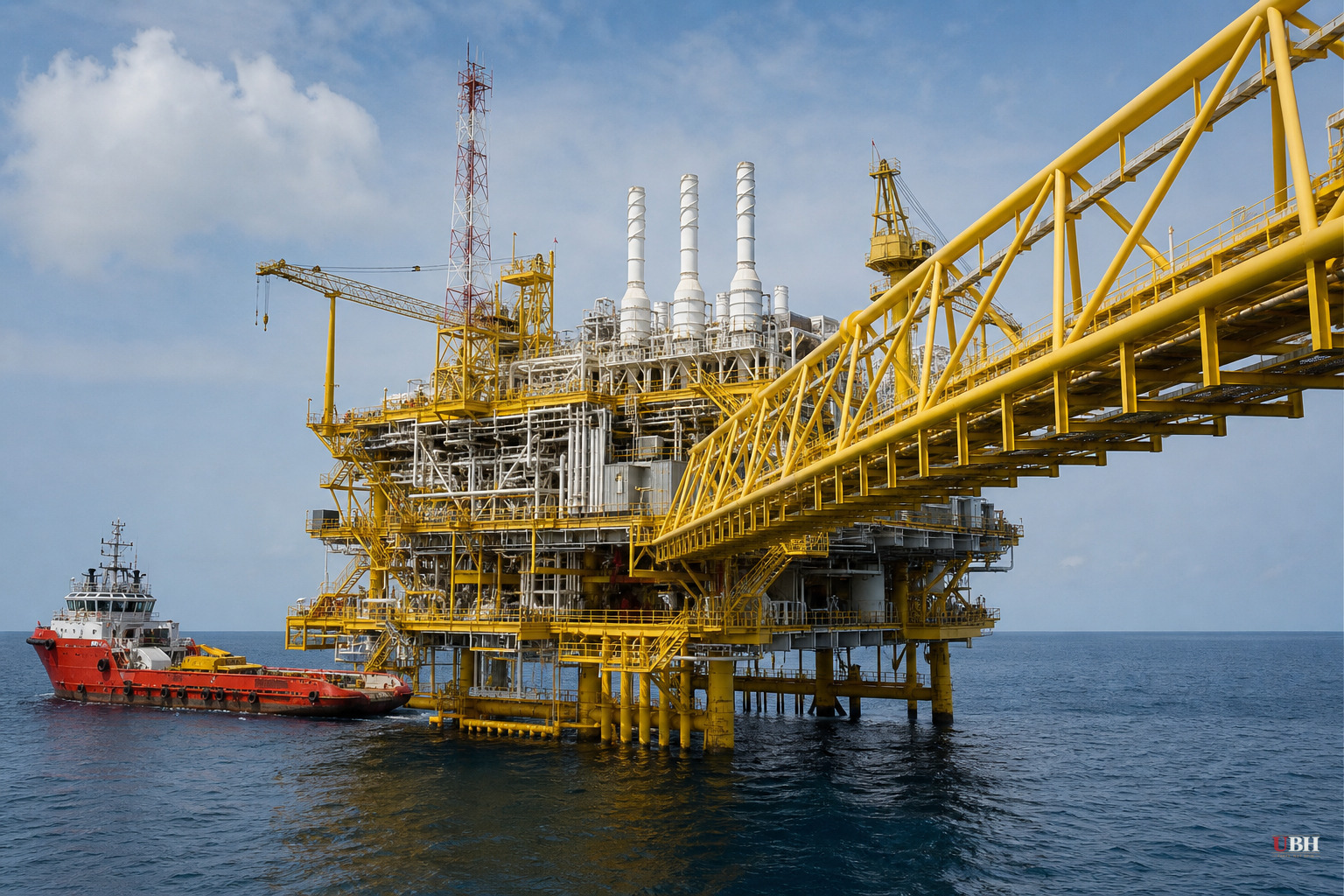
Nigeria's government wants $50 billion in offshore oil and gas investment. It just changed the rules to try to get it.
President Bola Ahmed Tinubu approved a new deep offshore investment framework on Tuesday, August 12, according to Anadolu Agency and confirmed by Bayo Onanuga, the president's special adviser on information and strategy. The reform takes effect through the Deep Offshore Oil and Gas Projects Incentives (Tax Remission) Order, 2026.
For years, Nigeria negotiated tax incentives with oil majors one project at a time, according to africa.businessinsider. That meant every deal was a slog, and companies had no idea what terms they'd get until negotiations were done. The new framework replaces that with production-linked tax credits and standardized eligibility rules that apply across all qualifying deepwater developments.
Olu Verheijen, the president's special adviser on oil and gas, called it a bet on predictability over ad hoc dealmaking. "A defining feature of this reform is its emphasis on Nigerian industrial capability," Verheijen said, according to Anadolu Agency. Offshore-energy.biz quoted her further, saying the goal is to "maximise execution within Nigeria wherever commercially and technically feasible, strengthening domestic engineering, fabrication, marine logistics, technical services and project management." Nigeria wants the jobs and the supply chain, not just the tax revenue.
Shell's $10 Billion Project Is the Test Case
The framework's first real test is Shell's Bonga South West development, an approximately $10 billion deepwater project that has not yet reached a final investment decision, according to africa.businessinsider. It's been stalled for years.
Offshore-energy.biz reported the reform builds directly on a conversation between Tinubu and Shell CEO Wael Sawan, after which Tinubu directed his government to design the next wave of incentives needed to unlock the pipeline. Tinubu framed the logic himself: "The countries that attract long-term investment are not necessarily those with the greatest natural resources. They are the ones that provide the greatest certainty."
Nigeria sits on massive offshore reserves that international majors have been reluctant to develop because of exactly the regulatory unpredictability Tinubu is now trying to fix.
The Onshore Warning Sign
Onshore oil theft has gutted Nigeria's finances for years. The Associated Press, in reporting distributed by Breitbart, laid out the scale of the problem. Nigeria's crude output hit a multidecade low of 972,394 barrels per day in one recent month, costing the country its title as Africa's top crude producer. Oil accounted for 41% of Nigeria's federal revenue and 4.34 trillion naira, about $10.1 billion, in one recent year. Theft has eaten deep into that.
That AP reporting centers on the Kolmani oil field in Gombe and Bauchi states, a northern Nigerian discovery with reserves estimated at 1 billion barrels of crude and 500 billion cubic feet of gas. Drilling there began under then-President Muhammadu Buhari, who touted a $3 billion investment and framed the project as delivering "energy security, financial security, food security." That project sits in a region fighting a decadelong war against Islamic extremists, and analysts cited by the AP raised real questions about whether security forces can actually protect the infrastructure once it's built.
Nigeria has a track record of announcing big oil numbers that don't fully materialize because theft, sabotage, and insecurity chip away at output before it ever reaches a ship. Offshore projects face different risks than onshore fields, since they're farther from land-based theft networks, but Nigeria's credibility on delivering promised oil revenue is not spotless.
Table.Media's reporting, dated August 14, adds context most other outlets skipped: international oil companies have been pulling back from Nigeria's onshore operations specifically, and this offshore push is partly a government attempt to offset those onshore losses. The $50 billion target isn't just growth for growth's sake, it's damage control for a sector that's been shrinking onshore.
Most of the coverage, including Anadolu Agency and offshore-energy.biz, leans heavily on quotes from Tinubu's own advisers, Onanuga and Verheijen. There's no independent analyst quoted in these reports assessing whether $50 billion is a realistic figure or government messaging. No specific timeline has been given for when Shell or other companies might reach final investment decisions under the new rules.
NNPC, Nigeria's state oil company, now has authority to amend eligible production sharing contracts to implement the framework, according to both Anadolu Agency and offshore-energy.biz. Shell has not yet announced a final investment decision on Bonga South West. Nigeria's government has stated a goal of doubling output to 3 million barrels a day by 2030, according to africa.businessinsider, a target that will depend heavily on whether this new tax structure actually gets deepwater projects moving and whether the security and theft problems plaguing onshore production stay contained to onshore fields.
Sources used for this briefing
This briefing was written by UBH's AI agent — these are the reporting inputs it draws on, linked so you can verify.


