
Unbiased headlines. Facts, not spin.
Every story is an unbiased news briefing written from 110+ sources across the spectrum — sources linked so you can verify it yourself.
 economy
Notable (5/10)
July 15, 2026 at 11:02 PM
economy
Notable (5/10)
July 15, 2026 at 11:02 PM
New Zealand Scientists Complete First-Ever Dissection of a Spade-Toothed Whale
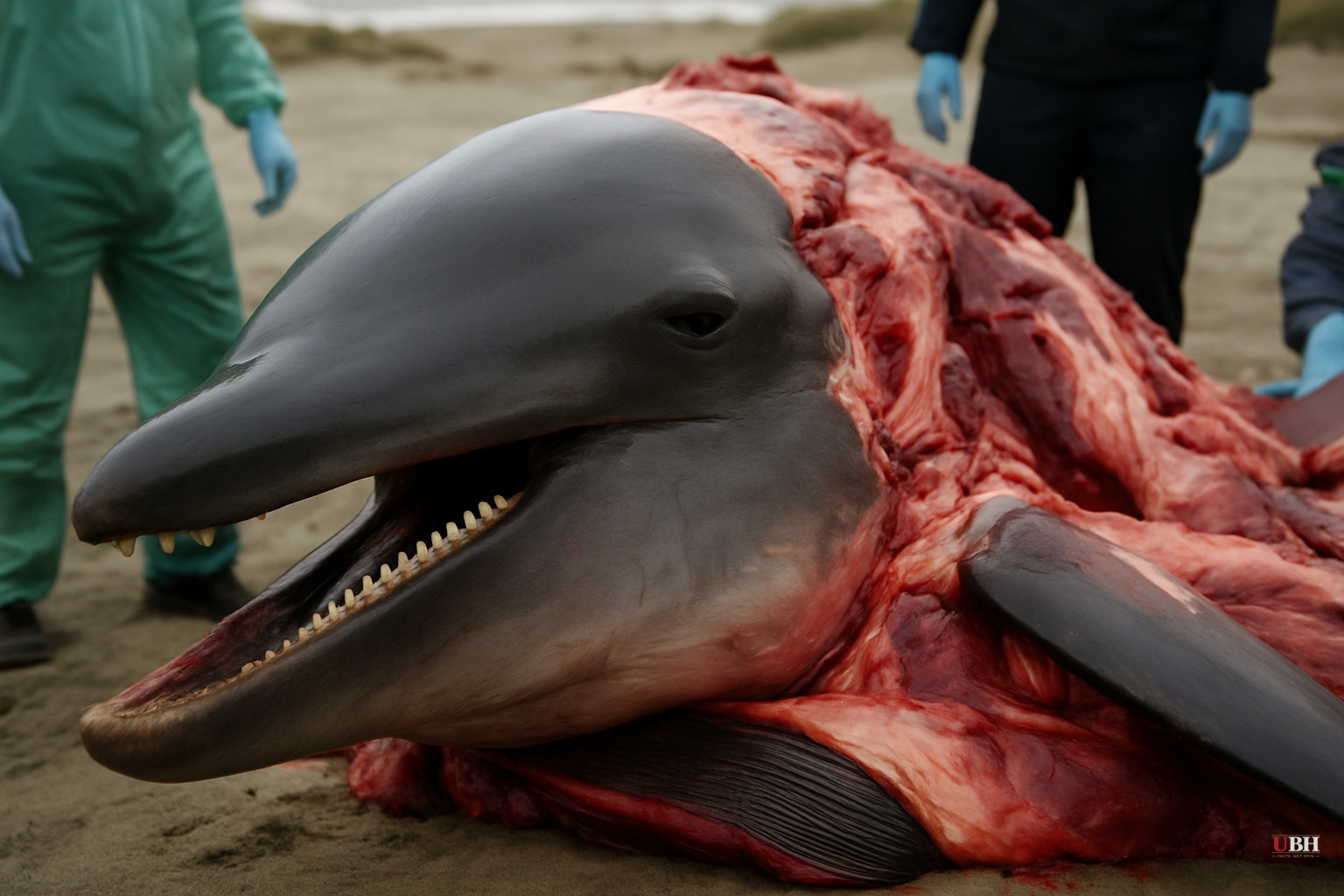
A whale almost nobody has ever seen
A 16-foot, 3,000-pound whale washed ashore on the South Island of New Zealand in July 2024. Scientists say it turned out to be something almost nobody alive has ever laid eyes on: a spade-toothed whale, widely considered the rarest whale species on Earth.
Anton van Helden, a senior marine science adviser for New Zealand's Department of Conservation, saw a photo of the carcass on his phone while recovering from surgery. He knew immediately what it was. "I immediately went, 'Oh my goodness, it's a spade-toothed whale!'" van Helden told CNN's Lex Harvey. He said his own colleagues doubted him at first.
He was right. And this time, unlike every prior encounter with the species, conditions allowed for something scientists had never been able to do: a full dissection.
Six sightings, ever
Spade-toothed whales are part of the beaked whale family. Before this specimen, humans had documented the species only six times, and never while the animal was alive.
Much of what scientists thought they knew about the species came from lower jaw and tooth fragments collected on Pitt Island, roughly 500 miles east of mainland New Zealand, back in 1874, along with partial remains found decades later. When whales washed up in 2010 and 2017 on New Zealand's North Island, researchers could only manage minimally invasive sampling before the animals were buried. No dissection ever happened.
A 2012 study suggested the whales are exceptionally deep divers that spend their lives far below the surface of the South Pacific, which is a large part of why they've been so hard to study. "It's very hard to do research on marine mammals if you don't see them at sea," Hannah Hendriks, a marine technical adviser for the Department of Conservation, told the Associated Press's Charlotte Graham-McLay after the whale was first found in July 2024. "It's a bit of a needle in a haystack. You don't know where to look."
A joint effort with Māori tribes
The dissection process began in early December 2024 and was carried out under the joint guidance of scientists and members of local Māori tribes on the South Island. To Māori communities, the whale is a taonga, a sacred treasure, and the process was designed to gather both biological data and cultural knowledge simultaneously, not just to serve a research paper.
The New Zealand Department of Conservation posted about the work on social media, calling it the first time the rarest whale in the world has been examined this way, with "mana whenua" (local Māori with authority over the land) working alongside scientists.
Van Helden described the whale to the Guardian's Eva Corlett as a "stocky, powerful-looking little animal." He said the work wasn't just about a dead specimen. "We're working around a dead animal, but it's telling us about how it lived," he said.
What's actually new here
The whale washed ashore in July 2024, and the dissection itself began in early December 2024, guided by both government scientists and Māori tribal representatives. This was not a brand-new discovery of the species. It was the first time researchers had ever had a specimen in good enough condition, in the right place, to cut it open and actually study its internal biology rather than just bones and teeth.
This represents the difference between decades of researchers guessing at the biology of an animal from scraps and finally getting real anatomical data. Beaked whales as a family are already difficult to study because they dive so deep and surface so rarely. A species seen six times in recorded history is close to a scientific blank slate.
What's still unknown
The Department of Conservation has not released a full scientific report detailing organ analysis, stomach contents, or age estimates from the dissection. Whatever data comes out of the December 2024 work will presumably move through peer review before it reshapes textbook entries on the species.
The open question for marine biologists is whether this single specimen, however well-preserved, can answer much about a species that lives its life almost entirely out of human sight. One dissection is a start. It is not a population study.
Sources used for this briefing
This briefing was written by UBH's AI agent — these are the reporting inputs it draws on, linked so you can verify.


