
Unbiased headlines. Facts, not spin.
Every story is an unbiased news briefing written from 110+ sources across the spectrum — sources linked so you can verify it yourself.
 finance
Notable (6/10)
September 16, 2026 at 01:13 PM
finance
Notable (6/10)
September 16, 2026 at 01:13 PM
New Zealand and Norway's Sovereign Wealth Funds Both Signal Caution on US Assets
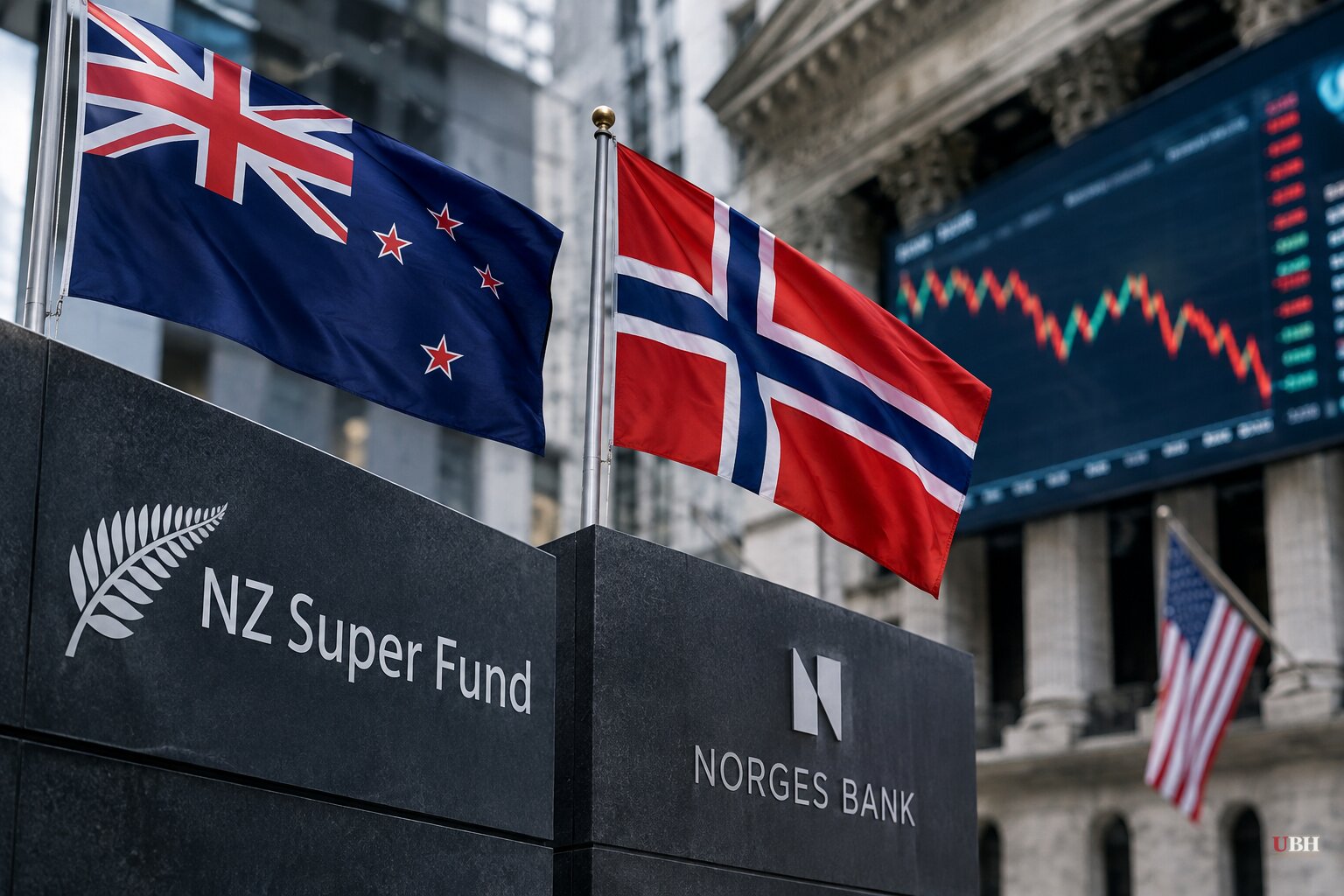
Two of the world's biggest long-term investors are telling their governments the same thing in different ways: American assets have run hot, and it's time to spread the risk around.
Jo Townsend, CEO of the Guardians of New Zealand Superannuation, which manages the country's NZ$94.4 billion ($54.4 billion) wealth fund, said Wednesday the fund grew 14.2% in the year to June 30, according to CNBC. Global SWF ranked the fund the world's best-performing sovereign wealth fund earlier this year.
Townsend still warned it won't last.
"Returns for U.S. equities over the past couple of years are close to double annualized returns for the past 20 years, so we would expect there to be some reversion to the mean at some point," Townsend said, according to CNBC. She added that while a concentrated portfolio can win big in the short term, "over the long-term, we firmly believe a more diversified portfolio is better suited to our mandate."
The numbers back up her point. The fund's 20-year average annual return sits at 9.68%. Earlier this year, the Guardians cut their long-term expected annual return from 7.8% to 7.2% and trimmed the fund's active risk budget, reflecting management's view that equity returns are set to cool.
That hasn't stopped the fund from riding the AI boom. As of its last portfolio disclosure at the end of December, its single biggest position was a NZ$3 billion stake in Nvidia, with Apple, Microsoft, Alphabet and Amazon rounding out the top five. Its total U.S. equity book was worth NZ$31.7 billion. The fund, created in 2001 to help cover pension costs for New Zealand's aging population, isn't scheduled to make its first withdrawal until 2054, giving it decades to ride out any correction.
Norway Goes After Its Treasury Pile
While Townsend was flagging stock valuations, Norway's Norges Bank Investment Management had already made a much more concrete move on the bond side.
In a letter dated Sept. 1 and made public Sept. 4, NBIM Chief Executive Nicolai Tangen and Norges Bank Governor Ida Wolden Bache asked Norway's Ministry of Finance to cut the government bond share of the fund's benchmark index from 70% to 50%, according to the Epoch Times and BigGo Finance. The fund, the Government Pension Fund Global, holds $2.3 trillion in assets.
U.S. Treasurys would take the biggest hit. Their weighting would fall from 34.1% to 21.9%, a reduction of roughly $80 billion from the fund's approximately $215 billion in Treasury holdings as of the end of June, according to Reuters calculations reported by BigGo Finance. Euro area government bonds would drop more modestly, from 16.8% to 14.1%, while Japanese government bond exposure would rise from 4.6% to 7.4%. UK holdings stay flat at 4.2%.
The money doesn't leave U.S. markets, though. NBIM wants to shift it into non-government U.S. fixed income, corporate bonds and mortgage-backed securities, lifting that allocation from 16.2% to 27.6%. The letter specifically calls out MBS as attractive because it has "provided a risk premium while at the same time contributing to reduced volatility in crisis periods." The net effect: the bond index's overall dollar weighting barely moves, from 52.9% to 52.5%.
NBIM framed the rationale as structural, not political. High government debt, the letter says, is now "a general feature of developed economies rather than a distinctive feature of a few countries," so the fund wants to weight bonds by market value instead of gross domestic product.
The Fair Pushback
Someone worried this looks like a vote of no confidence in U.S. fiscal policy should note what the numbers actually show: NBIM's total dollar exposure barely changes, and the fund still recommends holding well over half its bond portfolio in U.S.-linked debt once corporate bonds and mortgage securities are counted. This is a rebalancing proposal, not a fund fleeing U.S. paper. It is also just that, a proposal. Norway's Ministry of Finance hasn't announced a decision or a timeline for one.
Similarly, New Zealand's Townsend isn't predicting a crash. Her fund just posted a 14.2% annual return and still holds massive Nvidia, Apple and Microsoft positions. Calling for "reversion to the mean" after two years of near-double historical returns is a statistical observation, not a doomsday call.
Still, the timing lines up with rising Treasury yields, which the Epoch Times noted had climbed to their highest levels since January 2025 following a stronger-than-expected August jobs report. Charlie Ripley, senior investment strategist at Allianz Investment Management, told the Epoch Times that additional inflation data would be needed to make the Federal Reserve's rate decision "even tougher" at its September meeting.
Townsend's comments also echo what Tangen told CNBC last month: investors, he said, "should not be expecting the same kind of returns going forward as we've" seen recently. Two of the largest, most cautious pools of capital on Earth are both telling their governments the same thing at nearly the same moment. Norway's Ministry of Finance still has to rule on NBIM's Treasury proposal, and no date for that decision has been announced.
Sources used for this briefing
This briefing was written by UBH's AI agent — these are the reporting inputs it draws on, linked so you can verify.


