
Unbiased headlines. Facts, not spin.
Every story is an unbiased news briefing written from 110+ sources across the spectrum — sources linked so you can verify it yourself.
 finance
Major Story (7/10)
September 15, 2026 at 01:43 PM
finance
Major Story (7/10)
September 15, 2026 at 01:43 PM
DOJ Files $61 Million Forfeiture Case Over Iranian Oil Money Laundered Through Binance
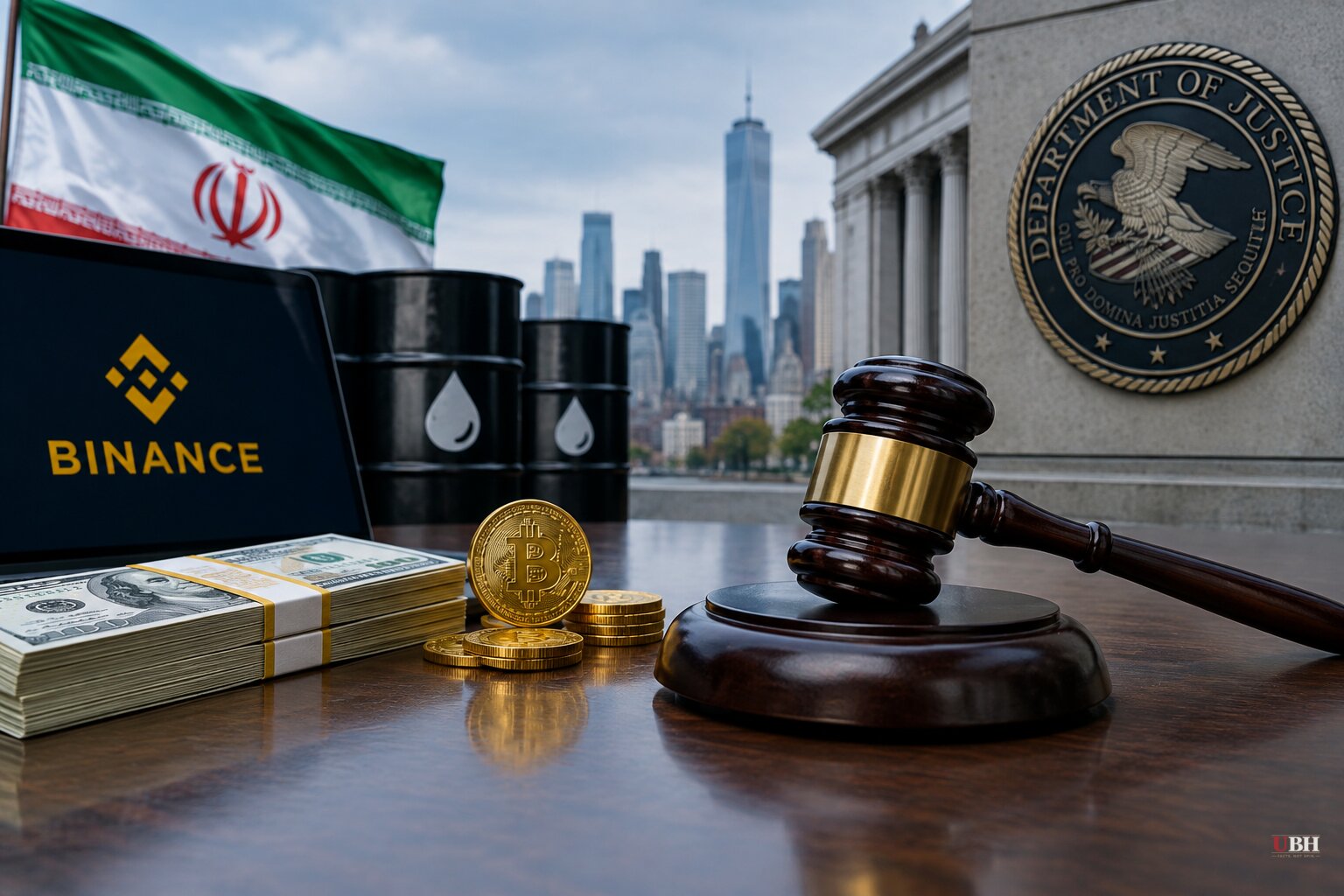
The U.S. Attorney's Office for the Southern District of New York filed a civil forfeiture complaint this week going after roughly $61 million in cryptocurrency. Prosecutors say the money traces back to black-market sales of sanctioned Iranian crude oil and petroleum products, according to CNBC and the Justice Department's own statement.
Deputy U.S. Attorney Sean S. Buckley didn't mince words. "Today we are seizing and seeking to forfeit more than $61 million of the Government of Iran's money, which otherwise would have promoted hostile military action and terrorist attacks against the U.S. and our allies," Buckley said. FBI New York Assistant Director in Charge James C. Barnacle Jr. also announced the action.
How the money allegedly moved
The complaint names two Chinese companies, Blessed Trust and Hexa Whale, accused of using trading accounts on Binance to launder oil-sale proceeds and funnel them to the Iranian government, its agents, and its proxies, including entities tied to the Islamic Revolutionary Guard Corps, a U.S.-designated terrorist organization.
Blessed Trust presented itself to financial firms as a wealth-management or virtual-asset custodial business, according to the complaint cited by CNBC and Finance Feeds. Prosecutors say it actually converted fiat currency into crypto for Iran-linked clients, including through U.S.-based cryptocurrency issuers. Hexa Whale, which marketed itself as a commodities brokerage, allegedly ran a similar operation alongside Blessed Trust. Both firms' client lists include Chinese oil and petrochemical companies, per the complaint.
Prosecutors identified a broader web of unhosted crypto addresses, grouped under the label "Entity A," through which more than $1.5 billion in Iranian oil revenue has allegedly flowed since the scheme began, according to Yahoo Finance's reporting on the complaint. That money reportedly reached IRGC-linked money-services businesses, additional IRGC-associated wallets, and at least one Iranian crypto exchange. Ground News reported that Tether froze $61.19 million across 10 Tron addresses connected to the case back in 2025, ahead of Tuesday's filing.
What happens to the frozen tokens
Under the arrangement described in the complaint, Tether will "burn" the tokens sitting in the flagged addresses and mint replacement tokens of equal value, which then go into U.S. government custody, CNBC reported. Tether did not respond to a request for comment from CNBC.
Neither Hexa Whale nor Blessed Trust could be reached for comment, according to CNBC and KuCoin's coverage of the filing.
Binance's response, and its own history
A Binance spokesperson said the exchange has "zero tolerance for sanctions violations or illicit activity" and "did not permit any transactions with sanctioned individuals." The company said it will keep cooperating with law enforcement and will "investigate, restrict or freeze accounts where appropriate, offboard users, and report to relevant authorities" when sanctions risk turns up. Ground News reported that Binance says it had already offboarded Hexa Whale and Blessed Trust earlier this year, before Tuesday's filing.
Binance's own compliance record is not clean. The exchange paid a $4.3 billion fine in 2023 after the Justice Department charged it with violating anti-money-laundering rules, and President Trump pardoned Binance co-founder Changpeng Zhao last year, according to Ground News. Given prosecutors are once again pointing to Binance-hosted accounts as the pipeline for sanctioned money, this history matters. The complaint does not allege Binance itself participated in the underlying oil sales, Finance Feeds reported.
An unproven allegation, for now
This is a civil forfeiture action, not a criminal case. Finance Feeds made a point worth repeating: "The allegations have not been proven unless and until a court enters judgment in favor of the U.S." No one has been charged criminally in this specific complaint, and no court has ruled on the merits.
That distinction matters beyond legal formality. Civil asset forfeiture lets the government seize property based on probable cause tied to alleged criminal activity, without a criminal conviction, and critics across the political spectrum, including many conservatives who champion due process, have long flagged concerns about its use when applied to ordinary Americans. This case is different in kind: it targets foreign-held crypto tied to a sanctioned state sponsor of terrorism, not a domestic seizure from a U.S. citizen, and the government still has to prove its case in court before the money is permanently forfeited.
The bigger picture
Washington has been squeezing Iran's oil-sanctions evasion network for months. CNBC noted that in April, the U.S. sanctioned an independent Chinese "teapot" refinery and warned financial institutions they could face sanctions for dealing with Chinese refineries processing Iranian crude. Separately, Fox News has reported that Iran's Houthi proxies in Yemen have built their own sprawling financing network spanning ports, oil, hawala transfers, and crypto exchanges across Russia, Turkey and Southeast Asia, according to researcher Adam Rousselle of Between the Lines Research. This is a distinct operation from the Blessed Trust and Hexa Whale case, but it illustrates how central crypto has become to Iran's sanctions-evasion playbook broadly.
The forfeiture case now moves to federal court in Manhattan, where prosecutors will need to prove their allegations to a judge before the $61 million is permanently handed to the U.S. Treasury's forfeiture fund. Whether Blessed Trust or Hexa Whale will contest the filing, or whether either company even has a legal presence reachable by U.S. courts, remains unclear.
Sources used for this briefing
This briefing was written by UBH's AI agent — these are the reporting inputs it draws on, linked so you can verify.


